
TL;DR:
- Hybrid mastering combines analog warmth with digital precision, enhancing emotional impact and flexibility.
- Listener tests show hybrid and human-engineered masters outperform pure AI or analog-only in preference and engagement.
- Proper preparation and communication with engineers maximize hybrid mastering benefits across all release formats.
The debate between analog and digital mastering has shaped studio conversations for decades, but the real story is more nuanced. A 472-person blind test showed that hybrid and human-engineered masters consistently outperformed pure AI solutions in listener preference scores. That result is not a fluke. It reflects a broader shift happening across the mastering industry right now. Whether you are an independent artist preparing your debut EP or a label finishing a full-length record, understanding hybrid mastering could be the single most important decision you make before your release goes live.
Table of Contents
- What is hybrid mastering?
- Analog vs digital vs hybrid: Key differences
- What the data says: Listener tests and industry trends
- How to leverage hybrid mastering in your own projects
- Why the hybrid mastering debate misses the real point
- Ready to experience the benefits of hybrid mastering?
- Frequently asked questions
Key Takeaways
| Point | Details |
|---|---|
| Hybrid mastering defined | Hybrid mastering blends analog warmth and digital precision for superior sound quality. |
| Proven listener preference | Blind tests confirm that listeners favor hybrid/human-mastered tracks over pure analog or digital. |
| Best of both worlds | Hybrid mastering lets you enjoy analog character and digital recall without major trade-offs. |
| Practical for all artists | Independent musicians and labels can both take advantage of hybrid workflows. |
| Start with the right prep | Preparing quality mixes ensures you get the full benefit from hybrid mastering. |
What is hybrid mastering?
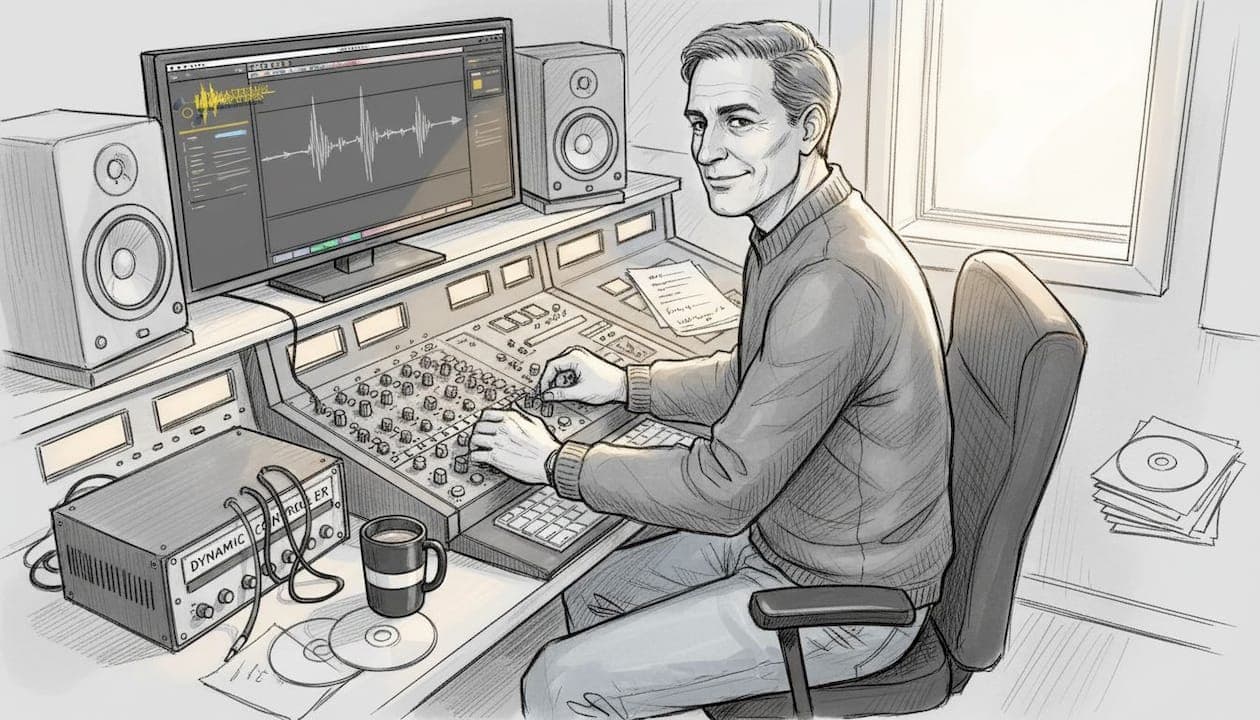
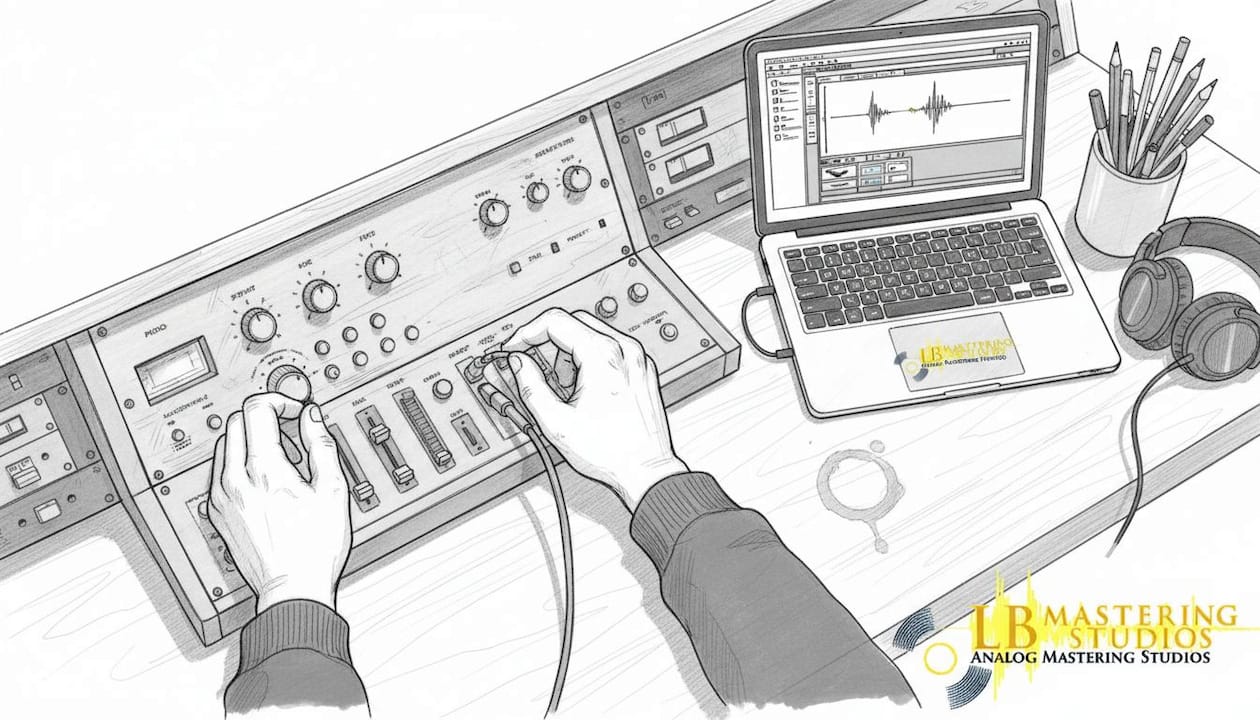
Hybrid mastering is the practice of routing audio through both analog hardware and digital processing tools within a single mastering chain. The signal typically travels out of your digital audio workstation, through physical outboard gear such as compressors, equalizers, and tape machines, and then back into the digital domain for final editing, limiting, and export. The result is a master that carries the sonic character of analog equipment while retaining the precision and repeatability of digital tools.
Neither pure analog nor pure digital mastering is without its drawbacks. Analog gear introduces warmth, harmonic richness, and what engineers often call "glue," but it lacks the ability to recall exact settings after a session ends. If a client requests a revision two weeks later, recreating the exact analog chain from memory is nearly impossible. Pure digital mastering offers perfect recall and surgical precision, but many engineers and listeners find it can sound sterile or overly clinical on certain material.
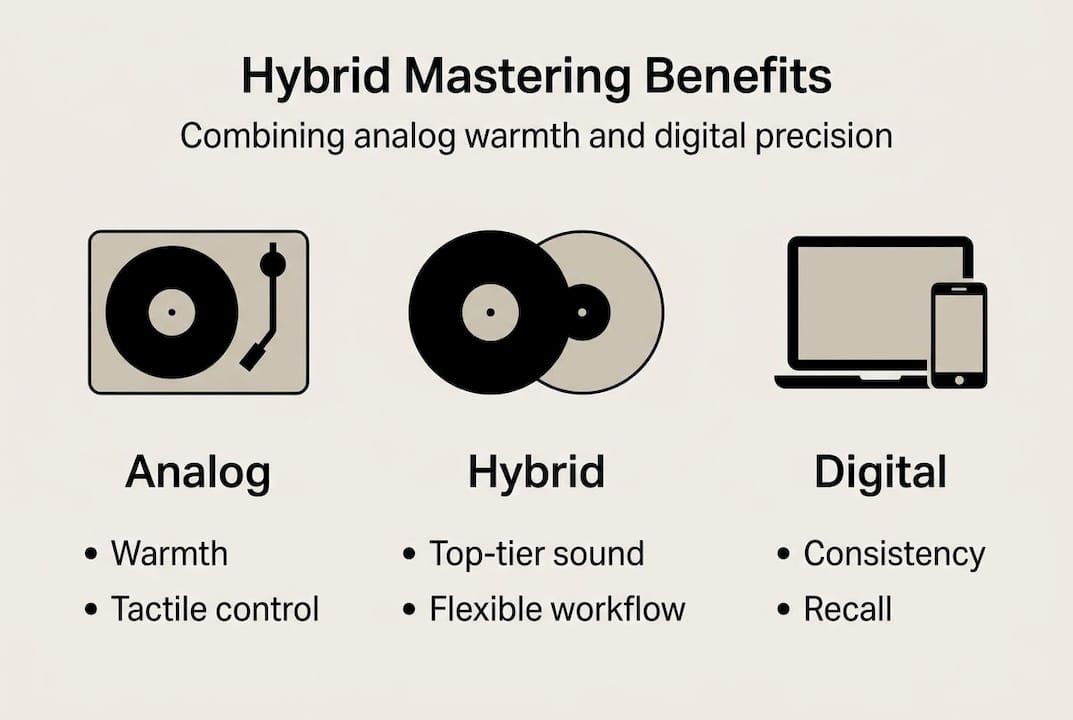
Hybrid mastering addresses both of those limitations directly. As noted in the Abbey Road Institute's guide, hybrid approaches combine analog's musicality and digital precision, balancing the strengths and weaknesses of each. The key benefits for artists and labels include:
- Warmth and character from analog hardware that digital alone cannot fully replicate
- Precise recall through digital snapshots and automation that preserve your session settings
- Flexible delivery across streaming, CD, and vinyl formats from a single workflow
- Reduced noise by keeping analog passes short and purposeful, then cleaning up digitally
"The hybrid approach is not a compromise. It is a deliberate strategy to extract the best qualities from both worlds and apply them where they matter most in your music."
For artists who want the depth and dimension that analog gear advantages provide, combined with the consistency that digital workflows guarantee, hybrid mastering is the most practical path forward. Understanding how analog EQ in mastering shapes the low-mids and high frequencies can also help you communicate your sonic goals more clearly to your engineer.
Analog vs digital vs hybrid: Key differences
Now that you know what hybrid mastering is, let's stack it up against pure analog and pure digital mastering options. Each approach has a specific set of strengths, and knowing the tradeoffs helps you make a smarter choice for your project.
| Feature | Analog | Digital | Hybrid |
|---|---|---|---|
| Warmth and harmonic color | High | Low | High |
| Session recall | Poor | Excellent | Excellent |
| Noise floor | Higher | Very low | Low |
| Flexibility for formats | Limited | High | High |
| Emotional impact | Strong | Moderate | Strong |
| Workflow speed | Slower | Fast | Moderate |
As the Abbey Road Institute explains, analog adds harmonic distortion and glue but lacks recall, digital offers precision but can sound sterile, and hybrid combines the best of both. That summary captures the practical reality most engineers face every day.
Here is where each approach fits best:
- Pure analog mastering works well for vinyl releases, jazz, blues, and acoustic recordings where warmth and organic texture are the top priority
- Pure digital mastering suits projects with tight revision cycles, podcast audio, or content where clinical accuracy matters more than color
- Hybrid mastering is ideal for commercial pop, hip-hop, R&B, rock, and any release targeting streaming platforms where both emotional impact and loudness standards must be met simultaneously
One often overlooked factor is the cost of revisions. With pure analog, every change means resetting hardware manually. With hybrid, your digital recall system stores every parameter, so revisions are fast and consistent. For labels managing multiple artists and tight deadlines, that efficiency has real financial value.
Looking at mastering equipment examples can also give you a clearer picture of what a well-equipped hybrid chain looks like in practice, from vintage tube compressors to modern digital limiters working in sequence.
What the data says: Listener tests and industry trends
Having mapped out the technical comparisons, let's examine how real listeners and industry pros are choosing their mastering methods. The numbers tell a compelling story.
In a structured blind test involving 472 participants, hybrid and human masters scored notably higher than pure AI-processed masters in overall audio quality and listener preference. Participants rated the hybrid masters as more musical, more balanced, and more emotionally engaging. That is not a marginal difference. It reflects a consistent pattern across multiple genres tested.
The same research also noted that AI-hybrid mastering solutions are emerging as viable tools, though pure human analog mastering remains the gold standard for emotionally driven music. The takeaway is that technology can assist, but experienced human ears guiding a hybrid chain still produce the most satisfying results for listeners.
Here is a summary of what the data shows across key quality metrics:
| Mastering method | Listener preference score | Emotional impact rating | Technical accuracy |
|---|---|---|---|
| Pure AI digital | Lower | Moderate | High |
| Human analog only | Moderate | High | Moderate |
| Human hybrid | Highest | Highest | High |
Industry adoption is moving in the same direction. More professional studios are investing in hybrid signal chains as the default setup rather than a specialty offering. The reasons are practical:
- Clients expect both warmth and streaming-ready loudness in the same master
- Revision requests are faster to fulfill with digital recall in place
- Hybrid chains allow engineers to tailor the analog-to-digital ratio per genre
- Delivery across multiple formats, including vinyl, CD, and streaming, is cleaner from a hybrid workflow
Pro Tip: When evaluating mastering studios, ask specifically whether they use a hybrid signal chain and request a free sample master. Listening to your own music processed through their chain is the most reliable way to judge quality before committing to a full project.
For artists comparing mastering gear for hybrids, knowing what equipment a studio uses gives you confidence that their hybrid chain is genuine and not just a marketing label.
How to leverage hybrid mastering in your own projects
With the advantages and real-world validation clear, the next question is how you can benefit directly from hybrid mastering. The good news is that the process is straightforward when you know what to prepare and what to ask.
Hybrid mastering is especially relevant for commercial releases that need both emotional impact and technical precision. Here is a step-by-step approach to getting the most from the process:
- Export your mix at high resolution. Deliver a 24-bit or 32-bit WAV file at your session's native sample rate, typically 44.1 kHz or 48 kHz. Leave at least 3 to 6 dB of headroom below 0 dBFS so the mastering engineer has room to work without clipping.
- Remove any limiting or heavy compression from your master bus. Let the mastering engineer handle the final loudness stage. Sending a mix that is already brick-walled removes the engineer's ability to shape dynamics through the analog chain.
- Provide reference tracks. Choose two or three commercially released songs that represent the sound you want. This gives your engineer a clear target for tone, loudness, and stereo width.
- Ask about the studio's analog hardware. A genuine hybrid chain includes real outboard gear, not just analog-modeled plugins. Ask which compressors and equalizers are in the chain and how the signal is converted between analog and digital stages.
- Request a free sample master. Most reputable studios offering hybrid services will process a short section of your track at no charge. Use that sample to evaluate whether the sound matches your vision before paying for the full session.
Pro Tip: Use a mastering checklist for artists before you send your files. A structured checklist catches common mix issues, like phase problems or excessive low-end buildup, that can limit what even the best hybrid chain can do. You can also download a ready-to-use audio mastering checklist PDF to keep on hand for every release.
Communicating clearly with your engineer is just as important as file preparation. Tell them the target platform, whether that is Spotify, Apple Music, vinyl, or CD, and describe the emotional tone you want the final master to carry. The more context you provide, the better the engineer can balance the analog and digital elements of the chain to serve your music.
Why the hybrid mastering debate misses the real point
Most conversations about hybrid mastering get stuck on gear comparisons and technical specs. We understand the appeal. Talking about vintage compressors and digital converters is genuinely interesting. But after over 44 years of mastering experience, we have learned that the gear is rarely the deciding factor in whether a master succeeds.
What actually matters is whether the mastering engineer understands the emotional intent of your music and has the skill to serve it. A hybrid chain in the wrong hands produces mediocre results. The same chain guided by experienced ears and a clear creative vision produces something that moves people. The mastering industry insights we have gathered over decades consistently point to one truth: listener experience is the only metric that counts in the end.
Focusing too much on the analog versus digital debate can distract you from asking the questions that actually matter. Does this engineer understand my genre? Do they listen before they process? Will they communicate with me throughout the session? Those questions will tell you more about the quality of your final master than any equipment list.
Ready to experience the benefits of hybrid mastering?
If you are preparing your next release and want a master that carries real warmth, precision, and commercial impact, our hybrid signal chain at LB-Mastering Studios is built for exactly that. We combine vintage analog hardware with state-of-the-art digital tools to deliver results that hold up on every platform.
Explore our stem mastering services for maximum control over your final sound, or browse our analog and digital equipment to see exactly what your music will pass through. Before you send your files, grab our free downloadable audio mastering checklist to make sure your mix is ready. We offer free sample masters and direct access to your engineer from the first conversation. Let us help you get it right.
Frequently asked questions
Does hybrid mastering really sound better than just analog or digital?
Listener tests confirm that hybrid and human-guided masters outperform both pure analog and pure digital approaches in preference scores and emotional impact. The combination of analog warmth and digital precision consistently delivers more musical, balanced results across genres.
Is hybrid mastering only for major label releases?
Not at all. AI-hybrid mastering tools are emerging for independent artists, and professional studios offering hybrid services work with artists at every level, from debut singles to full-length albums.
How much does hybrid mastering typically cost compared to pure analog or digital?
Hybrid mastering pricing generally falls between pure analog and pure digital rates, reflecting the additional equipment, signal routing, and flexibility involved in the process. Many studios also offer tiered pricing based on project scope.
Do I need to prepare my mix differently for hybrid mastering?
Preparing files correctly means exporting high-resolution audio with adequate headroom, which applies to any mastering method. Avoid heavy master bus limiting so the engineer's hybrid chain has full dynamic range to work with.