
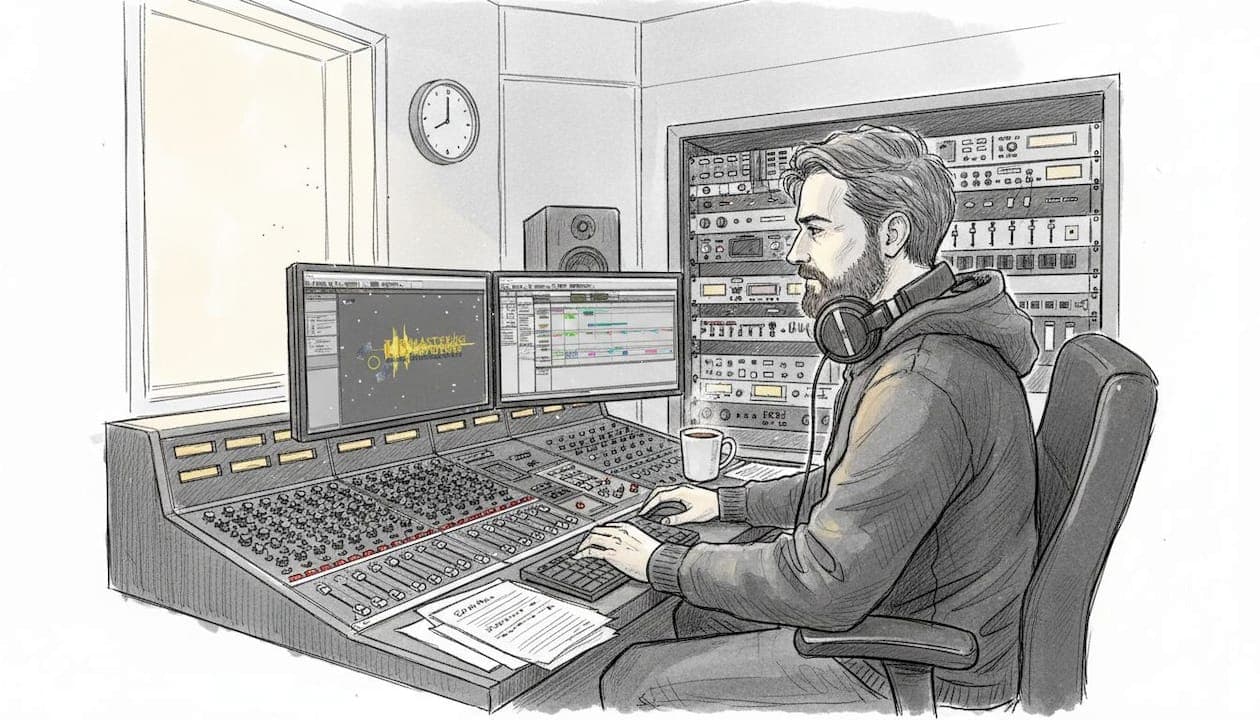
Achieving professional audio quality separates successful releases from amateur recordings. Independent artists and producers often struggle with the technical complexity of mastering, unsure which steps matter most for streaming platforms and physical formats. A comprehensive mastering checklist eliminates guesswork, providing clear actions that enhance sonic clarity, preserve dynamics, and meet industry loudness standards. This guide delivers essential mastering strategies, from mix preparation through final quality checks, helping you navigate the mastering process with confidence and deliver releases that compete with major label productions.
Table of Contents
- Key takeaways
- Mastering checklist criteria: preparing your track for success
- Step-by-step mastering checklist for flawless results
- Understanding loudness standards and dynamic range preservation
- Human mastering versus AI: benefits and limitations
- Enhance your mastering with LB-Mastering Studios
- Frequently asked questions
Key Takeaways
| Point | Details |
|---|---|
| Mastering readiness matters | Assess mix headroom, playback consistency across monitors and reference readiness criteria before applying any mastering processing. |
| Reference tracks guide decisions | Select genre matched reference tracks to set tonal balance and compression expectations so your master aligns with current standards. |
| Preserve dynamic range | Preserve dynamic range during mastering rather than chasing maximum loudness to suit streaming normalization. |
| Target streaming loudness | Aim for platform appropriate loudness targets while maintaining punch and musicality. |
| Pre mastering headroom | Export the mix with 3 to 6 dB of headroom to prevent clipping in mastering. |
Mastering checklist criteria: preparing your track for success
Before applying any mastering processing, evaluate your mix against critical readiness criteria. A well-balanced mix with proper headroom forms the foundation for effective mastering. Check that your mix translates consistently across playback systems, from studio monitors to earbuds to car speakers. Frequency imbalances, phase issues, or excessive compression in the mix stage create problems that mastering cannot fix.
Selecting appropriate reference tracks guides your mastering decisions and ensures your final master competes within your genre. Prioritize mix balance before mastering and use references matching your genre for accurate tonal and dynamic checks. Choose commercially released tracks with production values you admire, ideally mastered within the past three years to reflect current standards. Reference tracks reveal target frequency balance, compression character, and loudness levels appropriate for your musical style.
Understanding streaming platform requirements prevents technical rejections and ensures optimal playback. Most platforms normalize audio to specific loudness targets, making the loudness wars obsolete. Focus on preserving dynamic range rather than maximizing peak loudness, as streaming services reduce overly loud masters during playback. Enhance clarity through mastering by targeting appropriate loudness levels that maintain punch and musicality.
Essential pre-mastering criteria include:
- Export your mix with at least 3-6 dB of headroom to prevent clipping
- Verify balanced frequency distribution using spectrum analysis
- Remove unnecessary low-end rumble below 30 Hz
- Check stereo imaging for phase correlation issues
- Ensure consistent levels across all song sections
- Test mix translation on multiple playback systems
- Bounce final mix at the highest resolution your session supports
Understanding audio mixing fundamentals helps you deliver masters-ready mixes that require minimal corrective processing. The cleaner your mix enters the mastering stage, the more transparent and musical your final master becomes.
Step-by-step mastering checklist for flawless results
A systematic approach to mastering ensures consistent, professional results across all your releases. Core mastering methodology follows four stages: assess mix readiness and references, apply surgical then tonal EQ, clip transients with gentle compression and limit to target loudness, and perform final reference checks. This proven framework addresses technical issues while enhancing musicality and competitive loudness.
-
Assessment and preparation: Load your mix and reference tracks into your mastering session. Analyze frequency spectrum, dynamic range, and stereo width using metering tools. Listen critically for problem frequencies, tonal imbalances, or dynamic inconsistencies. Note the integrated loudness, true peak, and dynamic range measurements of both your mix and reference tracks. This baseline data guides all subsequent processing decisions.
-
Surgical EQ correction: Apply narrow, precise EQ cuts to remove problem frequencies that muddy or harshly affect your mix. Focus on subtractive EQ first, removing resonances or buildup rather than adding broad boosts. Common problem areas include low-mid buildup around 200-400 Hz, harshness around 2-4 kHz, and excessive sibilance above 8 kHz. Use high-pass filtering to remove unnecessary subsonic content below 30 Hz that wastes headroom.
-
Tonal EQ enhancement: After corrective EQ, apply gentle broad boosts to shape overall tonal character. Add air and sparkle with subtle high-frequency shelving around 10-12 kHz. Enhance warmth with gentle low-frequency boosts around 80-100 Hz if needed. Keep EQ moves musical and transparent, comparing frequently to your reference tracks.
-
Dynamic control: Use transient clipping or soft clipping to tame excessive peaks before compression. Apply gentle multiband or broadband compression with ratios between 1.5:1 and 3:1 to control overall dynamics while preserving punch. Set attack times to preserve transient impact and release times that breathe with the music. Aim for 2-4 dB of gain reduction maximum to maintain transparency.
-
Limiting and loudness optimization: Apply true peak limiting as your final processor to achieve target streaming loudness. Set your limiter's ceiling to -1 dBTP to prevent intersample peaks during codec conversion. Gradually increase input gain or reduce threshold until you reach your target integrated loudness, typically -14 LUFS for most streaming platforms. Monitor your dynamic range meter to ensure you maintain at least 8-10 dB of range.
-
Final quality checks: Compare your master against reference tracks at matched loudness levels. Check translation on multiple playback systems including headphones, earbuds, car stereo, and consumer speakers. Listen for distortion, pumping, or loss of dynamics. Verify that all technical specifications meet platform requirements using loudness metering tools.
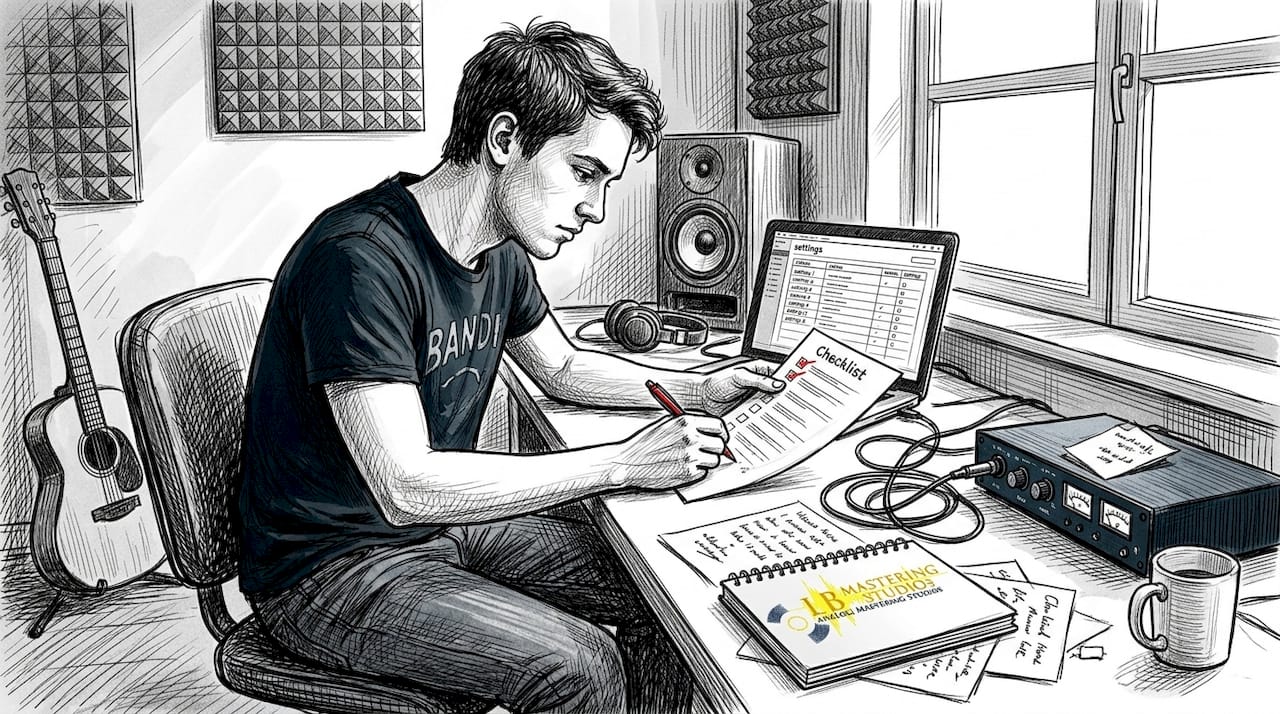
Pro Tip: Download a free comprehensive mastering checklist that covers every technical specification and listening check required for professional releases. This resource ensures you never miss critical mastering steps.
Systematic processing order prevents common mastering mistakes and delivers consistent results. Each processing stage builds on the previous one, creating a transparent signal chain that enhances rather than degrades your original mix.
Understanding loudness standards and dynamic range preservation
Streaming platforms revolutionized mastering by implementing loudness normalization, which adjusts playback levels to create consistent listening experiences. Streaming benchmarks target -14 LUFS integrated for Spotify, Tidal, and YouTube, -16 LUFS for Apple Music, with true peak not exceeding -1 dBTP across all platforms. These standards eliminate the competitive pressure to create excessively loud masters that sacrifice dynamics and introduce distortion.
Preserving dynamic range creates more engaging, musical masters that translate better across playback systems. Aim to maintain at least 8-10 dB of dynamic range, with DR7 as an absolute minimum for competitive genres like EDM or hip-hop. Masters with higher dynamic range values sound more open, punchy, and less fatiguing during extended listening sessions. Streaming normalization reduces overly compressed masters during playback, making dynamic preservation more important than peak loudness.
| Platform | Target integrated loudness | True peak maximum | Notes |
|---|---|---|---|
| Spotify | -14 LUFS | -1 dBTP | Reduces louder masters, does not boost quieter ones |
| Apple Music | -16 LUFS | -1 dBTP | Sound Check applies normalization by default |
| YouTube | -14 LUFS | -1 dBTP | Normalization active for all music content |
| Tidal | -14 LUFS | -1 dBTP | High-fidelity platform emphasizes dynamics |
| Amazon Music | -14 LUFS | -2 dBTP | Slightly more conservative true peak limit |
True peak limiting prevents intersample peaks that occur during lossy codec conversion. When audio converts to MP3, AAC, or other streaming formats, peaks can exceed 0 dBFS even if your master stays below that threshold. Setting your limiter ceiling to -1 dBTP provides safety margin that prevents distortion during format conversion and platform processing.
Pro Tip: Master to -14 LUFS integrated with -1 dBTP true peak as your default target, then create platform-specific versions only if needed for vinyl, CD, or specialized distribution. This approach ensures optimal loudness for streaming while maintaining maximum dynamic range and musicality.
Focus on creating masters that sound great at normalized playback levels rather than competing for maximum loudness. Dynamic, punchy masters with appropriate loudness outperform overly limited, distorted masters in blind listening tests and listener retention metrics.
Human mastering versus AI: benefits and limitations
Artificial intelligence mastering services offer speed and affordability, but blind tests show human engineers outperform AI in audio quality, musicality, and listener preference. Human mastering engineers consistently score higher across technical measurements and subjective listening evaluations. AI mastering works well for demos, rough mixes, or budget projects where speed matters more than nuanced sonic refinement.
| Aspect | Human mastering | AI mastering |
|---|---|---|
| Audio quality | Superior technical precision and musicality | Good for demos, lacks refinement |
| Processing time | 1-3 business days typical | Instant to minutes |
| Cost | $50-200+ per track | $5-20 per track |
| Customization | Detailed revisions and artistic input | Limited or no revision options |
| Genre expertise | Engineer experience guides decisions | Algorithm applies generic processing |
| Equipment | High-end analog and digital chains | Software-only processing |
Human engineers provide artistic nuance that AI algorithms cannot replicate. Experienced mastering engineers make musical decisions based on genre conventions, arrangement complexity, and intended emotional impact. They adjust processing dynamically throughout a track, applying different treatment to verses, choruses, and bridges. AI mastering applies static, broad-stroke processing that often sounds mechanical or overly compressed.
AI mastering advantages include:
- Instant turnaround for time-sensitive projects
- Consistent processing across album tracks
- Low cost for demos or pre-release testing
- Accessible for artists with limited budgets
- Useful for comparing mastering approaches
Human mastering advantages include:
- Superior sonic quality and competitive loudness
- Artistic interpretation and musical sensitivity
- Detailed revisions based on client feedback
- Professional mastering equipment including analog processing
- Genre-specific expertise and reference knowledge
- Problem-solving for challenging mixes
Choose AI mastering for demos, rough mixes, or when exploring different sonic approaches before committing to professional mastering. Select human mastering for final releases, important projects, or when sonic quality directly impacts your professional reputation. Many artists use AI mastering to test mixes during production, then invest in human mastering for the final release version.
The quality difference between AI and human mastering becomes most apparent in complex arrangements, dynamic music, or genres requiring subtle processing. Electronic music with consistent dynamics may show less difference than acoustic recordings with wide dynamic range and intricate instrumental details.
Enhance your mastering with LB-Mastering Studios
Achieving professional mastering results requires expertise, experience, and access to high-quality processing tools. LB-Mastering Studios combines 44 years of industry experience with Grammy-winning engineering expertise, offering both analog and digital mastering services for independent artists and major labels worldwide. Our hybrid signal chain utilizes vintage analog equipment alongside state-of-the-art digital processing, delivering warmth, clarity, and competitive loudness across all formats.
Download our free comprehensive mastering checklist covering every technical specification and quality check required for professional releases. Explore our professional mastering equipment including vintage compressors, equalizers, and monitoring systems that shape your sonic signature. We provide online mastering services worldwide, offering direct communication with your mastering engineer and free sample masters to ensure complete satisfaction before final delivery.
Frequently asked questions
What is the ideal loudness level for streaming platforms?
Most streaming platforms target -14 LUFS integrated loudness, including Spotify, YouTube, and Tidal. Apple Music targets -16 LUFS integrated. Set your true peak limiter ceiling to -1 dBTP maximum to prevent distortion during codec conversion. Focus on preserving 8-10+ dB of dynamic range rather than maximizing loudness, as platforms normalize audio during playback. Optimal loudness mastering balances competitive levels with dynamic preservation for better translation.
How can I tell if my mix is ready for mastering?
Check for balanced frequency distribution using spectrum analysis, ensuring no excessive buildup in any range. Verify consistent dynamics across all song sections without extreme level variations. Compare your mix against genre-specific reference tracks to assess tonal balance and overall loudness. Ensure at least 3-6 dB of headroom below 0 dBFS to prevent clipping during mastering processing. Test translation on multiple playback systems to identify frequency imbalances or phase issues. Enhance clarity through proper preparation before entering the mastering stage.
Can AI mastering replace a human engineer?
AI mastering serves demos and budget projects effectively but cannot match human engineering quality for professional releases. Blind listening tests consistently show human engineers deliver superior audio quality, musicality, and listener preference. AI algorithms apply generic processing that lacks artistic nuance and genre-specific expertise. Human engineers provide detailed revisions, use professional mastering equipment, and make musical decisions throughout your track. Choose AI for speed and cost savings on demos, but invest in human mastering for final releases and important projects where sonic quality impacts your professional reputation.