
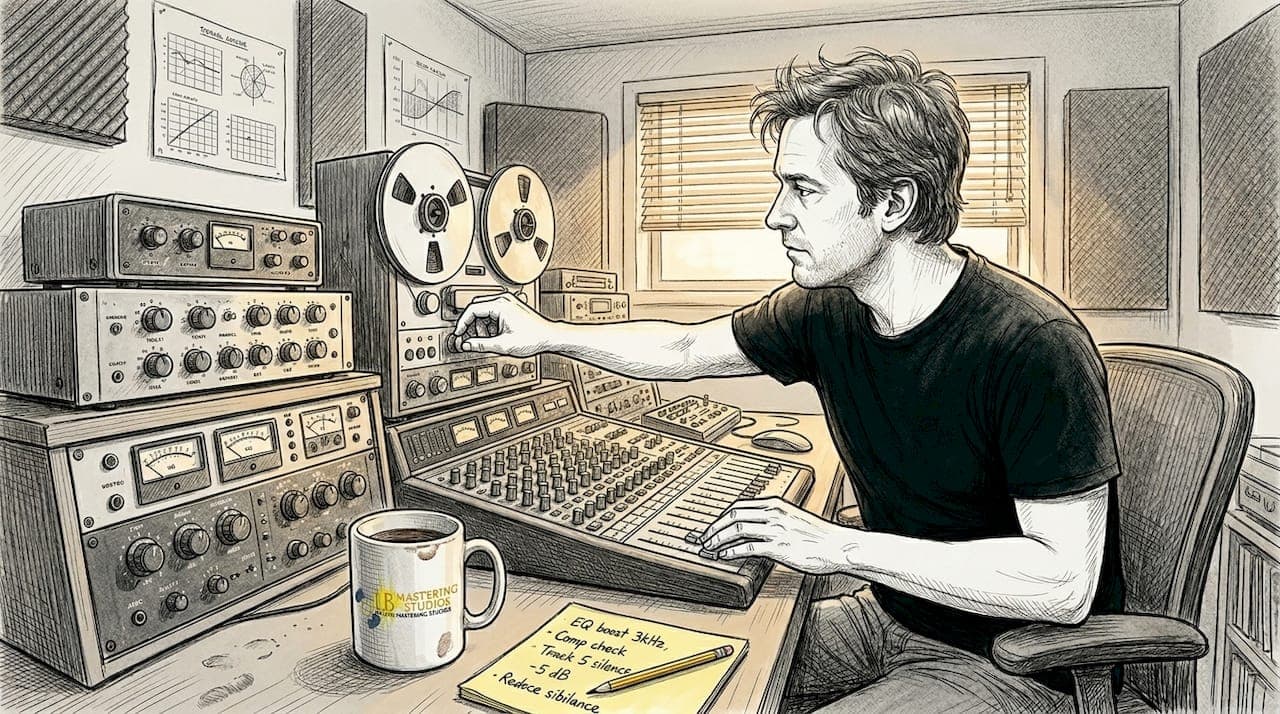
Every year, more producers invest in cutting-edge digital tools, yet the most sought-after masters still carry a warmth and depth that traces back to analog hardware. Walk into any world-class mastering facility and you will find vintage tube compressors, transformer-based EQs, and tape machines sitting alongside modern digital workstations. Independent musicians and producers often wonder whether analog gear is worth the investment or simply nostalgia dressed up as technique. This article breaks down the real science, practical workflow benefits, and honest limitations of analog gear so you can make smarter decisions for your masters.
Table of Contents
- Analog warmth: The science behind sound character
- Analog processing: Natural compression and musical cohesion
- Workflow impact: Tactile creativity and physical commitment
- Durability and authenticity: Analog's long-term value
- Drawbacks and digital advantages: When analog isn't ideal
- Best uses for analog gear: Genre, workflow, and hybrid strategies
- Take your mastering to the next level with expert analog gear
- Frequently asked questions
Key Takeaways
| Point | Details |
|---|---|
| Analog warmth explained | Analog gear creates musical warmth through subtle harmonics and saturation, giving masters depth and character. |
| Workflow boosts creativity | The tactile nature of analog hardware fosters focused artistic decisions and a more intentional mastering process. |
| Hybrid mastering is optimal | Combining analog and digital tools lets musicians achieve both sonic warmth and precise adjustments, maximizing mastering results. |
| Cost versus benefits | Analog gear is costly and less practical for indie producers, but its unique sound appeals to artists seeking authenticity. |
| Genre matters | Analog is ideal for genres like rock or jazz, while digital excels in electronic or pop for precision and clarity. |
Analog warmth: The science behind sound character
Analog gear does not just sound different by accident. The warmth you hear comes from a specific physical process called harmonic distortion, where the circuit adds subtle overtones to the original signal. Analog gear imparts warmth through even-order harmonics from tubes and odd-order harmonics from transformers, each producing a distinct tonal color. Tube circuits tend to sound rounder and smoother, while transformer saturation adds a bit more edge and presence.
The key word here is subtle. You are not talking about obvious distortion. Research from blind listening tests shows that distortion at 0.3% THD is audible but not harsh, while levels around 0.02% are perceived as a gentle, pleasing texture. That is the sweet spot where analog gear operates during professional mastering.
Why does this matter more than a plugin doing the same thing? Physical circuits interact with audio in ways that are not perfectly linear, and that nonlinearity is exactly what creates the sense of depth and dimension. You can explore mastering equipment examples to see how specific hardware choices shape the final sound. For a deeper look at how these processes compare, a mastering process expert guide lays out the technical differences clearly. Our own analog equipment options reflect decades of careful selection for exactly these sonic qualities.
"The character of analog gear is not a flaw to be corrected. It is a feature that has shaped the sound of recorded music for over a century."
Key reasons analog warmth feels more natural:
- Even-order harmonics from tubes mirror the overtone series found in acoustic instruments
- Transformer saturation adds subtle harmonic complexity that fills out the midrange
- Nonlinear behavior creates gentle compression that feels organic rather than mechanical
- Physical circuit noise sits below the threshold of perception but contributes to a sense of air and space
Analog processing: Natural compression and musical cohesion
Building on what gives analog sound its unique warmth, we next explore how analog processing shapes the feel and cohesion of your masters. Analog processing provides natural saturation and compression, softening transients and adding cohesion without digital artifacts. This is why a mix processed through a quality analog chain often sounds like it belongs together, even when the individual tracks were recorded in different environments.
Here is how analog devices glue a mix together, step by step:
- Input gain staging: Drive the analog device to around 0 VU, which corresponds to roughly -18 to -12 dBFS in the digital domain. Gain staging to 0 VU drives gentle saturation for harmonics without clipping.
- Tape or tube saturation: The signal passes through a tape machine or tube stage, where transient peaks are softened and harmonic content is added.
- Analog compression: A tube or optical compressor responds to the music's dynamics in a way that feels musical rather than mechanical, reducing gain reduction artifacts.
- Transformer output: The output transformer adds a final layer of harmonic density and low-end weight before the signal returns to the digital domain.
Analog vs. digital compression: A quick comparison
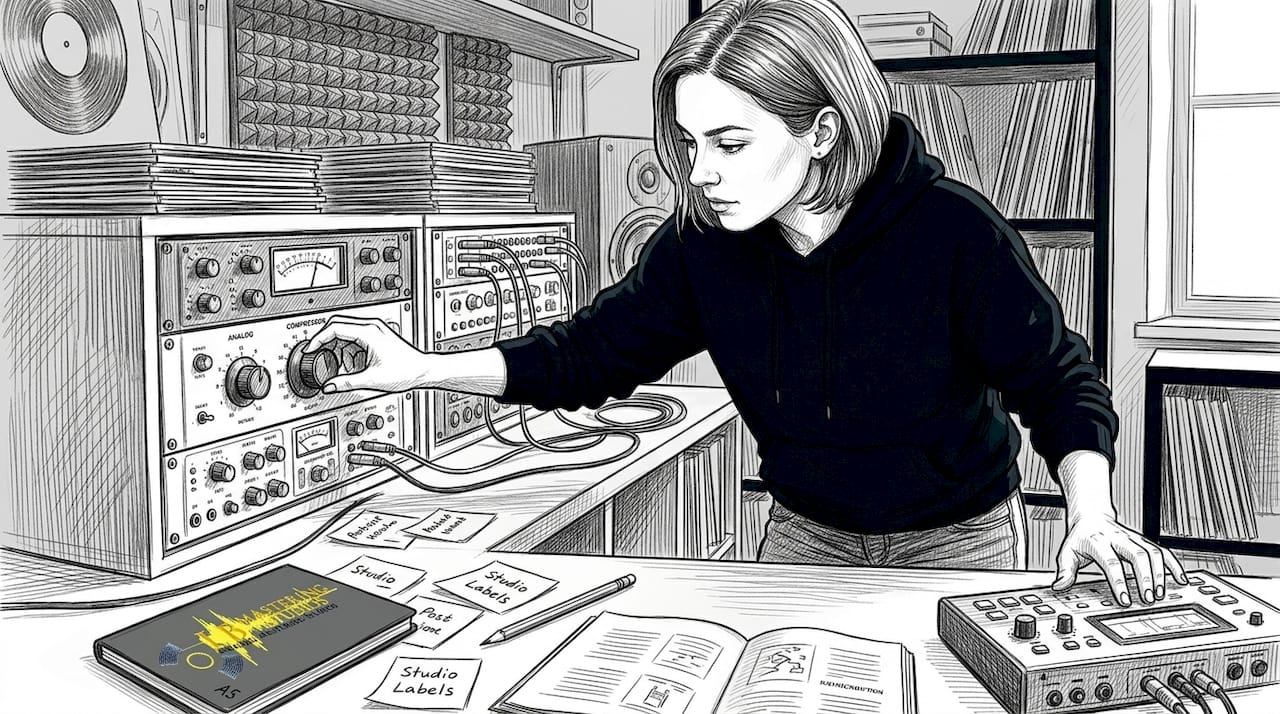
| Feature | Analog compression | Digital compression |
|---|---|---|
| Transient response | Soft, musical | Precise, surgical |
| Harmonic content | Adds subtle harmonics | Transparent |
| Recall | Manual, time-consuming | Instant, exact |
| Cost | High ($2,000 to $15,000+) | Low ($0 to $500) |
| Best use | Warmth, glue, character | Precision, consistency |
Pro Tip: When running audio through an analog compressor, start with the slowest attack and fastest release settings, then adjust by ear. This approach lets the transients breathe before the compression kicks in, preserving the natural punch of drums and guitars.
For a complete walkthrough of how these steps fit into a professional session, our sound quality mastering guide covers each stage in detail.
Workflow impact: Tactile creativity and physical commitment
Beyond sonic qualities, analog gear also shapes creative workflow and decision-making. When you sit in front of a hardware unit with a handful of knobs, you make decisions faster and commit to them more fully. Tactile workflow with analog gear promotes focused decisions, fewer parameters encourage mastery of fewer tools, and physical commitment improves recordings.
Digital audio workstations offer thousands of parameters across hundreds of plugins. That freedom can become a trap. You spend more time auditioning options than actually listening to the music. Analog gear removes that problem by design.
"Mastering one piece of hardware deeply is worth more than knowing ten plugins superficially. The limitation becomes the creative engine."
Benefits of a tactile analog workflow:
- Fewer choices mean faster, more confident decisions
- Physical knobs create a direct connection between your hands and the sound
- Committing to a setting forces you to listen critically before moving on
- Less screen time reduces ear fatigue during long sessions
Pro Tip: If you are working in a hybrid setup, treat your analog hardware as the creative centerpiece and your digital tools as the support system. Make your big tonal decisions on the hardware, then use plugins for cleanup and precision.
You can see how we apply this philosophy in practice by taking a look at our studio tour analog facility, where every piece of gear has a specific purpose in the signal chain.
Durability and authenticity: Analog's long-term value
With workflow benefits covered, let's look at analog's long-term value and market appeal. Analog gear offers longevity without software obsolescence, licensing issues, or subscriptions, and it is valued for authenticity in audiophile and vinyl markets. A well-maintained tube compressor from the 1960s still commands respect in professional studios today. No plugin can claim that kind of track record.
Why analog hardware holds its value:
- No operating system updates that break compatibility
- No subscription fees or license transfers
- Physical components can be repaired and recapped indefinitely
- Vintage units often appreciate in market value over time
- Audiophile and vinyl buyers specifically seek the analog signal path
For vinyl production in particular, the analog signal chain is not just preferred, it is often essential. The physical nature of vinyl playback rewards the harmonic richness that analog mastering provides. Our vinyl mastering authenticity guide explains exactly why this matters for your release. Before you start any mastering project, our audio mastering checklist is a free resource that helps you prepare your files correctly.
Drawbacks and digital advantages: When analog isn't ideal
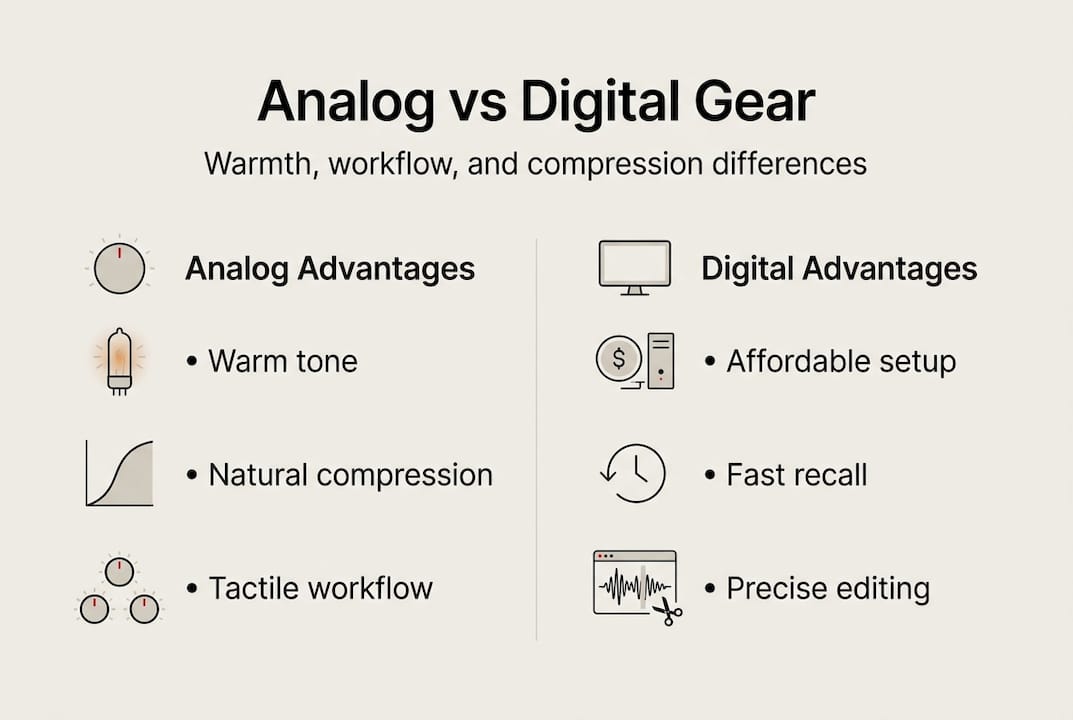
No gear is perfect. Here is where analog falls short and digital shines. High cost, maintenance, no recall, and less precision make analog less practical for indie producers working on tight budgets and fast turnarounds. A professional analog mastering chain can easily run $10,000 or more before you factor in maintenance, calibration, and studio space.
Digital tools solve real problems that analog cannot:
- Instant recall: Save every setting and return to an exact session state in seconds.
- Surgical precision: Linear phase EQ and transparent limiting are genuinely better in the digital domain.
- Affordability: A complete digital mastering toolkit costs a fraction of a single quality analog unit.
- Consistency: Digital processing produces identical results every time, which matters for batch mastering.
Analog vs. digital: Practical cost and use comparison
| Factor | Analog | Digital |
|---|---|---|
| Entry cost | $10,000+ | $200 to $500 |
| Maintenance | Regular, costly | Minimal |
| Recall | Manual notes only | Instant |
| Precision | Musical but variable | Exact |
| Best genre fit | Rock, jazz, soul, R&B | Electronic, pop, hip-hop |
It is also worth noting that advanced plugins emulate warmth effectively for many applications, and for producers focused on precision and clarity, a pure digital workflow is entirely sufficient. Our mastering checklist for artists helps you identify which approach fits your specific project before you commit.
Best uses for analog gear: Genre, workflow, and hybrid strategies
With strengths and limitations clear, here is how to apply analog gear for best results, especially in a modern, hybrid workflow. Analog excels in genres needing organic warmth such as rock, jazz, and soul, and works best when combined with digital precision in a hybrid approach that routes audio through analog hardware on key buses or final prints.
Experts note that a cumulative analog chain adds 15 to 20% enhancement to the perceived musicality of a master, and that focusing on sound rather than visual metering reduces listener bias. The hybrid workflow is widely considered optimal for modern mastering because it captures the best qualities of both worlds.
How to build a practical hybrid workflow:
- Use digital tools for editing, noise reduction, and surgical EQ corrections
- Route the stereo bus through an analog compressor or tape machine for warmth and glue
- Return the processed signal to digital for final limiting and loudness normalization
- Print the analog pass to a new file before applying any digital finishing
- Compare the analog and bypass versions critically before committing
Pro Tip: When evaluating your analog chain, listen at low volumes. Warmth and cohesion are easier to assess when your ears are not fatigued by loud playback. If the mix still sounds full and musical at low levels, the analog processing is doing its job.
We work with artists and producers from around the world through our mastering studio worldwide remote workflow, so geography is never a barrier to accessing a professional analog signal chain.
Take your mastering to the next level with expert analog gear
Understanding analog gear is one thing. Hearing what it does to your music is another experience entirely. At LB-Mastering Studios, we have spent over 44 years building and refining a hybrid analog-digital signal chain that brings genuine warmth, depth, and clarity to every master we deliver.
If you want to see exactly what hardware we use and why, browse our see analog and digital equipment page for a full breakdown of our studio's signal chain. Planning a vinyl release? Our vinyl mastering guide walks you through every step of preparing your music for the format that rewards analog processing most. And if you are just getting started, download our free audio mastering checklist to make sure your files are ready before your session begins. We offer free sample masters so you can hear the difference before you commit.
Frequently asked questions
What makes analog gear sound warmer than digital plugins?
Analog gear generates subtle harmonics and natural saturation that digital plugins attempt to emulate, but physical circuitry produces these qualities in ways that feel more organic and musical to most listeners.
Is analog mastering necessary for all music genres?
No. Analog excels in genres needing organic warmth like rock, jazz, and soul, while digital tools are the better choice for electronic music, pop, and any project where precision and transparency are the priority.
Can digital plugins fully replicate analog warmth?
Advanced plugins emulate warmth effectively for many use cases, but analog hardware's physical circuitry still produces subtle harmonic nuances that experienced listeners and engineers often find uniquely satisfying.
What's the biggest drawback to choosing analog gear?
Analog gear requires a significant upfront investment, regular maintenance, and offers no fast recall, making it less practical for indie producers compared to affordable and flexible digital alternatives.
How can hybrid workflows maximize both analog and digital tools?
Hybrid workflows combine digital precision with analog character on key buses and final prints, giving independent musicians the warmth and musicality of hardware alongside the flexibility and recall of digital tools.