
TL;DR:
- Audio restoration repair enhances damaged recordings without altering artistic intent for modern release standards.
- Combining analog warmth with digital precision ensures the best quality in restoring old or noisy recordings.
- Skilled engineers rely on both listening judgment and technical standards to evaluate restoration success.
Many musicians and labels assume that old, noisy, or damaged recordings are simply beyond saving. That assumption costs the industry countless valuable tracks every year. Audio restoration is the professional process of identifying and correcting sonic flaws in recordings, whether they come from aging tape, worn vinyl, poor room acoustics, or digital artifacts. Done right, it can transform a previously unreleasable recording into something that competes on any streaming platform or sounds stunning on a freshly pressed record. This guide walks you through what audio restoration really means, the techniques that make it work, and how to know when calling in a professional is the smartest move you can make.
Table of Contents
- Understanding audio restoration: Concepts and goals
- Essential audio restoration techniques explained
- Evaluating restoration quality: Standards and best practices
- When to invest in professional audio restoration
- Why trusting human ears beats automation in restoration
- Take your music to release-ready perfection
- Frequently asked questions
Key Takeaways
| Point | Details |
|---|---|
| Audio restoration definition | Audio restoration revives damaged or noisy recordings so they're suitable for professional release. |
| Human touch matters | Expert listening and musical sensitivity ensure a restoration sounds great, not just technically clean. |
| Standards guide quality | Restoration uses benchmarks like AES7 but ultimately relies on how music feels and translates to listeners. |
| Invest strategically | Professional restoration pays off for rare, archival, or significant projects intended for commercial release. |
Understanding audio restoration: Concepts and goals
At its core, audio restoration is the practice of repairing or improving a recording that has been damaged, degraded, or compromised in some way. Think of it as audio surgery. The goal is not to change the artistic intent of the recording, but to remove the obstacles standing between the listener and the music.
The main objectives of audio restoration include:
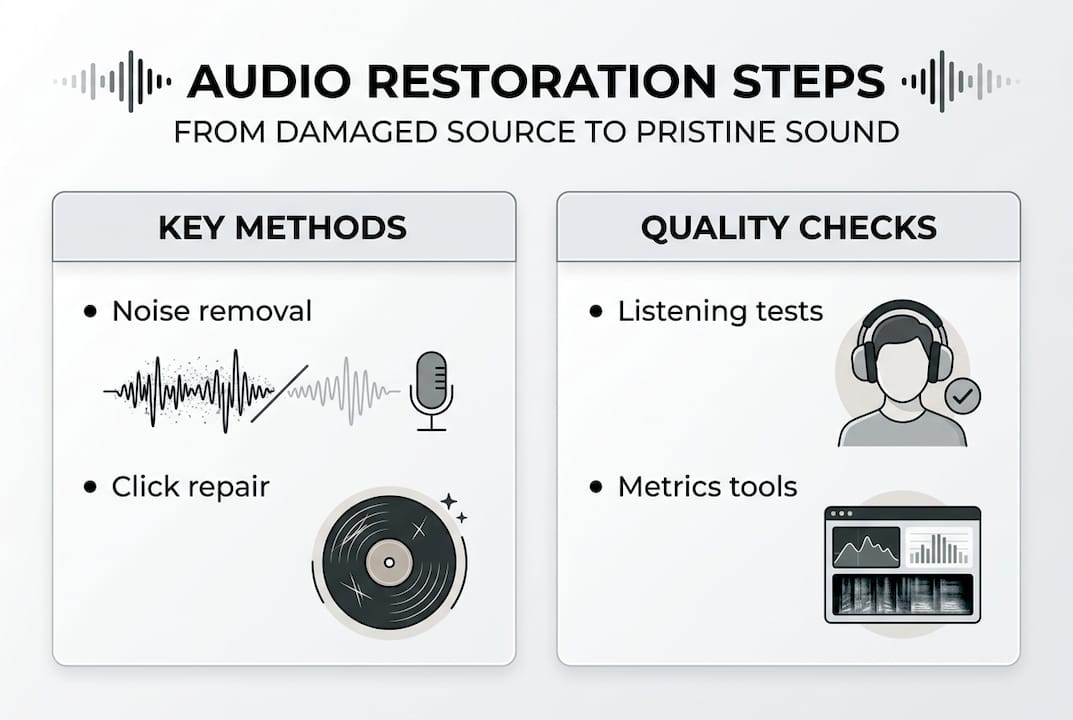
- Noise reduction: Eliminating tape hiss, room noise, and electrical interference that accumulates over time or during recording
- De-clicking and de-crackling: Removing the pops and crackles common in vinyl transfers or old tape recordings
- Hum removal: Addressing low-frequency electrical hum caused by grounding issues or aging equipment
- Spectral repair: Targeting and correcting specific frequency anomalies without affecting the surrounding audio
- Dynamic range recovery: Restoring natural loudness variation that may have been crushed or lost
Why does this matter for your releases? Because listeners notice. Whether your track lands on a streaming platform or gets pressed to vinyl, sonic flaws pull attention away from the music itself. Achieving professional sound quality means addressing both the technical and perceptual dimensions of your audio.
Here is the distinction that separates good restoration from great restoration: technical specs alone do not tell the whole story. A recording can measure well on paper and still sound wrong to a trained ear. AES standards guide preservation confirm that audio restoration prioritizes perceptual quality in professional workflows, meaning the listener's experience is the ultimate benchmark.
"The goal of audio restoration is not perfection on a meter. It is transparency to the original performance and fidelity to the listener's experience."
This is especially important for archival and catalog work. Recordings that once seemed commercially unviable, old masters buried in a label's vault, live tapes from legendary performances, rare session recordings, can be brought back to life and made relevant again. Understanding the audio mastering steps that follow restoration helps ensure the final product is ready for any format.
Essential audio restoration techniques explained
Once you understand why restoration matters, the next step is knowing how professionals actually do it. The process is methodical, and each stage targets a specific type of problem.
- Noise reduction: The first pass typically addresses broadband noise, the steady hiss or hum present throughout a recording. Spectral analysis tools identify the noise floor and allow engineers to subtract it without affecting the musical content.
- De-clicking: Individual clicks and pops are located and repaired using interpolation, a process where the software fills in the damaged sample with a calculated estimate based on surrounding audio.
- Hum removal: Electrical hum at 60 Hz and its harmonics is targeted with notch filters or adaptive algorithms that track and remove the interference while leaving the musical signal intact.
- EQ matching: When a recording has tonal imbalances caused by poor equipment or tape degradation, EQ matching tools can compare the damaged audio to a reference and correct the frequency response.
- Spectral repair: This is one of the most powerful tools available. Using a visual spectrogram, engineers can literally see and erase unwanted sounds, a cough, a door slam, a digital glitch, with surgical precision.
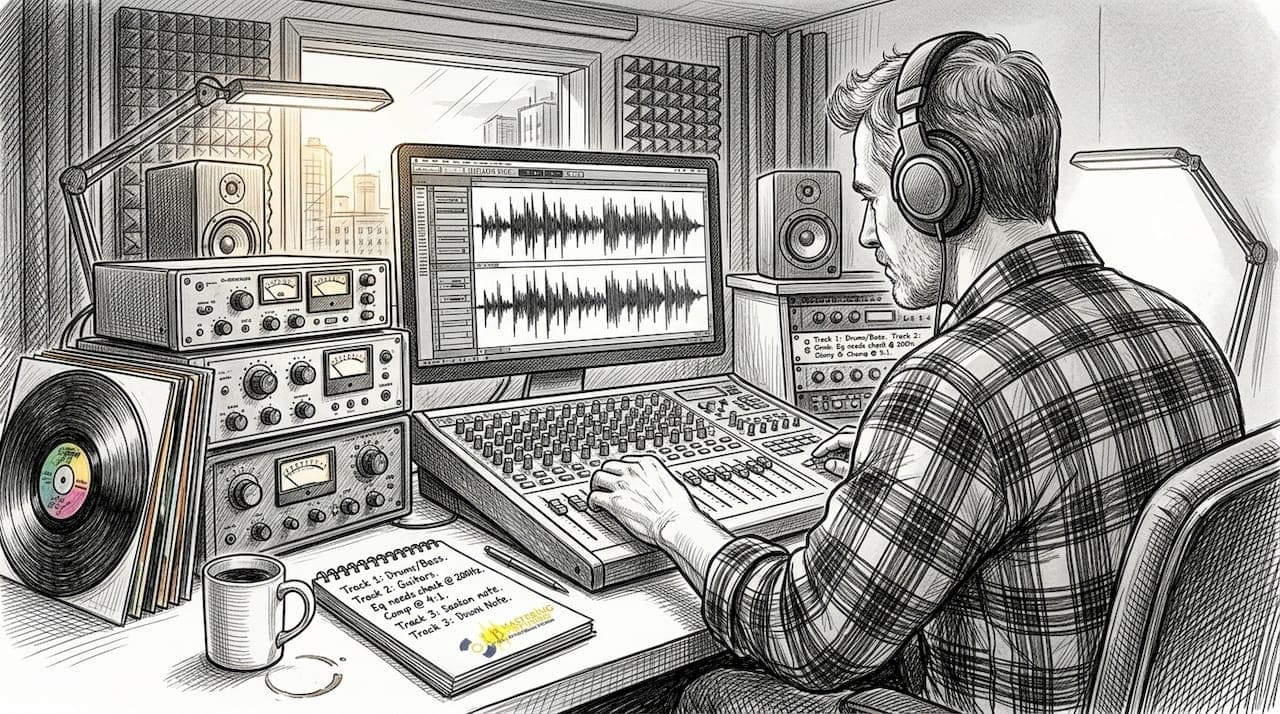
The best results come from a hybrid analog and digital workflow. Vintage outboard gear brings warmth and character to the signal, while modern software like RX by iZotope handles precision tasks that analog tools simply cannot. You can explore mastering equipment examples to understand how these tools work together.
Critically, audio restoration methods confirm that professional work often uses perceptual methods over automated benchmarks like PESQ, POLQA, and SDR. Automation is a starting point, not the finish line. A skilled engineer listens through every stage and makes judgment calls that no algorithm can replicate. Knowing when to stop processing is just as important as knowing how to start. Achieving clarity in mastering depends on restraint as much as technique.
Pro Tip: Always archive the original, unprocessed audio before beginning any restoration work. No matter how careful the process, having the raw source file protects you if any decisions need to be revisited later.
Evaluating restoration quality: Standards and best practices
With the techniques covered, the next question is: how do you actually know if the restoration worked? This is where many musicians get tripped up, because the answer is not as simple as checking a meter.
Technical metrics have their place. Tools like PESQ (Perceptual Evaluation of Speech Quality) and SDR (Signal-to-Distortion Ratio) provide objective data about how much the audio has changed. But they were designed primarily for speech, not music, and they cannot measure whether a restored track feels right.
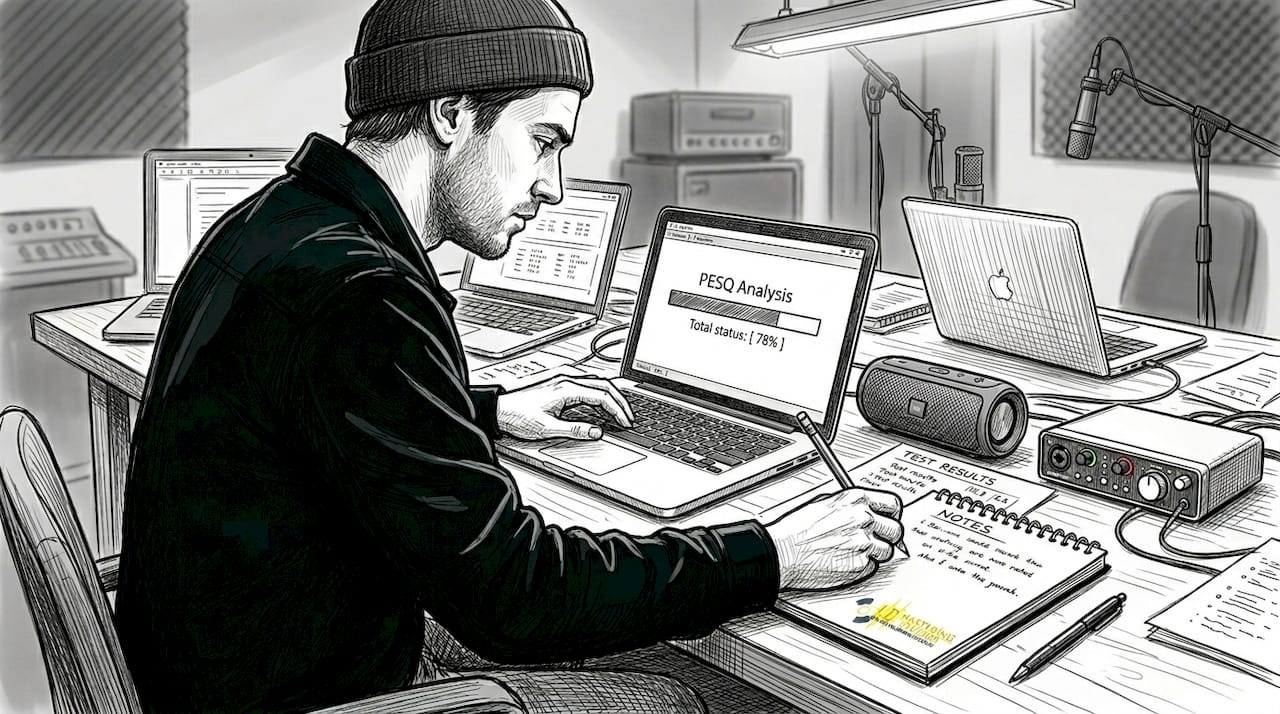
This is why AES standards guide preservation establish that AES7 and AES22 set benchmarks for handling and evaluating audio quality during restoration. AES7 covers measurement methodology, while AES22 addresses the preservation of audio recordings. Together, they provide a framework that professional engineers use alongside their own listening judgment.
Here is a comparison of the two main approaches to evaluating restoration quality:
| Evaluation method | Strengths | Limitations |
|---|---|---|
| Automated metrics (PESQ, SDR) | Fast, objective, repeatable | Cannot assess musicality or emotional impact |
| Subjective listening tests | Captures nuance, groove, and feel | Time-intensive, requires trained ears |
| Hybrid approach | Balances data with musical judgment | Requires experienced engineers |
"Numbers tell you what changed. Your ears tell you whether it was the right change."
For musicians and labels, the best practice is to test your restored audio on the systems your audience actually uses. Play it on streaming-quality earbuds, a home stereo, a car speaker, and a professional monitor. If it holds up across all of them, you are in good shape. This connects directly to achieving sound quality in mastering that translates across playback environments.
Also consider optimal loudness in mastering as part of your evaluation. A restored track should have the dynamic range and loudness profile appropriate for its intended format, whether that is a streaming platform or a vinyl pressing.
When to invest in professional audio restoration
Understanding quality is one thing. Knowing when to spend money on professional restoration is another. Not every recording needs it, but some absolutely do.
Here are the situations where professional restoration is worth every dollar:
- Old masters being reissued: If you are remastering a catalog release, restoration is the foundation. Pressing a noisy, degraded master to vinyl without restoration wastes the entire investment.
- Noisy live recordings: Live tapes often carry crowd noise, mic bleed, and electrical interference that distracts from a strong performance.
- Rare archival recordings: Unique recordings that cannot be re-recorded, a one-take session, a live performance from a legendary show, deserve the best possible treatment.
- Transfers from physical media: Ripping from vinyl or tape introduces artifacts that need professional attention before the audio is usable.
| Scenario | Restoration impact | Relative cost |
|---|---|---|
| Catalog reissue | High, directly affects sales value | One-time investment |
| Live tape release | Medium to high, improves listenability | Moderate |
| Archival preservation | Critical, prevents permanent loss | Variable |
| Noisy studio recording | Medium, improves professionalism | Low to moderate |
Audio restoration benefits are clear: restoration can revive archival or previously lost tracks for modern release standards, making them viable for streaming, CD, and vinyl formats.
Pro Tip: Treat restoration as a one-time investment for any re-issue or remaster project. The cost is recovered quickly when a cleaned-up recording reaches new audiences on streaming platforms or as a premium vinyl release.
Our vinyl mastering services are designed to work hand in hand with restoration, ensuring your audio is fully prepared for the demands of the cutting lathe. You can review our restoration rates to plan your project budget, and download our audio mastering checklist to make sure nothing gets missed before you submit your files.
Why trusting human ears beats automation in restoration
After 44 years of working with recordings at every stage of decay and damage, we have a clear opinion: no software, no matter how advanced, replaces the judgment of an experienced engineer who loves music.
Automated tools are extraordinary at finding noise floors and flagging clicks. But they cannot hear the groove of a performance. They cannot tell the difference between a distortion artifact and an intentional guitar crunch. They do not understand that a slight room ambience might be part of what makes a recording special, not a flaw to be removed.
The engineers who do the best restoration work are musicians first. They approach every track with a question: what was this recording trying to say, and how do we make sure the listener hears it? That question cannot be answered by a meter or an algorithm.
When you choose a restoration specialist, look for someone who combines technical tools with genuine musical sensitivity. Ask them how they decide when to stop processing. Their answer will tell you everything. For context on how this philosophy applies to modern releases, see how music mastering for 2026 playback continues to prioritize the listener's experience above all else.
Take your music to release-ready perfection
If your recordings have been sitting in a drawer because they did not sound good enough, or if you have a catalog that deserves a second life, we are ready to help. At LB-Mastering Studios, we combine over 44 years of Grammy-winning expertise with a hybrid analog and digital signal chain built for exactly this kind of work.
Our team handles audio restoration alongside full mastering for every format. Whether you need vinyl mastering services, CD mastering services, or want to explore our analog and digital mastering equipment, we bring the same attention to musical detail to every project. Contact us for a free sample master and hear the difference for yourself.
Frequently asked questions
What types of audio can be restored?
Old tapes, vinyl records, digital files, and noisy live recordings can all be improved with restoration techniques, since audio restoration adapts to the media type and damage involved.
Is audio restoration suitable for modern digital releases?
Yes, restoration ensures even older or flawed recordings meet today's digital and vinyl release standards, because restoration brings archival material up to professional quality benchmarks.
Can restoration remove all noise and defects?
Most noise and imperfections can be dramatically reduced, but keeping audio natural is always the priority, as professionals prioritize sound quality over complete removal of all artifacts.
How do professionals judge the quality of restoration?
Engineers use both technical measurements and careful listening, following standards like AES7 and AES22, because professionals blend standards with listener experience to assess quality.