
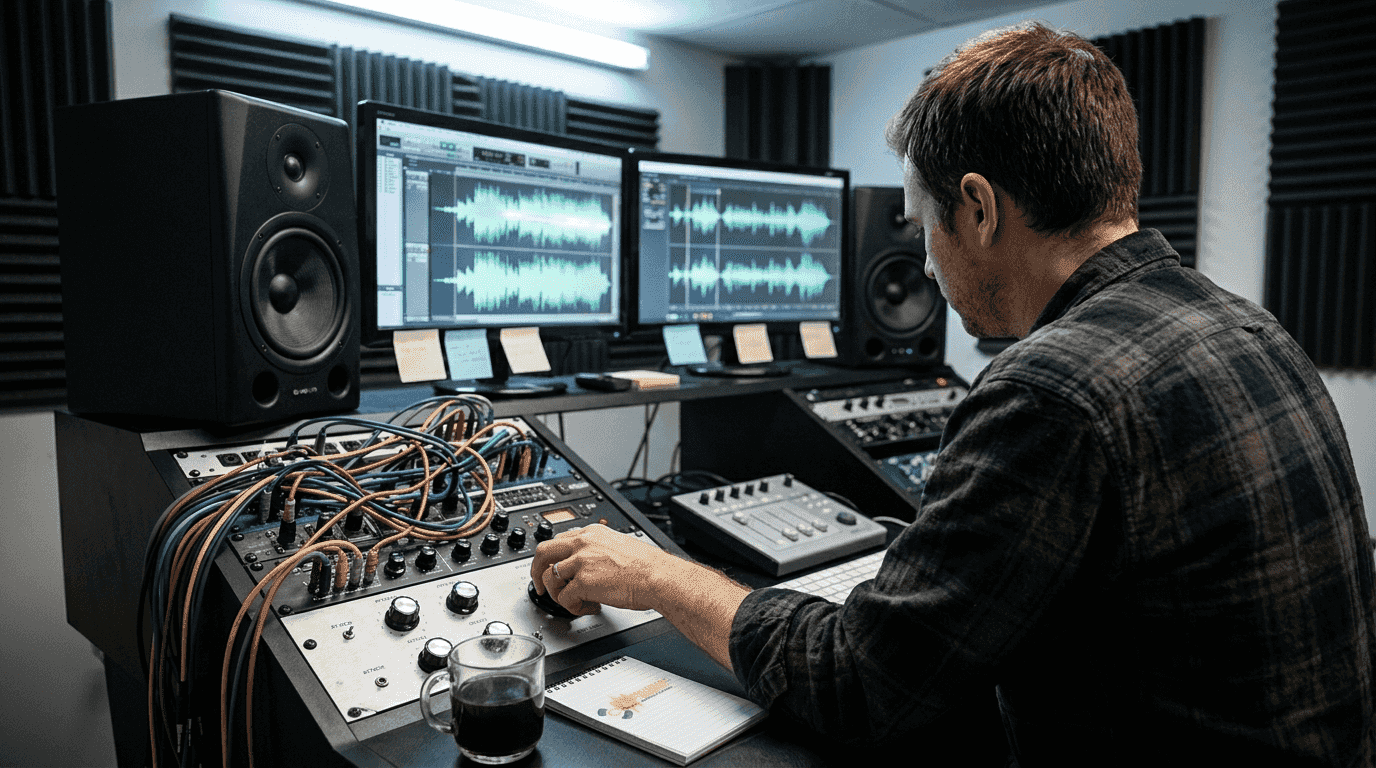
Getting your master loud enough to compete while preserving the punch and dynamics that make music exciting remains one of the toughest challenges in modern production. Streaming platforms apply loudness normalization to adjust playback volume to consistent levels, which means overly compressed masters often sound lifeless compared to dynamically balanced ones. This guide walks you through understanding loudness measurement, setting smart targets, applying effective mastering techniques, and verifying your results to deliver masters that translate powerfully across Spotify, Apple Music, YouTube, and beyond.
Table of Contents
- Understanding Loudness Measurement And Streaming Normalization
- Setting Loudness And Dynamic Range Targets For Different Music Formats
- Mastering Techniques And Workflow To Achieve Optimal Loudness
- Verifying Loudness And Troubleshooting Common Mastering Mistakes
- Achieve Professional Mastering Loudness With LB-Mastering
- FAQ
Key takeaways
| Point | Details |
|---|---|
| Understanding LUFS and dynamic range is essential | LUFS measures perceived loudness matching human hearing, while dynamic range creates impact and emotion in your master. |
| Streaming normalization targets around -14 LUFS integrated | Major platforms like Spotify, YouTube, and Amazon normalize to -14 LUFS, while Apple Music targets -16 LUFS. |
| Balancing impact and contrast beats maximal loudness | Masters with greater dynamic range sound more powerful at the same playback level. |
| Mastering chain order and true peak control affect quality | Processor sequence creates cumulative sonic effects, and controlling true peaks prevents distortion on streaming codecs. |
| Check masters on multiple platforms to ensure consistency | LUFS alone doesn't guarantee perceived loudness due to psychoacoustic factors and platform-specific processing. |
Understanding loudness measurement and streaming normalization
LUFS measures how your track is actually perceived by the human ear over time, not just raw peak levels. Unlike traditional RMS measurements that average signal power or peak meters that show maximum sample values, LUFS uses frequency weighting to match how our ears respond to different frequencies. This makes LUFS the industry standard for modern mastering decisions.
Streaming services implement loudness normalization to create consistent listening experiences across diverse catalogs. Platforms adjust playback volume to specific LUFS targets, typically around -14 LUFS for integrated loudness. When you master significantly louder than these targets, the platform simply turns your track down, wasting the dynamic range you sacrificed to achieve that extra volume.
Typical loudness targets vary slightly by platform:
- Spotify normalizes to -14 LUFS
- Apple Music targets -16 LUFS
- YouTube uses -14 LUFS
- Amazon Music applies -14 LUFS
- TikTok and Reels run hotter at -9 to -12 LUFS
True peak detection matters just as much as integrated loudness. Digital-to-analog conversion and lossy encoding can create inter-sample peaks that exceed your DAW's sample peaks, causing distortion even if your meter shows headroom. Aim for -1 dBTP (true peak) maximum to ensure clean playback across all platforms and devices.
For deeper insights into mastering fundamentals and industry techniques, explore the mastering tips blog covering everything from equipment choices to workflow optimization. Understanding these measurement standards positions you to make informed decisions throughout the mastering process.
Setting loudness and dynamic range targets for different music formats
Choosing appropriate loudness targets depends on your distribution strategy and musical genre. Streaming platforms normalize to different levels, with Spotify, YouTube, and Amazon at -14 LUFS and Apple Music at -16 LUFS. Social media platforms like TikTok favor slightly louder masters between -9 and -12 LUFS to match user-generated content.
Louder doesn't automatically mean better. Dynamic range creates perceived power and emotional impact that pure loudness cannot replicate. A master hitting -14 LUFS with 10 dB of dynamic range will sound more exciting and punchy than a -14 LUFS master squeezed down to 5 dB of range, even at identical playback volumes.
Different sections within your track benefit from varying dynamic approaches. Optimal dynamic range targets create contrast and maintain listener engagement:
| Section | Dynamic Range Target | Purpose |
|---|---|---|
| Intro/Outro | 10-14 dB | Creates space and draws listeners in |
| Verses | 8-12 dB | Maintains energy while allowing clarity |
| Choruses/Drops | 6-10 dB | Delivers maximum impact at climactic moments |
| Bridges | 9-13 dB | Provides contrast before final chorus |
Genre considerations also influence your targets. Electronic dance music and hip-hop often sit at -8 to -10 LUFS with tighter dynamic ranges of 6-8 dB. Singer-songwriter and jazz recordings benefit from -12 to -14 LUFS with 10-14 dB ranges, preserving natural dynamics and instrumental detail.
Pro Tip: Start your mix with proper gain staging and dynamic balance rather than relying on mastering to fix loudness issues. A well-balanced mix reaching -18 to -14 LUFS before mastering gives you headroom to add polish and controlled loudness without destroying dynamics. Download the free mastering checklist to ensure you're optimizing every stage of your workflow.
Mastering techniques and workflow to achieve optimal loudness
Processor order in your mastering chain creates cumulative effects on your final sound. A typical signal flow moves from corrective processing to enhancement to level control. Each stage builds on the previous one, so mistakes early in the chain compound through subsequent processors.
An effective mastering chain sequence typically follows this order:
- High-pass filtering to remove unnecessary subsonic energy below 20-30 Hz
- Corrective EQ addressing mix problems or tonal imbalances
- Multiband or broadband compression for dynamic control and glue
- Enhancement EQ adding character, air, or warmth
- Stereo imaging and width processing if needed
- Final limiting to achieve target loudness and control peaks
Compression and limiting serve different purposes in achieving loudness. Gentle multiband compression (2-4 dB gain reduction) tames frequency-specific dynamics and adds cohesion without obvious pumping. Save aggressive gain reduction for your final limiter, where you'll achieve the remaining loudness needed to hit your target.
Modern mastering trends favor movement and contrast over constant maximum volume. Listen to top streaming tracks in your genre and notice how they breathe, allowing quieter moments to enhance louder sections. This approach creates excitement and maintains listenability over repeated plays.
Avoid brick-wall limiting that eliminates all transients and dynamic variation. When your limiter constantly slams with 10+ dB of gain reduction, you're likely sacrificing punch for numbers on a meter. Instead, aim for 3-6 dB of limiting while using earlier compression to control dynamics more musically. Mastering too loud, like -6 LUFS, forces streaming services to turn you down, resulting in lifeless playback.
Tonal balance matters as much as loudness for competitive masters. Reference your work against professionally mastered tracks in similar genres using matched loudness. Focus on frequency distribution across lows, mids, and highs rather than trying to match peak levels. The mastering equipment you use influences tonal character, with analog gear adding harmonic richness and digital tools providing surgical precision.
Pro Tip: Check your true peak levels throughout mastering, not just at the final limiter. Inter-sample peaks can develop at any processing stage, especially after EQ boosts or saturation. Keep true peaks below -1 dBTP to prevent distortion when streaming codecs convert your master.
Verifying loudness and troubleshooting common mastering mistakes
Accurate loudness verification requires proper metering tools that display integrated LUFS, short-term LUFS, and true peak values simultaneously. Integrated LUFS measures average loudness across your entire track, while short-term readings show moment-to-moment variations. Both metrics inform whether you've achieved your target while maintaining appropriate dynamics.
Common mastering mistakes that compromise loudness quality include:
- Over-limiting that crushes transients and removes punch
- Ignoring platform-specific loudness differences and mastering only for one service
- Matching LUFS numbers without considering psychoacoustic factors like spectral balance
- Neglecting true peak control, leading to codec distortion
- Making loudness decisions on inaccurate monitoring or in untreated rooms
LUFS normalization doesn't guarantee consistent perceived loudness across all platforms due to psychoacoustic complexity. Tracks with similar integrated LUFS can sound dramatically different in perceived volume depending on frequency content, crest factor, and dynamic variation. This reality means you must verify your masters on actual streaming platforms, not just trust meter readings.
Apple Music's Sound Check treats files added to playlists differently than album playback, creating inconsistent loudness perception. Spotify's algorithm may also apply different normalization depending on user settings and device types. These platform quirks make real-world testing essential before finalizing your master.
A verification checklist ensures your master meets both technical and artistic standards:
| Check | Target | Tool |
|---|---|---|
| Integrated LUFS | -14 LUFS (streaming), -9 to -12 LUFS (social) | Loudness meter |
| True Peak | -1 dBTP maximum | True peak meter |
| Dynamic Range | 6-14 dB depending on genre and section | DR meter or manual calculation |
| Frequency Balance | Matches reference tracks at matched volume | Spectrum analyzer + ears |
| Mono Compatibility | No phase cancellation or thin sound | Mono switch on monitoring |
Balanced masters around -14 LUFS with -1 dBTP work safely across all platforms, though genre and creative intent may push you slightly louder or softer. When troubleshooting perceived loudness issues, compare your master to references at matched LUFS rather than matched peaks. This reveals tonal or dynamic differences causing the volume perception gap.
Iterative adjustments refine your master over multiple listening sessions. Export test versions, upload them to streaming platforms or distribution services with preview features, and evaluate how normalization affects your work. Make notes about sections that lose energy or moments where limiting becomes obvious, then return to your mastering session for targeted improvements.
For ongoing mastering education and technique refinement, the mastering blog tips section offers detailed articles covering everything from vintage equipment applications to cutting-edge digital workflows.
Achieve professional mastering loudness with LB-Mastering
Achieving optimal loudness while preserving dynamics and tonal balance requires both technical knowledge and experienced ears trained on thousands of masters.
LB-Mastering combines 44 years of Grammy-winning expertise with state-of-the-art analog and digital equipment to deliver masters optimized for 2026 streaming standards. Whether you need stereo mastering, stem mastering, or vinyl preparation, the hybrid signal chain ensures your music sounds powerful and balanced across all formats. Access the free audio mastering checklist to improve your pre-mastering workflow, explore the mastering equipment that shapes your sound, or connect with the online mastering studio serving artists worldwide with personalized service and flexible remote workflows.
FAQ
What is the ideal LUFS target for streaming platforms?
Most streaming services normalize to -14 LUFS integrated, including Spotify, YouTube, and Amazon Music. Apple Music normalizes slightly lower at -16 LUFS. Mastering between -14 and -16 LUFS ensures your track plays at full volume without normalization penalties.
Why is dynamic range important even with loudness normalization?
Dynamic range enhances perceived loudness and creates emotional impact through contrast between quiet and loud moments. Normalization sets playback volume but cannot restore dynamics lost to over-compression. Masters with 8-12 dB of range sound more powerful and engaging than squashed 4-6 dB masters at identical LUFS levels.
How can I avoid a squashed sound when mastering loud?
Avoid excessive limiting beyond 6 dB of gain reduction and maintain dynamic variation between song sections. Mastering at very loud levels like -6 LUFS forces streaming services to reduce volume, producing lifeless playback. Target -14 LUFS with compression earlier in your chain rather than relying solely on limiting for loudness.
Should I master differently for vinyl versus streaming?
Vinyl mastering requires specific considerations like bass management, limiting high-frequency energy, and controlling dynamic range to prevent groove spacing issues. Streaming masters can be more dynamic and use the full frequency spectrum. Creating separate masters optimized for each format ensures the best playback quality on physical media and digital platforms.
What metering plugins accurately measure LUFS and true peak?
Professional options include iZotope Insight, Waves WLM Plus, and Nugen VisLM for comprehensive loudness analysis. Free alternatives like Youlean Loudness Meter provide accurate LUFS and true peak measurement suitable for streaming preparation. Ensure your chosen meter displays integrated LUFS, short-term values, and true peak simultaneously for complete loudness monitoring.