
TL;DR:
- Human mastering outperforms AI tools in listener preference, sound coherence, and musicality.
- Professional mastering ensures format-specific adjustments essential for vinyl, CD, and streaming releases.
- Investing in expert mastering enhances your music's impact, reach, and career opportunities.
You might assume that faster and cheaper is better when it comes to finishing your tracks. But the evidence tells a different story. In a 472-person blind test, human-mastered recordings scored 6.4/10 and 6.1/10, while the best AI tools topped out at just 5.9/10. Listeners consistently chose human masters for their natural sound, detail, and overall coherence, even when those versions were quieter. That result alone should make any independent artist stop and think before routing their final mix through an automated plugin or budget tool. This article explains exactly what professional mastering delivers, how it compares to DIY and AI options, and why it matters for every format you release on.
Table of Contents
- What does mastering actually do?
- Human vs. automated mastering: What does the evidence show?
- Why format expertise matters: Vinyl, CD, and streaming
- How professional mastering boosts your music's impact and reach
- Why pro mastering is still underrated in the DIY age
- Looking for the real mastering difference?
- Frequently asked questions
Key Takeaways
| Point | Details |
|---|---|
| Human mastering wins | Studies show listeners consistently prefer human-mastered tracks for quality and vibe. |
| Format expertise critical | Professional engineers tailor mastering for vinyl, CD, and streaming so your release sounds best everywhere. |
| Competitive edge matters | Pro mastering increases chances for playlist placements, sales, and positive listener reactions. |
| AI is not enough | While quick and cheap, AI tools miss the musical depth and detail crucial for released music. |
What does mastering actually do?
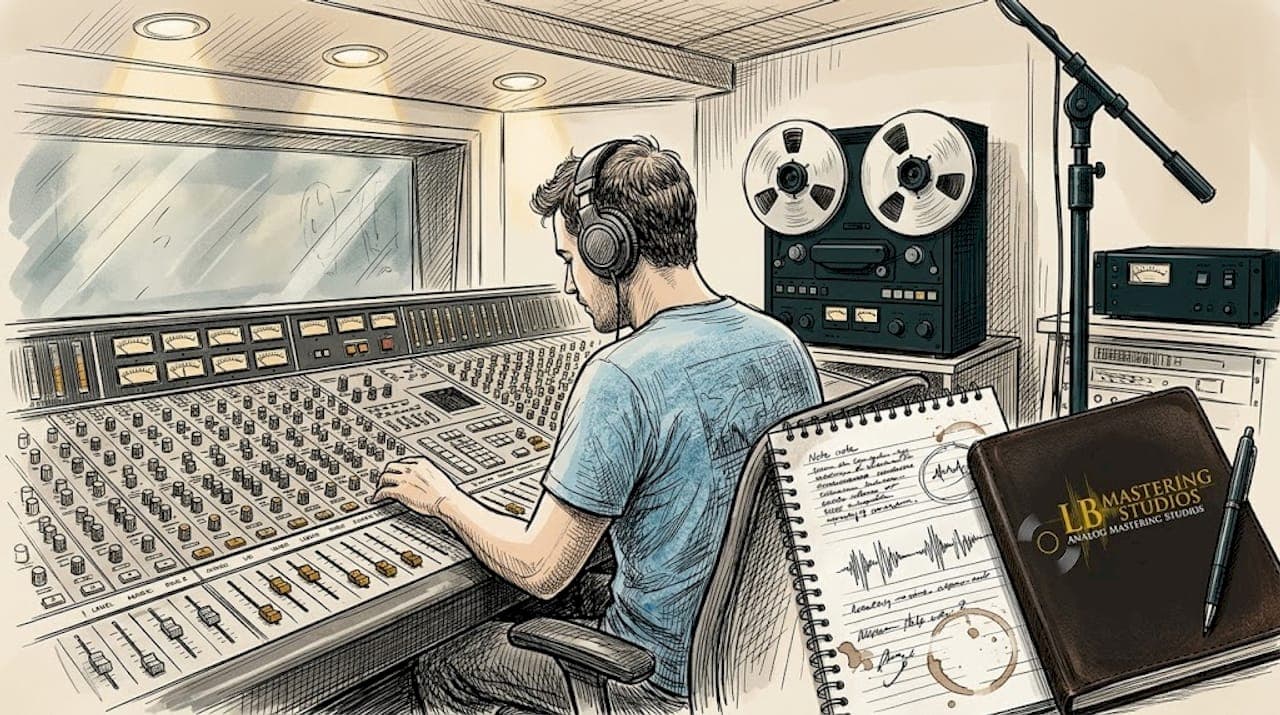
Mastering is the final, critical stage of audio post-production. It takes your finished mix and prepares it for the world, whether that means streaming platforms, vinyl pressing, CD duplication, or digital download stores. Think of it as the last quality check and sonic polish before your music reaches listeners. It is not just about making your track louder. It is about making every element of your sound translate correctly across every playback system, from phone speakers to club sound systems to audiophile headphones.
A skilled mastering engineer listens to your mix with fresh, trained ears and makes a series of targeted adjustments. These adjustments are highly intentional and informed by years of experience, not guesswork. Here is what professional mastering typically addresses:
- Equalization (EQ): Balancing frequency content so your track sounds full and clear without harshness or muddiness.
- Dynamics processing: Using compression and limiting to control the dynamic range, adding perceived loudness and consistency.
- Stereo imaging: Widening or focusing the stereo field so the mix sounds spacious but well-centered and mono-compatible.
- Noise removal: Eliminating unwanted clicks, hum, or background noise that survived the mix stage.
- True peak limiting: Preventing clipping and distortion on streaming platforms that use lossy encoding.
- Sequencing and spacing: Arranging tracks for an album or EP so the listening experience flows naturally from start to finish.
Reading about these adjustments in a sound quality mastering guide gives you a sense of how precise this process actually is. It is not a single button press. Each adjustment requires a skilled engineer to listen critically, make a change, and evaluate how it affects the entire track, not just one frequency band or moment.
Human-mastered tracks score higher on listener preference tests because professional engineers bring musicality and context to their decisions. They understand genre conventions, they know how a track is meant to feel, and they make technical choices that serve the music rather than just hitting a loudness target. Achieving clarity in mastering requires both technical skill and an artistic ear that no algorithm has fully replicated yet.
Pro Tip: Always send your mastering engineer a reference track in the same genre and on a similar label. This gives them a sonic target and helps align your expectations before the session even begins.
Human vs. automated mastering: What does the evidence show?
Understanding what mastering does sets the stage for comparing how different approaches deliver results. The debate between human mastering engineers and AI or DIY tools has grown louder as software options have multiplied. Platforms like LANDR, eMastered, and various DAW-integrated tools promise fast, affordable results. For some situations, they deliver something usable. But for competitive releases, the data consistently points in one direction.
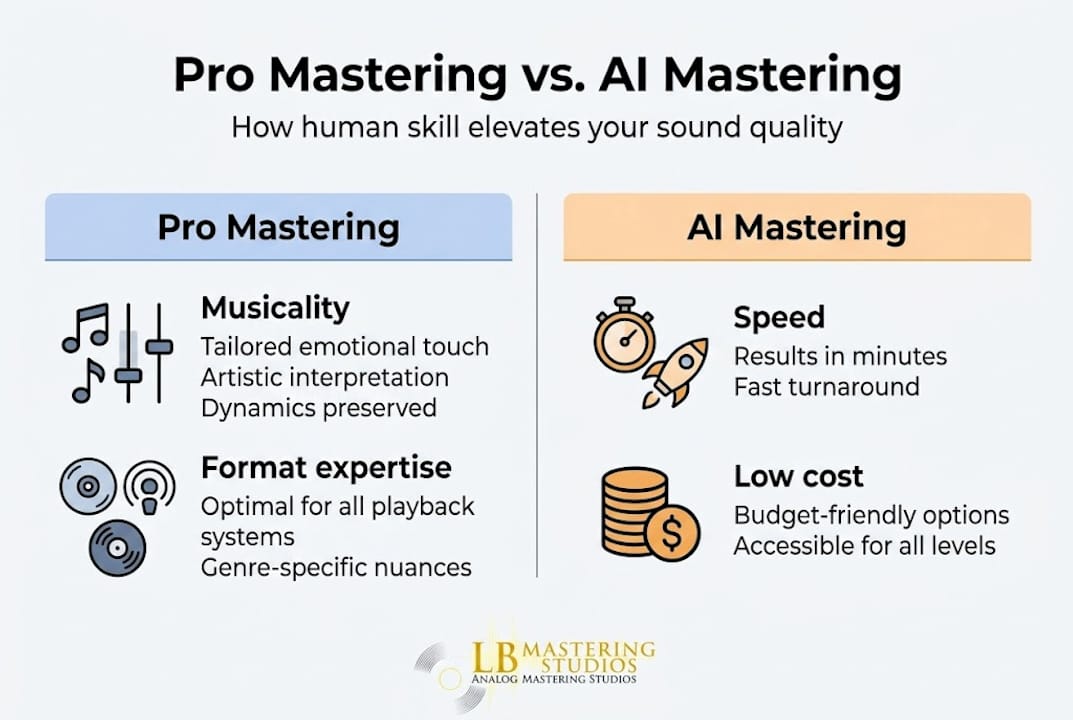
In a 472-person blind test, human masters scored highest at 6.4/10 and 6.1/10, while AI tools reached a maximum of just 5.9/10. Listeners cited coherence, detail, and natural sound as the reasons they preferred the human masters. Importantly, they favored human results even when those tracks were slightly quieter, which challenges the widespread assumption that loudness alone drives listener preference.
"Listeners preferred human mastering for coherence, detail, and natural sound, even at lower loudness levels, demonstrating that musicality and feel matter more than raw volume."
Here is a direct comparison of how these approaches perform across key criteria:
| Criteria | Professional mastering | AI/DIY mastering |
|---|---|---|
| Listener preference score | 6.4/10 (blind test) | Max 5.9/10 (blind test) |
| Musicality and feel | High, genre-informed | Moderate, algorithm-based |
| Format-specific adjustments | Yes (vinyl, CD, streaming) | Rarely or never |
| Noise removal and restoration | Yes | Limited |
| Personalized communication | Yes, direct with engineer | None |
| Revision process | Collaborative | Automated re-run |
The practical boundary matters here. AI and DIY mastering is arguably acceptable for demos, voice memos, or quick social media previews where the stakes are low. But for a release you intend to submit to playlists, pitch to blogs, press to vinyl, or sell commercially, the gap in quality becomes very real. Industry professionals who have studied this confirm that human mastering vs AI shows a clear advantage when musicality and competitive translation are required.
Using our mastering checklist for artists before you submit files will also help you get the best possible result from any engineer, and it sharpens your own ears in the process. Preparation matters as much as the mastering session itself.
Why format expertise matters: Vinyl, CD, and streaming
Beyond quality, how does pro mastering ensure each version fits its final format? This is where many independent artists run into problems, often without realizing it until they have already paid for pressing or received listener complaints. A master that sounds great on Spotify can be a disaster on vinyl. A CD master that hits modern streaming loudness standards may lose dynamic range that listeners expect. Each format has its own set of technical and physical requirements, and ignoring them creates audible problems that reflect poorly on your release.
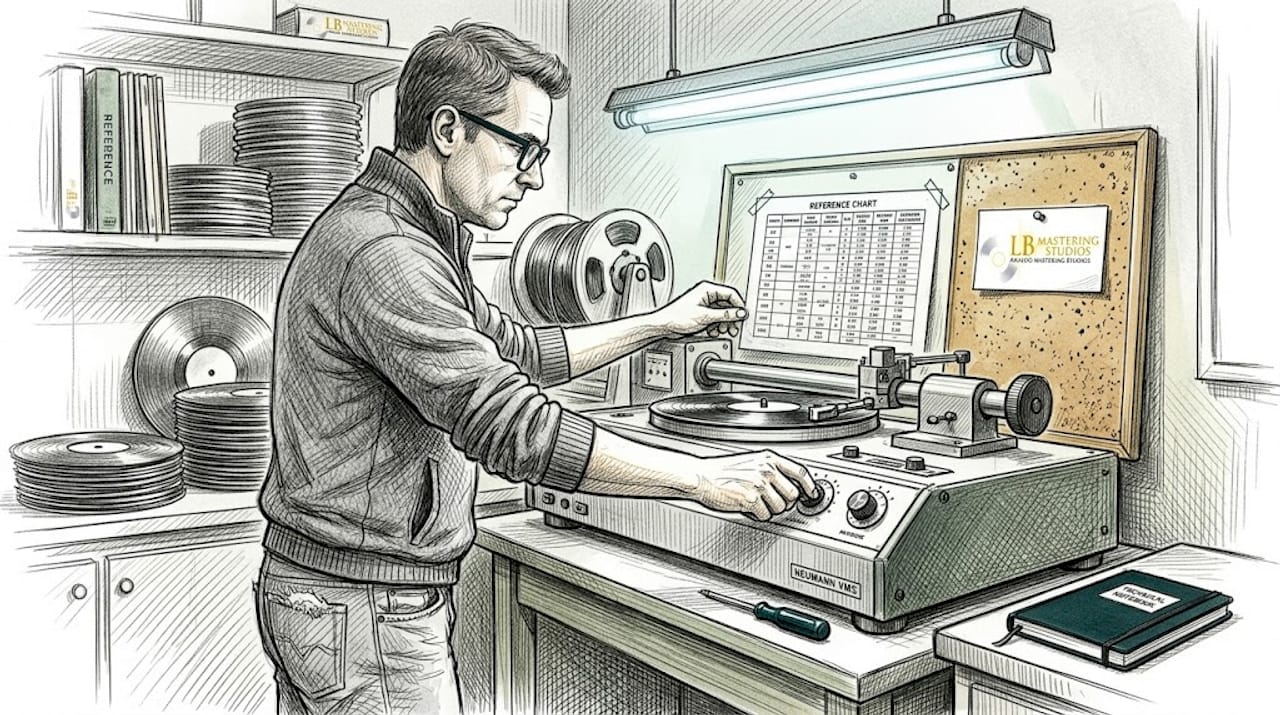
Vinyl mastering requires a specific set of adjustments that no streaming-optimized master can skip. These include applying RIAA equalization, summing bass frequencies below 150 to 200 Hz to mono to prevent the cutting stylus from jumping out of the groove, reducing extreme sub-bass content, and widening the dynamic range since vinyl cannot handle the heavy limiting used in streaming masters. Groove optimization is a separate layer of expertise that requires the engineer to consider playback physics alongside sound quality.
Here is how the three main formats differ in their core mastering requirements:
| Format | Loudness target | Bass handling | Dynamic range | Key technical concern |
|---|---|---|---|---|
| Streaming (Spotify, Apple) | Around -14 LUFS | Full stereo acceptable | Moderate to wide | True peak limiting, loudness normalization |
| CD | Around -9 to -12 LUFS | Full stereo acceptable | Moderate | DDP file creation, ISRC coding, PQ markers |
| Vinyl | Wider dynamics preferred | Mono below 150 to 200 Hz | Wide, natural | RIAA EQ, groove optimization, sibilance control |
Key technical moves that only an experienced engineer handles correctly include:
- RIAA EQ: The standard equalization curve applied during vinyl mastering and playback that no automated tool fully implements with physical accuracy.
- Mono bass summing: Preventing groove misalignment on vinyl by centering low frequencies below a defined threshold.
- Sibilance control: Using de-essing and dynamic EQ to tame harsh high frequencies that can cause distortion on vinyl playback.
- DDP file creation: Producing the Disc Description Protocol image required for professional CD manufacturing.
Our detailed vinyl mastering guide walks through each of these steps in full, and our team has prepared vinyl masters for releases across genres including jazz, hip-hop, rock, and classical. The CD mastering process is equally specific, involving file formats, metadata, and quality control steps that go well beyond exporting a WAV file.
Format mistakes do not just affect sound quality. They can result in a pressing plant rejecting your files, additional costs for re-cutting lacquers, or worst of all, releasing a product that sounds noticeably inferior to what you intended. Getting format-specific mastering right the first time protects your release and your reputation.
How professional mastering boosts your music's impact and reach
Armed with format-specific knowledge, let us look at how professional mastering directly strengthens your release's impact in the real world. The sonic difference is one part of the story. The career and marketing implications are just as significant, and they compound over time as you build your discography and audience.
Here are five tangible ways professional mastering strengthens your release:
-
It creates a powerful first impression. Playlist curators, music supervisors, blog editors, and label A&R representatives make snap judgments. A track that sounds polished and competitive signals that you are serious about your craft. A flat, harsh, or inconsistent master sends the opposite message before a single note of melody registers.
-
It improves playlist and editorial placement. Streaming platforms use loudness normalization, which means overly compressed tracks sound no louder than their quieter competitors, but they do sound worse dynamically. A professional master hits the right loudness target while preserving dynamics that make a track feel exciting and alive.
-
It strengthens your entire discography. When multiple releases are mastered by the same skilled engineer, your catalog develops a consistent sonic identity. That consistency builds listener trust and recognition, which directly supports streaming saves, follows, and long-term audience growth.
-
It supports your marketing and PR efforts. When you pitch your music to blogs, radio programs, or sync licensing opportunities, your material competes with tracks from major labels and experienced indie artists. Professional mastering closes that gap and removes a common reason for rejection.
-
It positions you for physical format sales. Vinyl and CD releases command higher price points and create tangible merchandise that fans value. But only if the audio quality justifies the format. Poor mastering wastes the opportunity entirely.
Professionals deliver superior musicality and translation for releases where competitiveness matters, while AI tools remain better suited for demos and social media content where speed and cost take priority. Understanding this boundary helps you allocate your budget where it creates the most impact.
The connection between mastering and audience growth is more direct than most artists recognize. If you want to grow your audience fast, your music needs to sound good enough to earn shares, saves, and repeat listens. Professional mastering contributes directly to those outcomes by removing the sonic barriers between your music and the listener.
Pro Tip: Ask your mastering engineer for two versions of your master: one optimized for streaming with appropriate loudness normalization targets, and one at a wider dynamic range for live play, radio, and physical formats. The difference in how they translate across contexts is immediately noticeable.
Also, using our pro mastering steps as a pre-session guide helps you send cleaner, better-prepared files, which always translates to a better final master.
Why pro mastering is still underrated in the DIY age
Here is what most musicians still miss about mastering, even after reading all the evidence. The DIY music production movement has done something remarkable for creativity and accessibility. But it has also created a blind spot. When artists can record, mix, and release entirely on their own, mastering becomes the step they are most tempted to shortcut, because it seems like polish rather than substance.
The truth is that mastering is where your music either becomes competitive or stays in the tier of "home recordings." Not because of snobbery, but because of physics, perception, and the real listening habits of real audiences. We have worked with thousands of tracks over more than 44 years, and the most common thing we hear from artists after their first professional master is, "I did not realize how much I was leaving on the table."
AI tools encourage this shortcut because they are fast and inexpensive and produce something that sounds fine at a casual listen. But fine does not get featured. Fine does not get synced. Fine does not build a career. You can hear the difference in our LB-Mastering discography across genres and release types. The final 5% of sonic quality, the part that mastering contributes, is often the difference between a track that connects and one that gets scrolled past.
Invest in that final 5%. It is the step your listeners will feel even if they cannot name it.
Looking for the real mastering difference?
If this article has clarified what professional mastering actually delivers, the next step is hearing it on your own music. At LB-Mastering Studios, we offer a free sample master so you can experience the difference before committing. Our team brings over 44 years of Grammy-winning expertise and a hybrid analog-digital signal chain to every project we touch.
Whether you are preparing a streaming single, a vinyl pressing, or a full album release, our mastering services are built around your specific format and goals. If vinyl is your target, our specialized vinyl mastering process handles every technical requirement from RIAA EQ to groove optimization. Before you submit your files, download our free audio mastering checklist and make sure your mix is ready to give your master the best possible foundation. Let us help you make your next release sound exactly as good as it deserves to.
Frequently asked questions
Is professional mastering worth the cost for indie artists?
Yes. Studies show that listeners prefer human-mastered tracks for their detail, coherence, and natural sound, which translates directly to better engagement, playlist placement, and listener retention for your releases.
Can I use the same master for vinyl, CD, and streaming?
No. Each format requires unique technical adjustments, and vinyl in particular demands specific EQ curves, mono bass handling, and groove optimization that a streaming-optimized master simply cannot provide without risking distortion or pressing rejections.
When might AI or DIY mastering be enough?
AI and DIY mastering can work acceptably for demos, rough mixes, or short-form social media content, but pros deliver superior musicality and competitive translation for any release where playlist placement, press coverage, or physical sales are the goal.
How does professional mastering improve chances for playlist or radio features?
Professional mastering improves coherence, dynamic feel, and loudness targeting, all qualities that human mastering improves for curators and listeners who decide whether a track earns a feature or gets passed over.