
TL;DR:
- A mastering chain is a specific sequence of audio processors tailored to enhance final mixes for various formats.
- Format-specific adjustments are essential, with streaming, CD, and vinyl each requiring unique mastering strategies.
- Over-processing, incorrect processor order, and reliance on templates can compromise sound quality; subtlety and context are key.
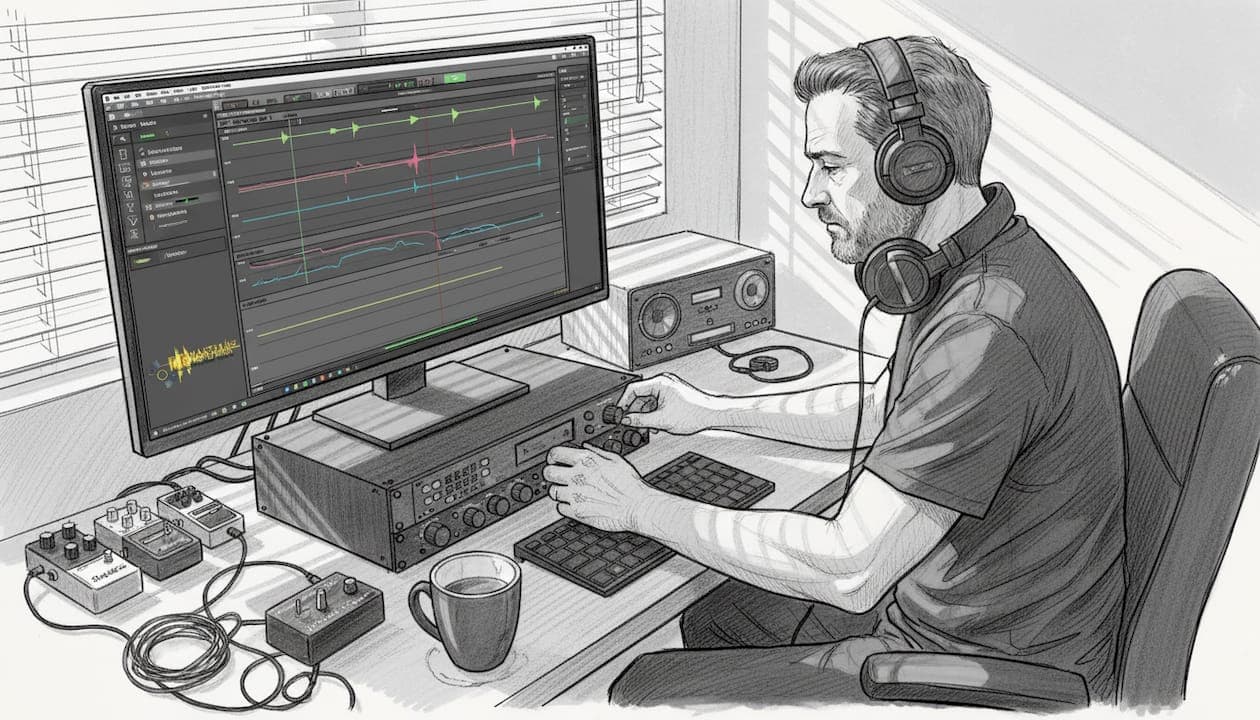
Many independent artists assume that dropping a preset on their final mix is the same as mastering. It is not. A mastering chain is a carefully ordered sequence of audio processors designed to solve specific problems in your mix and prepare it for a specific release format. Whether you are releasing to Spotify, pressing CDs, or cutting vinyl, each format demands different decisions. This guide walks you through every stage of a professional mastering chain, shows you how to adapt it for each format, and helps you avoid the most common mistakes that hold indie artists back from professional results.
Table of Contents
- What is a mastering chain?
- The ideal mastering chain order explained
- How mastering chains adapt for streaming, CD, and vinyl
- Avoiding common mastering chain mistakes
- Expert workflow: Adapting the mastering chain to your track
- A mastering engineer's perspective: Why there's no one-size-fits-all chain
- Take your music further: Professional mastering for every format
- Frequently asked questions
Key Takeaways
| Point | Details |
|---|---|
| Mastering chain definition | A mastering chain is a series of processors that finalize your music for release. |
| Processor order matters | The sequence of processors directly shapes clarity, loudness, and musicality. |
| Adapt for each format | Streaming, CD, and vinyl each require a tailored finishing approach for best results. |
| Subtle moves, big impact | Less is often more—subtle EQ and compression usually work better than drastic changes. |
| No perfect template | Mastering chains must be adjusted track-by-track; use references and metering throughout. |
What is a mastering chain?
After understanding why a single preset is not enough, see what actually makes up a mastering chain. A mastering chain is the sequence of audio processors applied to a final stereo mix to polish it for distribution. Each processor in the chain serves a specific purpose, and together they shape how your music sounds across every playback system.
Think of the chain as a production line. Each station does one job well. When every station works together in the right order, the final product is clean, loud, and balanced. When one station is out of place or overcorrects, the problems compound as the signal moves forward.
Core processors in a typical mastering chain include:
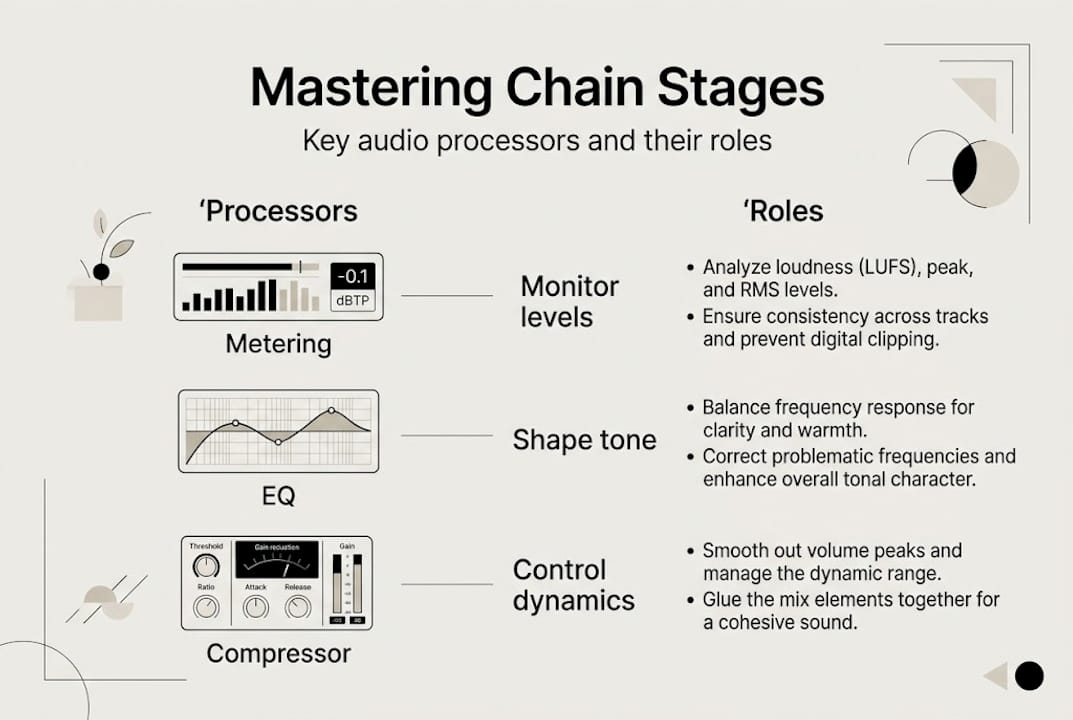
- Metering: Measures loudness, true peak, and stereo width before and after each stage
- Corrective EQ: Removes problematic frequencies such as muddiness or harshness
- Compression: Controls dynamic range and adds cohesion to the mix
- Saturation: Adds harmonic warmth and subtle analog character
- Stereo imaging: Controls the width and mono compatibility of the stereo field
- Limiting: Sets the final loudness ceiling and prevents clipping
For a deeper look at the tools behind each stage, see these mastering equipment examples that professionals rely on. Understanding music production in mastering also helps you appreciate how the two disciplines connect.
| Processor | Position in chain | Primary role |
|---|---|---|
| Metering | First and last | Monitor levels and loudness targets |
| Corrective EQ | Second | Fix frequency imbalances |
| Compression | Third | Control dynamics and add punch |
| Saturation | Fourth | Add warmth and analog color |
| Stereo imaging | Fifth | Widen or tighten stereo field |
| Limiting | Last | Set final ceiling and loudness |
The ideal mastering chain order explained
Now that you know what a mastering chain consists of, let's examine the typical order and why it's crucial. The sequence matters because each processor responds to what comes before it. Compression after EQ, for example, reacts to a corrected frequency balance. Compression before EQ means the compressor is responding to problems that EQ would have removed.
The standard mastering chain order follows this structure:
- Gain staging and metering — Set your input level correctly so every processor downstream receives a clean, consistent signal.
- Corrective EQ — Remove resonances, low-end mud, and high-frequency harshness that the mix may have accumulated.
- Compression — Glue the mix together and manage dynamic peaks after EQ has cleaned up the spectrum.
- Additive EQ and saturation — Shape the tonal character you want and add warmth or presence.
- Stereo imaging — Widen or narrow the stereo field with intention, always checking mono compatibility.
- Limiting — Apply the final loudness ceiling and output gain last, always.
Changing this order can yield interesting results in some cases, but it also carries risk. Placing compression before corrective EQ means the compressor may pump on a frequency you were planning to cut anyway. Placing saturation before compression can drive unwanted harmonics deeper into the mix.
| Order variation | Potential benefit | Potential risk |
|---|---|---|
| EQ before compression | Cleaner compression response | May over-sculpt before dynamics are set |
| Compression before EQ | Can reveal tonal issues to address | Compressor reacts to uncorrected problems |
| Saturation before limiting | Warm character baked in | Can push limiter harder unexpectedly |
For artists exploring hybrid mastering or curious about analog gear benefits, knowing where to insert hardware in this chain is equally important.
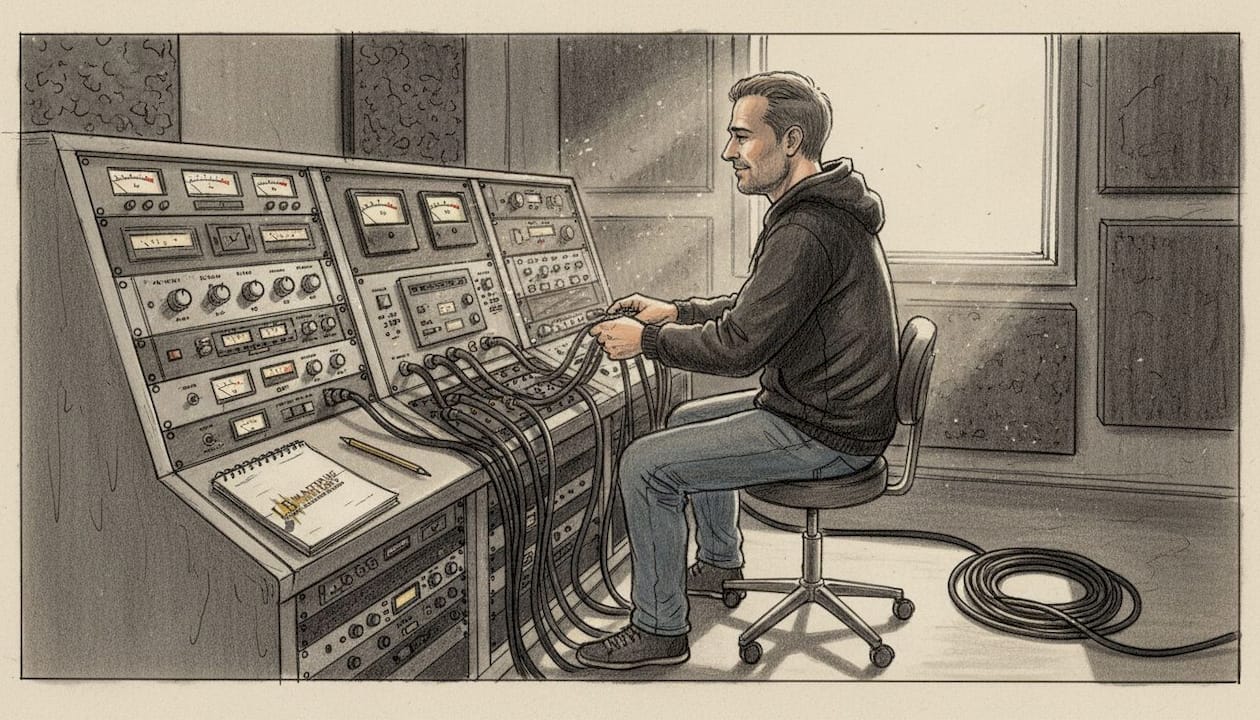
Pro Tip: No matter how creative you get with processor order, the limiter and metering tools belong at the very end of the chain. Moving them earlier will skew every reading and potentially cause downstream clipping.
How mastering chains adapt for streaming, CD, and vinyl
Having learned the chain's core structure, see how different formats dictate special mastering strategies. Not every master serves every format. A master built for Spotify will sound too compressed on vinyl. A vinyl master will appear too quiet on streaming. Format awareness is not optional if you want your music to translate properly.
Here is what changes across formats:
- Streaming: Target -14 LUFS integrated for Spotify, YouTube, and Tidal. Apple Music targets -16 LUFS. True peak should land between -1 and -2 dBTP. Loudness normalization on these platforms means pushing louder than these targets will actually hurt your sound.
- CD: Targets range from -10 to -12 LUFS depending on genre. CDs benefit from clean limiting and precise true peak control, but do not face the same normalization as streaming. More headroom means more flexibility.
- Vinyl: Vinyl requires separate masters with mono bass below 80Hz, more headroom, and far less limiting and compression to avoid groove distortion. Heavy loudness processing causes skipping on vinyl pressings.
For artists planning a vinyl release, our vinyl mastering guide covers every technical detail specific to that format. And if you want to understand loudness targets more deeply, this resource on maximizing loudness for streaming will help you hit every platform's sweet spot.
Pro Tip: Always prepare separate masters for streaming, CD, and vinyl rather than using one file everywhere. A single master is a compromise, and compromises rarely sound their best on any format.
Avoiding common mastering chain mistakes
You've learned best practices for format-adapted mastering chains. Now let's keep you from the most frequent pitfalls that can undo all that good work.
The most damaging mistakes engineers and self-mastering artists make:
- Over-processing with EQ or compression. EQ moves over 2-3dB and compression over 4dB gain reduction kill the dynamics that make music feel alive. Stay subtle.
- Using the wrong processor order. Putting the limiter before the stereo imager, or compression before corrective EQ, compounds problems rather than solving them.
- Relying on a single template. No universal chain exists; every track needs custom adjustments. Subtle moves of 0.5 to 1.5dB in EQ outperform aggressive template-based processing every time.
- Ignoring mono compatibility. A wide stereo mix can collapse badly in mono. Always check before finalizing.
- Skipping reference tracks. Comparing your master to a commercially released song at level-matched volume reveals problems your ears may have stopped noticing.
"The wrong processor order doesn't just fail to fix problems — it actively creates new ones. And heavy processing at mastering rarely saves a mix; it just makes the damage louder."
Our mastering checklist gives you a step-by-step resource to verify every stage before you export.
Pro Tip: Before you finalize any master, check mono compatibility and phase correlation on your metering plugin. A master that sounds wide in stereo but breaks down in mono is not ready for release.
Expert workflow: Adapting the mastering chain to your track
Now that you're protected from the most common errors, you're ready for the adaptive workflows that set professionals apart. Great mastering engineers do not apply the same chain to every track. They listen first, identify what the mix needs, and build a chain that responds to those specific issues.
Metering tools guide every decision throughout the session. A professional will monitor:
- Integrated LUFS — Overall perceived loudness across the full track
- True peak — Prevents inter-sample clipping after format conversion
- Spectrum analyzer — Visualizes frequency balance and identifies problem areas
- Goniometer — Monitors stereo width and mono compatibility in real time
- Short-term LUFS — Tracks loudness in specific sections like choruses or drops
A/B comparison with commercially released reference tracks keeps your decisions objective. Listen to your master and a reference at the same loudness level, and compare without ego. If the reference sounds clearer or more open, that tells you where to adjust.
The order is flexible except for the limiter and meters, which must always be last. Hybrid analog and digital chains add warmth through vintage hardware while keeping the precision of digital metering and limiting. We regularly use this approach at LB-Mastering Studios, and it consistently delivers that combination of body and clarity that pure digital chains can sometimes miss.
For a deeper look at how we apply this, see our articles on hybrid chains and the role of analog gear in mastering.
A mastering engineer's perspective: Why there's no one-size-fits-all chain
After examining advanced workflow strategies, here is the reality check that separates professionals from everyone else: the tools matter far less than the ears using them.
We have worked with artists who spent weeks building the "perfect" mastering chain template, only to get results that felt stiff and lifeless. The reason is almost always the same. They were fitting the music to the chain instead of building the chain around the music.
Every track arrives with its own personality. A dense rock mix needs different EQ moves than a sparse acoustic recording. A track destined for vinyl demands more headroom than one headed to streaming. Fresh ears and a quality monitoring environment will always outperform expensive gear in a compromised room.
The most important insight from our audio steps checklist and our own studio experience: less is more. The best masters we have delivered involved fewer processors, not more. Subtle, respectful processing preserves the artist's vision. Heavy-handed mastering replaces that vision with someone else's idea of loud.
Take your music further: Professional mastering for every format
Understanding the mastering chain is a powerful first step. Applying it correctly across streaming, CD, and vinyl formats is where professional results are made.
You do not have to navigate that process alone. At LB-Mastering Studios, we bring over 44 years of experience and Grammy-winning expertise to every session, with a hybrid analog-digital signal chain built to serve your music's specific needs.

Explore our full range of mastering and mixing services, or get started with a dedicated vinyl mastering service for your next pressing. Not sure where to begin? Download our free mastering checklist to prepare your files and get the most out of every session. Reach out today and let us put our expertise to work for your music.
Frequently asked questions
What is the most important processor in a mastering chain?
The limiter and metering tools are most critical because they set final loudness and prevent distortion. As the chain rule states, these always belong at the very end of the signal path.
Why does vinyl mastering require a different chain than streaming?
Vinyl masters must preserve dynamics and keep bass in mono below 80Hz, while streaming favors controlled loudness and clean true peak values. Vinyl requires separate masters with less limiting and more headroom to avoid groove distortion during playback.
How much EQ or compression is too much?
EQ boosts or cuts exceeding 2-3dB and compression with more than 4dB of gain reduction are generally considered excessive. Over-processing kills dynamics and removes the natural energy that makes music engaging.
What LUFS should I target for streaming platforms?
Aim for -14 LUFS integrated for Spotify, YouTube, and Tidal, and -16 LUFS for Apple Music, with true peak at -1 to -2 dBTP.
Is it OK to use templates for mastering?
Templates can work as a starting point, but every track needs individual adjustments for best results. No universal chain exists, and subtle moves of 0.5 to 1.5dB in EQ consistently outperform rigid template-based approaches.