

Many independent musicians confuse audio mixing with mastering, treating them as interchangeable steps when they serve completely different purposes in music production. This article clarifies what audio mixing really is, why it's essential for professional quality music, and how it differs from mastering. You'll learn key mixing techniques, common challenges like frequency masking and stereo width problems, and practical strategies to improve your mixes. By the end, you'll have a clearer understanding to elevate your production skills and create polished, professional recordings.
Table of Contents
- What Is Audio Mixing? Understanding The Basics
- Mixing Versus Mastering: Clarifying Common Confusion
- Common Mixing Challenges And Expert Strategies
- Best Practices And Tips For Effective Audio Mixing
- Enhance Your Mixes With Professional Mastering Services
- Frequently Asked Questions
Key takeaways
| Point | Details |
|---|---|
| Mixing balances individual tracks | Proper mixing ensures every instrument, vocal, and effect works together cohesively without clashing. |
| Mixing and mastering are distinct stages | Mixing processes separate tracks; mastering polishes the final stereo mix for commercial release. |
| Address masking and stereo width issues | Fixing frequency overlaps and avoiding excessive widening creates clarity and impact in your music. |
| Mix reactively, not by rigid rules | Effective mixing requires listening carefully and applying techniques only when the song needs them. |
What is audio mixing? Understanding the basics
Audio mixing is the art and science of combining multiple recorded tracks into a single cohesive stereo file that sounds balanced, clear, and emotionally compelling. Mixing involves balancing volume levels, adjusting stereo positioning, shaping frequency content, and applying spatial effects to create depth and impact.
The process transforms raw recordings into a polished song ready for mastering. Think of it as assembling puzzle pieces where each instrument and vocal needs the right space, volume, and tonal character to support the overall musical story. Without proper mixing, your song may sound muddy, cluttered, or amateurish no matter how great the individual performances were.
Key mixing techniques include:
- Level balancing to ensure vocals sit perfectly above the backing instruments
- Panning to position sounds across the left to right stereo field
- Equalization (EQ) to shape each track's frequency content and prevent clashing
- Compression to control dynamic range and add punch or sustain
- Reverb and delay to create spatial depth and ambience
- Automation to adjust parameters dynamically throughout the song
The ultimate goal is clarity, separation, and emotional storytelling. Each element should have its own defined space in the mix while contributing to a unified sonic experience. Proper mixing creates the foundation that allows mastering professionals to add the final polish and prepare your music for distribution across streaming platforms, vinyl, and other formats.
Mixing versus mastering: clarifying common confusion
One of the biggest mistakes independent musicians make is treating mixing and mastering as the same process or worse, skipping one entirely. Mixing focuses on balancing and processing individual tracks, while mastering optimizes the final stereo mix for commercial release. Understanding this distinction is critical to achieving professional results.
During mixing, you work with dozens or even hundreds of separate tracks. You adjust the volume of each drum mic, add compression to vocals, pan guitars left and right, and sculpt frequencies with EQ on individual instruments. The mixing stage is where creative decisions about effects, stereo imaging, and sonic character happen. You're building the sonic landscape from individual components.
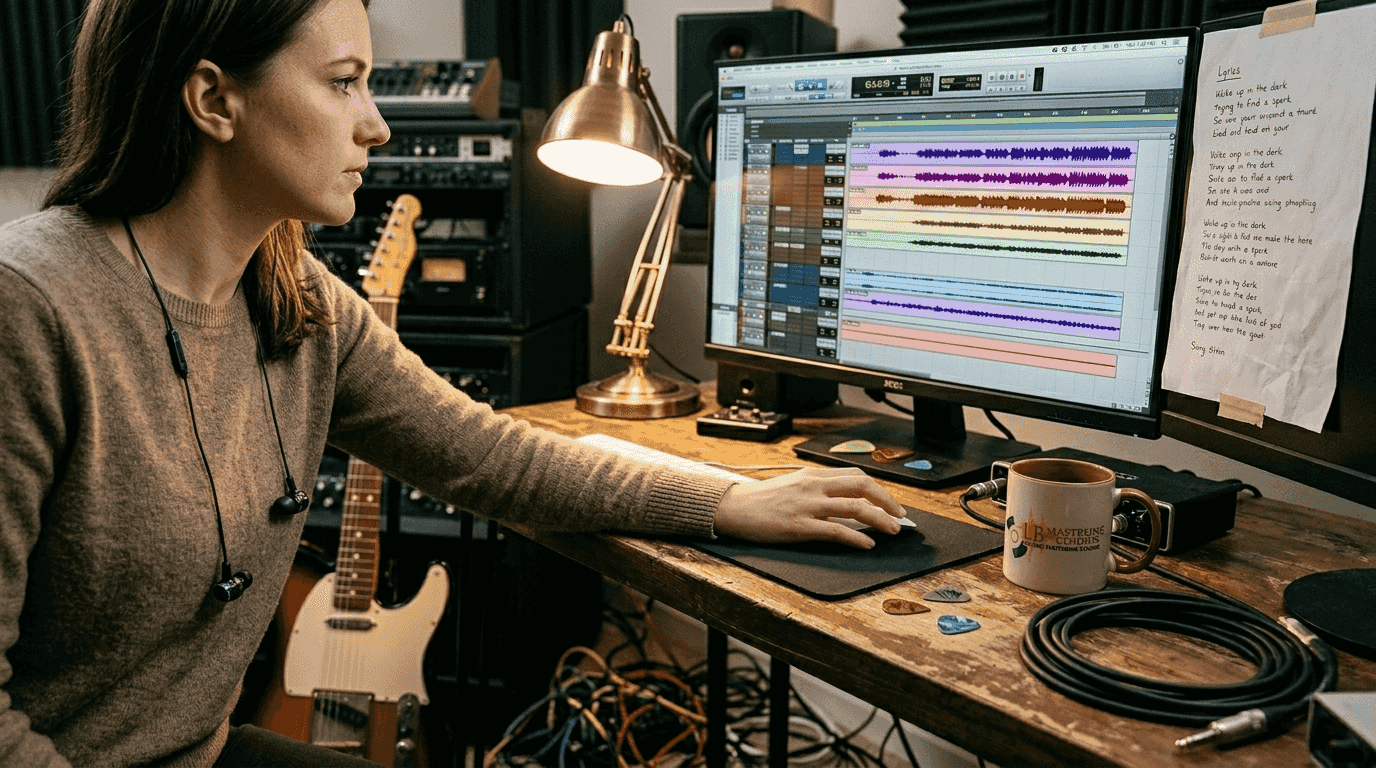
Mastering happens after mixing is complete and exported as a stereo file. Mixing and mastering are distinct stages, not interchangeable processes. The mastering engineer focuses on overall tonal balance, loudness optimization, stereo enhancement, and preparing the final master for different distribution formats. They ensure your song translates well across playback systems and matches professional loudness standards for streaming services.
Here's a quick comparison:
| Aspect | Mixing | Mastering |
|---|---|---|
| Input | Multiple individual tracks | Single stereo mix |
| Focus | Balance between instruments | Overall sonic polish |
| Tools | Track EQ, compression, effects | Broad EQ, limiting, stereo imaging |
| Goal | Create cohesive song | Optimize for release formats |
| Mindset | Creative sculpting | Technical finishing |
Both stages require different skill sets and listening environments. Trying to master your own mix in the same session often leads to over processing because your ears are fatigued and you lack objectivity. Professional studios like LB-Mastering offer specialized mastering services and resources to ensure your carefully crafted mixes receive the expert finishing touches they deserve.
Common mixing challenges and expert strategies
Even experienced producers face recurring challenges that can sabotage an otherwise great mix. Understanding these pitfalls and how to address them separates amateur productions from professional results.
Frequency masking is perhaps the most common clarity killer. Masking happens when two or more sounds fight for the same frequencies, causing one to hide another. The 1 to 5 kHz range is particularly crowded because vocals, snare drums, and guitars all occupy this space. When these elements compete, your mix sounds muddy and important parts get buried.
To fix masking issues:
- Use spectrum analyzers to identify overlapping frequency ranges between competing tracks
- Apply surgical EQ cuts to carve space for the most important element
- Pan conflicting instruments to different stereo positions when possible
- Consider arrangement changes if the masking is severe
Stereo width presents another challenge. Stereo width is crucial but excessive widening causes hollow sound and loss of focus. Over widening low frequencies creates phase problems that make your mix disappear when played in mono, which still happens in clubs, phones, and some streaming scenarios. Wide stereo imaging sounds impressive initially but often lacks the punch and clarity of a properly balanced mix.
Phase issues occur when two or more signals cancel each other out due to timing differences. This happens when using multiple microphones, applying excessive stereo widening, or layering samples without checking phase relationships. The result is a thin, hollow sound in stereo and complete disappearance of certain elements when summed to mono.
Pro Tip: Always check your mix in mono periodically during the mixing process. If important elements vanish or sound drastically different in mono, you have phase problems that need addressing before mastering. Use phase correlation meters and trust your ears.
The most important strategy is mixing reactively rather than following preset formulas. Every song has unique needs based on arrangement, genre, and artistic intent. Listen carefully, identify specific problems, and apply targeted solutions. For more insights on tackling complex mixing scenarios, explore the LB-Mastering blog for expert perspectives.
Best practices and tips for effective audio mixing
Developing a solid mixing workflow and following proven best practices dramatically improves your results and efficiency. These strategies come from decades of professional experience and help you avoid common pitfalls.
-
Start with proper gain staging throughout your signal chain. Proper gain staging prevents unwanted distortion and maintains signal clarity from recording through final output. Set input levels conservatively during tracking, monitor plugin gain staging, and avoid clipping at any stage. This is especially critical when using analog style plugins that model vintage gear, as they often add harmonic saturation that can accumulate.
-
Maintain master level headroom at -3 to -6 dB during mixing. This prevents clipping, gives the mastering engineer room to work, and ensures your mix has dynamic range. Resist the temptation to make your mix as loud as possible. Loudness is the mastering engineer's job.
-
Mix at moderate volumes and take regular breaks. Loud monitoring fatigues your ears quickly and makes everything sound better than it actually is. Mix at conversational levels and check at lower volumes to ensure your balance translates. Take a 10 minute break every hour to reset your ears and perspective.
-
Reference your mix against professionally produced songs in your genre. Load commercial tracks into your session and A/B compare levels, tonal balance, and stereo width. This reality check helps you identify weaknesses and set realistic targets. Don't try to match commercial loudness, just focus on balance and clarity.
-
Use automation to create dynamic interest and solve balance issues. Static mixes sound boring. Automate vocal levels during verses and choruses, bring up guitar solos, duck reverb during busy sections, and create movement that supports the song's emotional arc.
-
Apply effects purposefully, not habitually. Just because you have a plugin doesn't mean every track needs it. Listen first, identify what the track needs, then apply the minimum processing required. Over processing creates a cluttered, unnatural sound.
Pro Tip: Before starting your mix, create a rough balance with just faders and panning. Get 80% of the way there without touching EQ or effects. This forces you to make smart arrangement and level decisions and prevents over reliance on processing to fix fundamental balance issues.
LB-Mastering Studios uses state of the art equipment combining vintage analog gear with modern digital precision. Following these mixing best practices ensures your tracks arrive at mastering in optimal condition. Download the free mastering preparation checklist to learn exactly how to prepare your mixes for professional mastering.
Enhance your mixes with professional mastering services
Once you've crafted a solid mix using these techniques, professional mastering takes your music to commercial quality. LB-Mastering Studios combines over 44 years of industry experience with Grammy-winning expertise to deliver the sonic excellence your music deserves.
Our hybrid analog-digital signal chain utilizes vintage mastering equipment and cutting edge technology to add warmth, clarity, and optimal loudness while preserving your artistic vision. Whether you're releasing music to streaming platforms, vinyl, or CD, proper mastering ensures your songs translate perfectly across all formats and playback systems.
Prepare your mixes like a professional by downloading our comprehensive mastering checklist that covers everything from proper gain staging to file format specifications. We serve independent musicians and major labels worldwide through our online mastering services, offering free sample masters and direct communication with experienced mastering engineers who understand your creative goals.
Frequently asked questions
What is the difference between audio mixing and mastering?
Mixing balances and processes individual recorded tracks using EQ, compression, effects, and panning to create a cohesive stereo song. Mastering takes that finished stereo mix and optimizes it for commercial release by adjusting overall tonal balance, loudness, and preparing it for various distribution formats. They are complementary but completely separate stages in music production.
How can I fix masking issues in my mix?
Identify which instruments occupy overlapping frequency ranges using spectrum analysis and your ears. Apply targeted EQ cuts to carve space for the most important element, typically vocals. Panning competing instruments to different stereo positions also reduces masking by giving each sound its own spatial location.
Why is maintaining headroom important during mixing?
Headroom prevents digital clipping and distortion while leaving dynamic range for the mastering engineer to optimize loudness. Keep your master fader around -3 to -6 dB during mixing. Pushing levels too hot creates a distorted, fatiguing sound and limits mastering options.
Should I mix and master my own music?
Mixing your own recordings is common and can produce excellent results with practice. However, mastering requires fresh ears, specialized equipment, and an objective perspective that's difficult to achieve after spending hours mixing. Professional mastering adds polish and ensures your music meets commercial standards across playback systems.
What mixing techniques help create stereo width?
Use panning to position instruments across the stereo field, apply stereo widening plugins sparingly on mid to high frequencies, and create depth through reverb and delay. Avoid widening low frequencies below 200 Hz as this causes phase problems. Always check your mix in mono to ensure widening doesn't create phase cancellation issues.