 comparison
Vintage Mastering: How Analog Gear Shapes Professional Sound
Table of Contents
- What Vintage Mastering Actually Is
- Digital vs Analog Mastering: The Core Differences
- The Analog Mastering Chain: Essential Components
- Key Techniques in Vintage Mastering
- Benefits of Analog Mastering for Your Mix
- Analog Emulation: When Hardware Isn't an Option
- Genre-Specific Vintage Mastering Approaches
- Getting Professional Vintage Mastering Results
- Frequently Asked Questions
Last Updated: September 3, 2026
What Vintage Mastering Actually Is
Vintage mastering uses analog equipment and techniques to shape the final sound of a recording. Unlike purely digital mastering, which relies on software and computer processing, vintage mastering leverages hardware like tape machines, analog compressors, and tube-based EQ to add warmth, character, and musical density to a mix before distribution across streaming, CD, and vinyl formats.
Analog gear introduces harmonic distortion, tape saturation, and subtle frequency coloration that many engineers find more pleasing than clinical digital processing. A vintage mastering chain doesn't just control loudness and dynamics, it imparts a sonic signature that makes a recording feel more cohesive and competitive in crowded playlists.
At LB-Mastering Studios, we approach vintage mastering as both a technical discipline and an art form. The engineer's experience matters as much as the equipment. Knowing when to apply tape saturation, how much compression adds glue without destroying transients, and which frequency bands benefit from EQ shaping separates professional results from amateur attempts.
Digital vs Analog Mastering: The Core Differences
Digital mastering uses software plugins and computer-based processing to control loudness, dynamics, and frequency response. It's fast, repeatable, and doesn't require expensive hardware. Analog mastering uses physical outboard gear, tape machines, compressors, and EQ units to achieve similar goals with different sonic character.
The practical difference shows immediately in how each handles transients and dynamic range. Digital processing can be surgical and precise. Analog equipment, especially tape-based systems, responds more slowly and musically. A transient hitting tape compresses slightly differently than a digital limiter catching the same peak, creating a cohesive, warm sound that many describe as having more "life."
Tape saturation adds harmonic content, extra frequencies generated by the nonlinear response of tape itself. A digital EQ cuts or boosts specific frequencies. A tape machine running at moderate saturation adds harmonic distortion that enriches the entire signal. This is why analog mastering often sounds fuller and rounder.
Digital mastering excels at precision and consistency. Analog mastering requires more hands-on decision-making and skilled ears. Each track may need different settings and compression ratios. The flexibility is powerful, but it demands experience.
The Analog Mastering Chain: Essential Components
A professional analog mastering chain flows through several key pieces of equipment, each serving a specific purpose.
Channel Strip and EQ
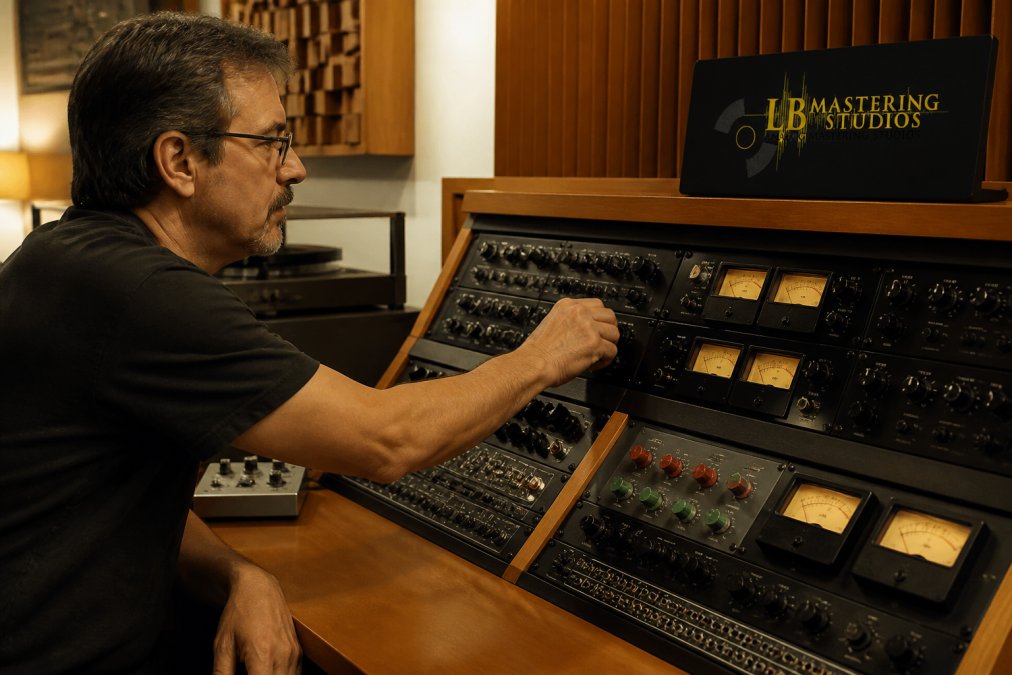
The channel strip is the central hub of most analog mastering chains, combining a preamp, EQ, and sometimes compression in a single unit. The preamp adds gain and often imparts subtle coloration from tube circuitry or transformer saturation.
Broad EQ is a hallmark of professional analog mastering. Instead of isolating a specific frequency and cutting it surgically, a vintage EQ adjusts broad regions like the presence band (2-5 kHz) with gentle slopes. This musical approach preserves the natural balance of the mix while shaping overall character. Many engineers prefer broad EQ because it sounds less processed and more natural than narrow-band digital cuts.
The channel strip's transformer or tube stage adds harmonic content that smooths and glues the signal. Running audio through a quality analog channel strip often improves the overall sound before any compression or EQ is applied.
Compression and Dynamic Range Control
Compression in analog mastering controls peaks, adds sustain and glue, and can add character through harmonic distortion. A gentle compression ratio of 2:1 or 3:1 with a slow attack preserves transients while adding cohesion (aes.org). Soft-knee compression sounds more musical and transparent, which is why it's preferred in mastering.
Different compressor types, VCA, FET, optical, variable-mu, respond differently to the same input. An optical compressor like the Teletronix LA-2A has a smooth, musical response favored for mastering. Choosing the right compressor requires understanding both the mix and the compressor's character.
Tape Saturation and Harmonic Distortion
Tape saturation is the nonlinear response of analog tape when it approaches its maximum recordable level (peer-reviewed research). As you approach saturation, the tape compresses the signal and adds harmonic distortion that is musical and subtle, not harsh or digital-sounding.
Running a mix through tape at moderate saturation adds richness and presence. The harmonic content enriches fundamental frequencies and adds upper harmonics that make the mix sound fuller. Different tape formulations produce different harmonic characteristics. This is why tape machines remain in high-demand mastering studios despite being decades old. preserving vintage media.
Key Techniques in Vintage Mastering
Successful vintage mastering combines technical knowledge with artistic judgment.
Tape Saturation for Musical Character
The decision to use tape saturation, and how much, defines the sonic character of the master. Light saturation adds subtle warmth and glue. Moderate saturation enriches the mix noticeably, adding presence and perceived loudness without increasing peak levels. Most professional masters use tape saturation somewhere in the chain, even if subtle.
Broad EQ and Frequency Band Shaping
Rather than surgical cuts, vintage mastering EQ shapes broad frequency regions to enhance clarity, warmth, or presence. A gentle boost in the 80-120 Hz region adds weight without muddiness (aes.org). A subtle lift in the 2-4 kHz region adds presence. A gentle rise above 10 kHz adds air and openness.
Broad EQ is forgiving because it respects the mix's natural balance. The goal is enhancement, not transformation.
Soft Clipping and Transient Response
Soft clipping uses a limiter or soft-clipping circuit to catch peaks gently rather than allowing hard digital clipping. Analog soft clipping sounds smoother because the signal compresses gradually as it approaches the ceiling.
Transient response, how quickly a compressor reacts to peaks, matters enormously in mastering. A slow attack preserves the initial impact of drums. A faster attack controls peaks more aggressively but can dull the mix if set too fast. The best chains use multiple compression stages with different attack and release times.
Benefits of Analog Mastering for Your Mix
Analog mastering delivers concrete advantages over purely digital approaches. The most obvious is sonic character, that warmth, glue, and presence that listeners associate with professional recordings.
Analog mastering forces intentional decision-making. An analog engineer must commit to settings, listen carefully, and make deliberate choices. This discipline often results in more restrained, more musical mastering decisions.
Analog gear also handles loud mastering differently. Digital systems can push to extreme loudness, but the result often sounds compressed and fatiguing. Analog equipment reaches a natural loudness ceiling where saturation and soft clipping prevent further compression. Masters made this way often sound louder and punchier while feeling less fatiguing.
The monitoring environment in a professional analog mastering room is crucial. These rooms are acoustically treated to reveal truth. An experienced engineer using accurate monitoring can make decisions that translate reliably across all playback systems: earbuds, car stereos, club systems, and streaming platforms.
Analog Emulation: When Hardware Isn't an Option
Professional analog mastering gear is expensive and requires expertise. Modern plugin emulations of classic analog gear have become remarkably sophisticated. The Waves J37 Tape plugin emulates the Studer J37 tape machine, offering three tape formulations and controls for tape speed and bias. PSP Vintage Warmer 2 simulates analog tape saturation and compression.
These plugins can't replicate every nuance of real analog equipment, but they capture the essential sonic character. The practical advantage is accessibility, an independent artist can apply tape saturation and analog compression without investing in hardware.
Many professional mastering engineers use a hybrid approach: analog gear for the primary chain, supplemented by high-quality plugins for specific tasks.
Genre-Specific Vintage Mastering Approaches
Different genres benefit from different mastering techniques.
Hip-hop and rap benefit from aggressive compression and tape saturation that adds weight to drums. Broad EQ might emphasize the low-mids (100-300 Hz) for punch and the presence region (2-5 kHz) for vocal clarity.
Rock and alternative music often use less aggressive compression, preserving dynamic range and transient impact. Tape saturation adds warmth without obvious distortion.
Jazz and classical music require restraint. Compression is gentle, EQ is subtle, and tape saturation is light or absent. The goal is transparency.
Electronic and dance music can handle more aggressive processing. Compression might be tighter, tape saturation more obvious, and EQ more sculpted for club sound systems.
Getting Professional Vintage Mastering Results
Achieving professional vintage mastering results requires three elements: quality equipment, proper monitoring, and experienced ears.
The equipment matters, but skilled engineers working with mid-tier analog gear outperform inexperienced engineers with world-class equipment. Quality components do make a difference, though.
The monitoring environment is equally important. A properly treated mastering room reveals the truth about a mix. This is why professional mastering studios invest heavily in acoustic treatment, quality speakers, and monitoring systems.
Experience is the third element. Knowing when to apply tape saturation, how much compression adds glue, and which frequency regions benefit from EQ shaping comes from years of working with different mixes and equipment.
The difference between a good master and a great one often comes down to the final stage of production. When you invest time and resources into recording and mixing, professional mastering ensures that work reaches listeners in its best possible form. LB-Mastering Studios specializes in analog vintage mastering for artists across all genres, offering customized approaches for CD, stem, and vinyl formats. Our team leverages premium analog outboard gear and over 44 years of professional experience to deliver masters that translate reliably across streaming platforms, headphones, and playback systems. Every project receives a free sample master so you can hear the difference before committing. Book a session with LB-Mastering Studios to get started.
Frequently Asked Questions
Q: What exactly defines the vintage mastering sound?
A: Vintage mastering combines analog warmth, tape saturation, and harmonic distortion to add musical character and cohesion to a mix. The sound is characterized by gentle compression, broad EQ shaping, and the natural soft clipping of analog circuitry. This approach adds density and presence while preserving dynamic range and transient response. The result feels fuller and more integrated than purely digital processing, with a retro aesthetic that translates well across streaming platforms and physical formats.
Q: Why do professional mastering engineers prefer analog gear for vintage mastering?
A: Analog hardware processes audio through physical circuitry, creating harmonic content and transient response that digital systems struggle to replicate authentically. Analog summing, tape machines, and vintage EQ units add character naturally rather than algorithmically. Engineers value the signal chain's ability to compress and shape frequency response in musically pleasing ways. This is why studios invest in premium outboard gear, the sonic results justify the investment for commercial releases.
Q: Is vintage mastering better than digital mastering for streaming?
A: Vintage mastering isn't inherently better, but it excels at creating masters that sound cohesive and warm across all playback systems, including streaming. Analog processing adds harmonic content that compensates for the loss in streaming compression algorithms. A vinyl-ready master created through analog mastering often translates beautifully to Spotify and Apple Music because the analog warmth masks some artifacts of lossy encoding. Digital mastering alone can produce excellent results, but vintage techniques add a professional sheen that stands out in competitive playlists.
Q: How does analog saturation actually affect a master?
A: Analog saturation adds soft clipping and harmonic distortion that thickens audio without obvious distortion. When a signal passes through analog tape or tube circuitry, it generates subtle harmonic overtones that make the mix sound fuller and more cohesive. Saturation compresses peaks gently, controlling dynamic range while preserving transient response and musical character. The effect is cumulative across a signal chain, each piece of analog gear contributes warmth. Proper saturation enhances frequency response and stereo imaging without degrading mono compatibility, making it essential for professional mastering.
This article was written using GrandRanker