 how-to
How to Communicate Your Creative Vision to a Mastering Engineer
Table of Contents
- Start With a Creative Brief, Not a Guess
- What to Tell a Mastering Engineer Before the Session
- Choosing and Annotating Mastering Reference Tracks
- Use a Mastering Engineer Communication Template
- Prepare and Deliver Your Files Correctly
- How to Give Feedback on a Master Without Derailing the Process
- Genre, Orchestral, and Film-Score Considerations
- Conclusion: Communicating Your Creative Vision Gets Easier With Practice
- Frequently Asked Questions
Last Updated: October 15, 2026
Start With a Creative Brief, Not a Guess
Learning how to communicate your creative vision to a mastering engineer starts with one document: a short creative brief. Most artists skip this step and then wonder why the finished master sounds nothing like what they imagined. A brief takes twenty minutes to write and prevents weeks of back-and-forth.
Here at LB-Mastering Studios, we've worked with independent artists, labels, and film composers for decades. The projects that go smoothly almost always start with a clear brief.
A creative brief is a short written summary of your song's intent, sound, and goals. It tells the mastering engineer what you want before they touch a single fader.
What a Brief Should Cover
Keep your brief to one page. Include these elements:
- Song or album title and artist name
- Genre and subgenre
- Two or three reference tracks
- The mood or feeling you want
- Target playback systems (streaming, vinyl, film)
- Anything you want left untouched
The brief isn't a contract. It's a conversation starter. Engineers read it, then ask follow-up questions.
What to Tell a Mastering Engineer Before the Session
Tell your mastering engineer three things: the sound you want, the references that define it, and the boundaries you don't want crossed. Everything else is their job.
That's the short answer. Here's how to actually do it.
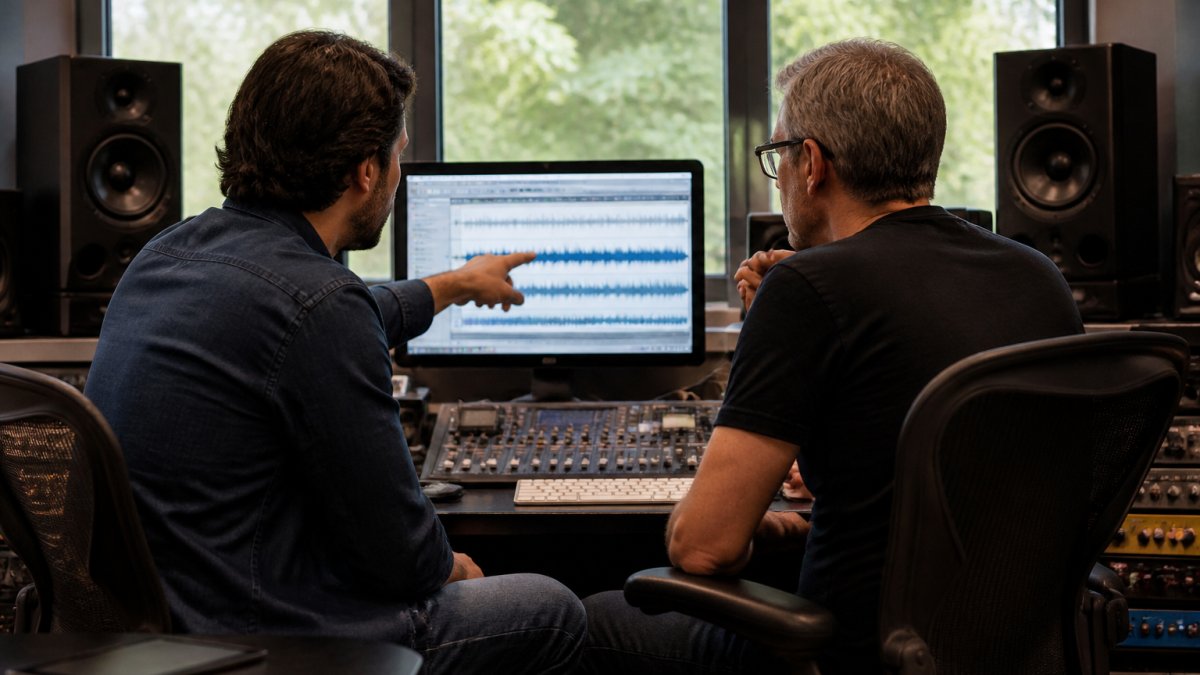
Describing Tone, Balance, and Dynamics in Plain Language
You don't need audio engineering jargon. Use everyday words.
- "Warm and full" instead of "boost 200 Hz"
- "Bright but not harsh" instead of "shelf at 8 kHz"
- "Punchy drums" instead of "increase transient attack"
- "Wide and open" instead of "stereo widening"
The best mastering engineers translate plain language into technical moves. Your job is to describe the feeling, not the frequency.
What to Leave to the Engineer's Judgment
This is where most artists overreach. You hired an expert. Let them work.
Leave these to the engineer:
- Exact EQ and compression settings
- Limiting and loudness targets
- Stereo image adjustments
- Format-specific tweaks for vinyl or streaming
Give direction on the destination, not the route. A good engineer will ask if something feels off.
Choosing and Annotating Mastering Reference Tracks
Reference tracks are commercial songs that sound like what you want. Pick two or three, then annotate them.
Don't just send a Spotify link. Tell the engineer what to listen for.
- "The vocal sits forward like this"
- "This kick has the punch I want"
- "The low end is tight, not boomy"
- "The highs are smooth, never sizzling"
Annotating a reference track means pointing to a specific moment and naming the quality you want to match. For example: "At 0:45, the chorus opens up without getting louder."
Use a Mastering Engineer Communication Template
A template saves time and stops you from forgetting key details. Copy this one and fill in the blanks. The goal is not to dictate technical moves but to give the engineer a clear destination.
Sample Template You Can Copy
Artist: [Your name] Track/Album: [Title] Genre: [e.g., indie rock, orchestral, hip-hop] Mood: [e.g., intimate, anthemic, dark] Reference tracks:
- [Song - Artist] - what to notice: [specific quality, e.g., "vocal sits forward without harshness"]
- [Song - Artist] - what to notice: [specific quality, e.g., "kick has weight but stays tight"] What I love about my mix: [e.g., drum tone, vocal warmth] What I'm unsure about: [e.g., low end feels muddy] Target formats: [streaming / vinyl / CD / film] Do not change: [e.g., keep the intro quiet] Deadline: [Date]
Send this with your files. It takes five minutes and eliminates most confusion.
How to Annotate References So They Actually Help
Don't just attach a Spotify link. Point to a specific moment and name the quality you want to match. For example:
- "At 0:45, the chorus opens up without getting louder."
- "The vocal sits forward like this, but I don't want it to sound brittle."
- "This kick has the punch I want, but the low end should stay tighter than this."
Annotating a reference track means pointing to a specific moment and naming the quality you want to match. Two well-annotated references beat ten vague ones.
Translating Subjective Terms into Actionable Language
You don't need audio engineering jargon. Use everyday words, but be specific about what you hear:
- "Warm and full" instead of "boost 200 Hz"
- "Bright but not harsh" instead of "shelf at 8 kHz"
- "Punchy drums" instead of "increase transient attack"
- "Wide and open" instead of "stereo widening"
The best mastering engineers translate plain language into technical moves. Your job is to describe the feeling, not the frequency.
The brief isn't a contract. It's a conversation starter. Engineers read it, then ask follow-up questions.
Prepare and Deliver Your Files Correctly
Deliver a stereo mixdown with proper headroom, not a slammed mix. Export at the highest sample rate and bit depth your session allows.
Follow these export settings:
- File format: WAV or AIFF, never MP3
- Sample rate: Match your session rate (44.1 kHz, 48 kHz, 96 kHz)
- Bit depth: 24-bit or 32-bit float
- Headroom: Leave peak levels around -6 dB
- Processing: Bypass master bus compression and limiting
If you're sending stems, label every file clearly. For orchestral or film-score work, include a stereo mix plus stems for each section.
Many artists ask whether to send stems or a stereo file. A stereo mixdown is standard for single-song mastering. Stems give the engineer more control for complex projects. Our album mastering and stem mastering services cover both.
How to Give Feedback on a Master Without Derailing the Process
Give feedback in one consolidated message, not a stream of texts. Listen on multiple systems first: studio monitors, car speakers, earbuds, phone. Most engineers include a set number of revisions in their quote. Ask upfront. Respect the process and keep feedback focused.
A Feedback Workflow That Works
Use this structure:
- Listen to the full master twice
- Note issues by timestamp
- Describe the problem, not the fix
- Send one clear revision request
Example feedback: "At 1:20, the vocal feels buried compared to the reference. Can it sit more forward?" This tells the engineer what's wrong without prescribing EQ moves.
Revision Etiquette and Resolving Disagreements
Set expectations for feedback timing. A common pattern is to allow 24-48 hours for a first listen, then send one consolidated set of notes. Avoid sending notes from multiple people. Pick one decision-maker. Everyone else gives notes to that person, not the engineer.
If you disagree with a choice, ask for the reasoning before requesting a change. For example: "I hear the low end as tighter than my reference. Can you explain what you were aiming for?" This keeps the collaboration productive and often reveals a misunderstanding rather than a mistake.
What to Tell the Engineer Versus What to Leave to Their Judgment
This is where most artists overreach. You hired an expert. Let them work.
Leave these to the engineer:
- Exact EQ and compression settings
- Limiting and loudness targets
- Stereo image adjustments
- Format-specific tweaks for vinyl or streaming
Give direction on the destination, not the route. A good engineer will ask if something feels off.
Genre, Orchestral, and Film-Score Considerations
Different genres need different conversations. A hip-hop master prioritizes low-end weight and vocal clarity. An acoustic folk master prioritizes natural dynamics and warmth.
Orchestral music and film scores are their own world. Dynamic range matters more than loudness. The quietest passage must stay audible, and the loudest must not distort.
For orchestral and film work, tell your engineer:
- The intended listening environment (theater, home, streaming)
- Whether the piece needs to translate to broadcast standards
- How much dynamic range to preserve
Game music adds another layer. Tracks loop, so the master must avoid clicks at loop points. Mention this early.
Conclusion: Communicating Your Creative Vision Gets Easier With Practice
The gap between what you hear in your head and what comes out of the speakers shrinks every time you practice describing it. Start with a brief. Annotate your references. Send one clear feedback message.
If you want a mastering partner who reads the brief, asks the right questions, and treats your vision as the goal, LB-Mastering Studios is built for exactly that. Our engineers bring a Latin GRAMMY Award-winning background, 11x Billboard charting credits, and over 44 years of experience to every project. We offer single-song, album, stem, and vinyl mastering, plus a free sample master so you can hear the difference before you commit.
Book a session with LB-Mastering Studios and let's finish your record the right way.
Frequently Asked Questions
What should I tell my mastering engineer before a session?
Share your creative vision, the intended listening context (streaming, vinyl, film), and any specific tonal goals. Mention what you love about your mix and what you are unsure about. Provide reference tracks with notes on what to notice in each. Also state your deadline and preferred file delivery method. A short written brief covering these points gives the engineer a clear direction and reduces back-and-forth.
Should I send reference tracks to a mastering engineer?
Yes. Mastering reference tracks help the engineer understand your target balance, loudness, and tone. Choose two or three commercially released songs that match your genre and desired feel. Annotate each with specific notes: 'I like the vocal clarity here' or 'this low-end weight is what I want.' Avoid sending your own rough mix as a reference unless you want it matched exactly.
How many revisions should I request from a mastering engineer?
Most engineers include one or two rounds of revisions. Request a revision only if something clearly misses the mark after listening on multiple systems. Gather all your feedback into one clear message rather than sending multiple small notes. If you need more than two rounds, discuss it upfront. Clear initial communication reduces the need for extensive revisions.
Can a mastering engineer change the sound of my mix?
A mastering engineer can enhance tone, balance, and loudness, but they cannot fix fundamental mix problems. They work with the stereo file or stems you provide. If your mix has issues like muddy low end or harsh highs, address those in the mix before mastering. Communicate your vision clearly so the engineer knows what to preserve and what to improve.