 ultimate-guide
Benefits of Analog Outboard Gear for Mixing
Table of Contents
- What Analog Outboard Gear Does for Your Mix
- Sonic Characteristics: Harmonic Distortion and Warmth
- Analog Saturation in Digital Mixing: Bridging Hardware and DAW
- Integrating Outboard Gear with DAW for Hybrid Mixing Workflow
- Workflow Efficiency and Creative Commitment
- Hybrid Mixing Workflow: Why Studios Combine Hardware and Digital
- Technical Considerations and Recallability
- When Analog Outboard Gear Makes the Biggest Impact
- Frequently Asked Questions
What Analog Outboard Gear Does for Your Mix
Analog gear demands commitment. Unlike a plugin you can instantly bypass or undo, hardware requires intentional choices about signal routing, gain staging, and processing parameters. This constraint becomes a feature: you adjust, listen, and move forward without endless tweaking. The physical tactile feedback, the resistance of a fader, the mechanical click of a switch, the visual feedback of a meter needle, creates a connection between your intention and the audio that digital interfaces struggle to replicate.
At LB-Mastering Studios, we've spent over 44 years working with premium analog equipment. What we've learned is that the value extends beyond sound to the decision-making framework that hardware forces you into. This workflow discipline translates directly into faster mixing sessions and more decisive sonic choices.
Sonic Characteristics: Harmonic Distortion and Warmth
Analog gear introduces harmonic distortion and non-linearities that digital systems cannot replicate, even with sophisticated modeling algorithms. When an analog saturation stage processes your mix bus, it adds harmonic content that compresses dynamic range while expanding the perceived frequency spectrum. The distortion is musically coherent, it sounds like the audio has been enriched, not clipped.
Analog circuitry responds to peaks differently than digital algorithms (aes.org). Fast transients don't get slammed into a brick wall; they're gently compressed and shaped. This transient response is why engineers describe analog gear as having "character", it's the specific way the circuit handles frequency-dependent compression and harmonic generation.
Different analog devices have wildly different sonic footprints. A tube-based compressor behaves completely differently from a solid-state unit. A transformer-coupled summing amp adds harmonic richness that transformerless designs cannot match. These are fundamental differences in signal flow and final mix character.
Analog Saturation in Digital Mixing: Bridging Hardware and DAW
Most modern mixing happens entirely in the digital domain. Analog saturation works best when you treat it as a commitment point: mix your track inside your DAW to rough balance, route the mix bus or stems out through your audio interface to the analog gear, process them, and record the output back into your DAW. This round-trip introduces latency considerations and requires careful gain staging, but it forces clarity in your mixing decisions.
Plugin emulations of analog gear have improved significantly, but they lack the dynamic responsiveness of actual hardware. A plugin saturation algorithm processes audio based on mathematical models; actual analog circuitry processes audio based on physical laws. The difference becomes apparent with complex transients or wide dynamic range.
The key insight is that analog saturation works best as a finishing tool, not a mixing tool. Use it on your master bus after completing your mix, or on individual stems before final assembly. This prevents relying on hardware processing to fix mixing problems that should be solved with better balancing and EQ decisions inside the DAW.
Integrating Outboard Gear with DAW for Hybrid Mixing Workflow
Signal Flow and Round-Trip Latency
Integrating analog outboard gear into a hybrid mixing workflow requires careful attention to signal flow and latency compensation. Your DAW must send audio out to the hardware, receive it back, and align it perfectly with the original signal. Any timing misalignment creates phase coherence issues that muddy your mix.
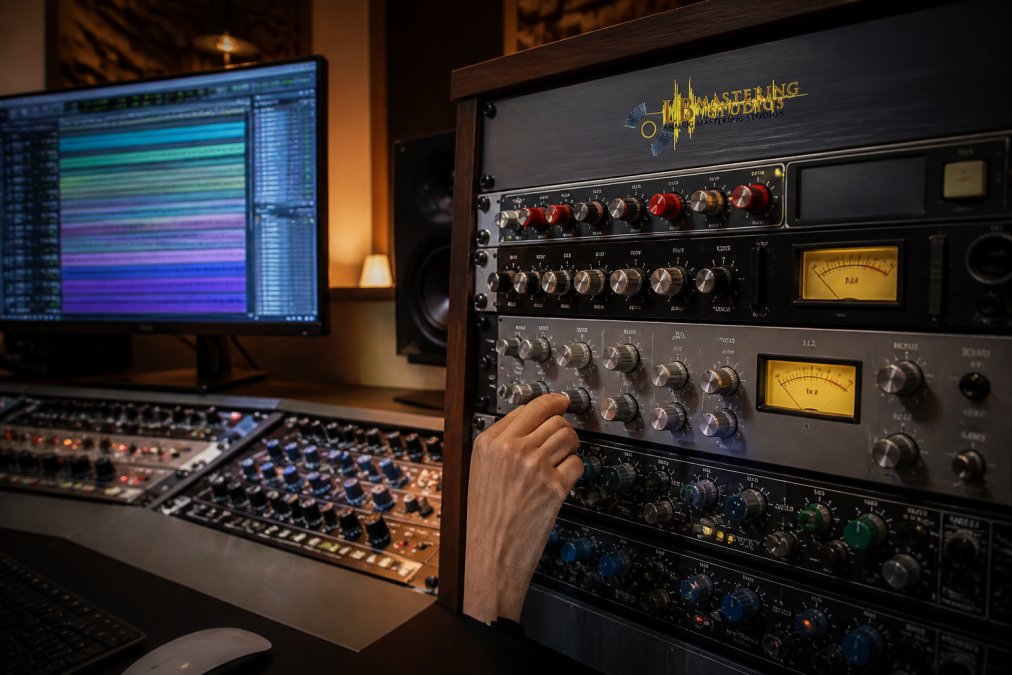
Round-trip latency is the total time for audio to leave your DAW, process through the hardware, and return. Most modern interfaces add 5-20ms of latency per direction, meaning total round-trip might be 10-40ms depending on your setup (peer-reviewed research). Your DAW has delay compensation tools built in that can automatically delay the original signal to match the processed signal latency.
Set up a test track, send a short audio clip out to your hardware and back, measure the timing difference, and configure your DAW accordingly. Once configured correctly, you can work with confidence that your original and processed signals are phase-coherent.
Gain Staging and Phase Coherence
Proper gain staging is non-negotiable when working with analog hardware. Analog gear has a specific operating range where it sounds best. The standard operating level is +4dBu, which corresponds to a specific voltage level (aes.org). Your audio interface needs calibration so that a 0dBFS signal in your DAW translates to approximately +4dBu at the output.
Phase coherence becomes critical when blending the original digital signal with the processed analog signal. If they're not perfectly time-aligned, the two signals partially cancel each other in certain frequency ranges, creating a hollow or comb-filtered sound. Many engineers use a parallel approach: send a copy of the signal to the hardware while keeping the original in the DAW, then blend them together. This gives you flexibility in processing amount without committing entirely to the hardware sound.
Workflow Efficiency and Creative Commitment
Analog gear removes the option for endless adjustment. Once you've routed audio through a compressor, adjusted the ratio and threshold, and committed to that sound, you move forward. This constraint accelerates the mixing process because you're not caught in analysis paralysis.
This workflow efficiency compounds across a full mix. In a purely digital workflow, each decision is revisable, which means each takes longer because you're always wondering if you should reconsider it. In a hybrid workflow with analog gear, decisions feel more final, which paradoxically makes them faster and often better. You're forced to trust your instincts rather than endlessly comparing alternatives.
The creative limitation of analog gear is actually a feature. You can't have unlimited instances of every compressor, EQ, and saturation device. You have to prioritize which tracks truly benefit from hardware processing. This forces strategic thinking about your mixing approach, leading to more cohesive, intentional mixes.
Hybrid Mixing Workflow: Why Studios Combine Hardware and Digital
Modern professional studios combine analog and digital strategically, leveraging the strengths of each domain while minimizing weaknesses.
Digital mixing excels at flexibility, recall, and precision. You can automate parameters with sample-level accuracy, store unlimited versions, and make non-destructive edits. Digital mixing also scales infinitely with unlimited tracks and plugins.
Analog mixing excels at musicality, workflow efficiency, and creative decision-making. Analog gear sounds subjectively warmer because of harmonic distortion and transient response. The tactile interface encourages faster mixing. Physical limitations force strategic thinking about which tools to use where. high end audio quality.
The hybrid workflow uses analog gear for specific, intentional purposes: master bus summing, parallel compression on drums, saturation on vocals, or EQ on individual stems. The rest of the mixing happens in the DAW where digital tools are more efficient. Studios maintaining this hybrid approach report faster mixing sessions and more consistent results. When you have limited analog resources, you use them wisely.
Technical Considerations and Recallability
One legitimate challenge with analog outboard gear is recallability. Digital mixing allows you to save a complete mix as a file that can be recalled exactly. Analog gear doesn't work that way. The practical solution is to develop a documentation system: photograph your hardware settings after each session, creating a visual record of knob positions and switch settings.
Digital control surfaces for analog gear have emerged to address this problem. Some modern analog compressors and EQs include motorized faders or digital recall systems, bridging the gap between analog sound and digital convenience. However, these systems add cost and complexity.
Maintenance and longevity are additional technical considerations. Analog gear requires periodic maintenance: tube replacement, capacitor aging, transformer inspection. A well-maintained compressor from the 1970s will still work perfectly, but it requires attention. Digital plugins never wear out.
When Analog Outboard Gear Makes the Biggest Impact
Analog outboard gear delivers the most noticeable benefits in specific mixing scenarios. Understanding when to use hardware and when to stick with plugins is key to efficient hybrid mixing.
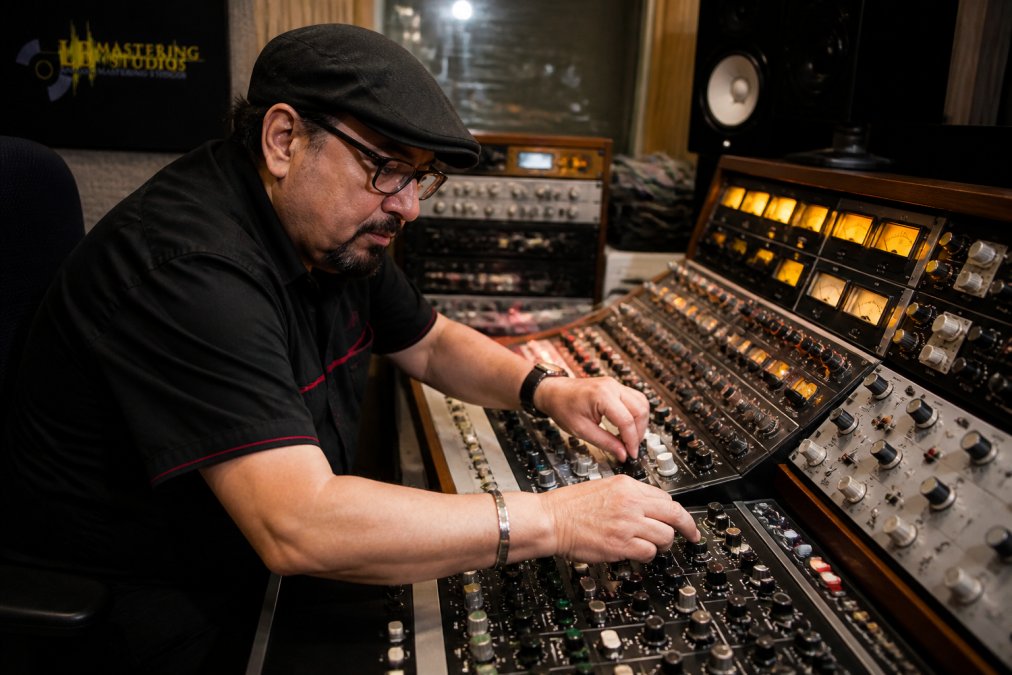
Analog gear shines on the master bus summing stage. When blending all your individual tracks together, analog summing amplifiers add cohesion and musicality that purely digital summing cannot match. The harmonic distortion from the transformer-coupled summing stage makes the mix sound more integrated and "glued."
Parallel compression on drums is another high-impact scenario. The transient response of analog compressors makes them ideal for controlling drum peaks while maintaining punch and attack. A fast analog compressor on a drum parallel channel tightens the overall drum sound in ways that digital parallel compression struggles to match.
Saturation on lead vocals is a third high-impact use case. The harmonic richness that analog saturation adds makes vocals sit better in the mix and sound more present. Lead vocals are often the focal point, so the sonic improvement from analog processing is immediately noticeable.
Analog EQ on individual stems can also deliver significant benefits, particularly on sources with complex harmonic content like strings, pianos, or synthesizers. The phase response of analog EQ differs from digital EQ, and many engineers prefer the musical quality of analog filtering.
The common thread in these high-impact scenarios is that analog gear processes important, prominent elements of the mix. You're not processing background elements; you're processing the elements that define the mix. This is where the benefits of analog processing are most audible and most valuable.
When you're ready to take your mixing to the next level, professional mastering with analog outboard gear can transform your final product. LB-Mastering Studios specializes in hybrid mixing and mastering workflows that combine the precision of digital mixing with the sonic excellence of premium analog equipment. Our team leverages decades of experience with professional-grade analog gear to deliver masters optimized for streaming, CD, vinyl, and physical distribution. Whether you're working on a single song or a full album, our analog mastering process ensures your music reaches its full potential. Book a Session with LB-Mastering Studios today and experience the difference that professional analog mastering makes.
Frequently Asked Questions
What are the primary sonic benefits of using analog outboard gear for mixing?
Analog outboard gear introduces harmonic distortion, saturation, and non-linearities that add musicality and warmth to your mix. Unlike digital processing, analog hardware naturally compresses the dynamic range in ways that sound musical rather than clinical. The transient response of analog equipment captures subtle details in your audio that digital emulations often miss, resulting in a more cohesive, professional sound across streaming platforms and physical formats.
How does analog saturation in digital mixing improve my final master?
Analog saturation adds character and glue to individual tracks and your stereo mix by gently compressing peaks and adding harmonic content. When integrated into a hybrid mixing workflow, saturation smooths harsh frequencies, tightens the frequency spectrum, and improves stereo imaging. This is especially valuable during mastering, where subtle saturation on your summing stage can transform a good mix into a commercial-quality master ready for distribution across all platforms.
Do professional studios still use analog mixers and outboard gear?
Yes. Many professional mastering facilities and high-end mixing studios maintain analog signal chains because the sonic footprint of hardware remains valuable for commercial releases. Studios use analog outboard gear not as a replacement for digital tools, but as an essential part of hybrid setups. This combination delivers the precision of modern DAWs with the musicality and transient response that analog hardware provides, resulting in masters that translate well across all playback systems.
What is round-trip latency and why does it matter when integrating outboard gear with my DAW?
Round-trip latency is the delay that occurs when audio leaves your DAW, travels through analog hardware via AD/DA converters, and returns to your computer. Even small latencies (5-10ms) can cause phase coherence issues and make real-time monitoring difficult. Professional studios compensate for this latency in their DAW settings, ensuring your mix remains phase-aligned. This technical consideration is crucial for maintaining the integrity of your mix during hybrid workflows and preventing unwanted comb filtering that degrades your final master.
This article was written using GrandRanker