
 ultimate-guide
Benefits of Hybrid Mixing for Professional Music Production
Table of Contents
- What Hybrid Mixing Is and Why It Matters
- Analog vs Digital Mixing: Pros and Cons
- How Hybrid Mixing Improves Sound Quality for Streaming
- Best Analog Outboard Gear for Mastering
- Building a Hybrid Workflow: Signal Path and Patchbay Routing
- Solving the Recall and Scalability Challenge
- Why Professional Studios Choose Hybrid Mixing
- Frequently Asked Questions
Last Updated: October 2, 2026
What Hybrid Mixing Is and Why It Matters
Hybrid mixing is the practice of blending analog outboard gear with digital audio workstations to create a final mix that captures the strengths of both worlds.
The benefits of hybrid mixing for professional music production stem from a fundamental reality: analog and digital audio behave differently. Analog equipment imparts harmonic saturation, natural compression curves, and subtle distortion that many engineers and listeners perceive as warmth or musicality. Digital systems offer precision, recall, and unlimited processing power. Hybrid workflows combine both.
At LB-Mastering Studios, we've worked with this approach for decades because it solves problems that either pure analog or pure digital alone cannot address. Streaming platforms demand loudness, clarity, and consistency, digital precision handles that. But those same platforms play music on consumer earbuds and phone speakers where harmonic character and transient response matter enormously.
The real advantage isn't about sounding "warmer" or more "analog." It's about having the right tool for each decision. A compressor with a specific attack curve, a summing amplifier that handles gain staging in a particular way, or an EQ with a particular harmonic response can solve mixing problems that no plugin can replicate exactly.
Analog vs Digital Mixing: Pros and Cons
Understanding the trade-offs between analog and digital mixing explains why hybrid approaches dominate professional studios. Each has genuine strengths and real limitations.
Analog mixing advantages:
- Harmonic saturation and natural compression curves that add musicality
- Tactile control: physical faders, knobs, and switches that many engineers prefer
- Transient response characteristics that can enhance punch and clarity
- Summing and gain staging that feels more natural to many ears
- No latency compensation needed for real-time monitoring
Analog mixing disadvantages:
- No session recall, settings must be photographed, noted, or memorized
- Equipment cost is substantial; quality outboard gear runs into thousands
- Physical space requirements for racks, patchbays, and cabling
- Maintenance, calibration, and occasional repairs
- Less flexibility for rapid A/B comparisons or undo functionality
Digital mixing advantages:
- Perfect recall, save every setting and reopen it identically
- Unlimited processing power and plugin options
- No physical space needed beyond a computer
- Lower entry cost for basic setups
- Instant automation, undo, and version control
Digital mixing disadvantages:
- Plugin emulations approximate but rarely match hardware exactly
- Latency can complicate real-time monitoring and printing
- Screen-based workflow lacks the tactile immediacy of physical controls
- Decision paralysis from too many plugin options
- Sample rate and bit depth limitations (though 24-bit/96kHz minimizes this)
Hybrid mixing sidesteps these trade-offs. You keep digital's recall and flexibility while accessing analog's specific sonic character when it matters most.
How Hybrid Mixing Improves Sound Quality for Streaming
Streaming platforms impose specific technical demands: consistent loudness (measured in LUFS), clean frequency response, and dynamic range that translates across all playback systems. A mix that sounds great on studio monitors might sound thin on earbuds or overwhelmed on cheap Bluetooth speakers.
The benefits of hybrid mixing for professional music production become most apparent here. Analog summing and mastering-chain processing naturally manage dynamic range and harmonic balance in ways that preserve clarity across playback systems.
Consider gain staging, the practice of setting levels correctly at each stage of the signal path. Analog gear handles gain staging in a specific way: pushing signal into a compressor or summing amplifier creates harmonic saturation that sounds musical even at high levels. Digital systems can emulate this, but the curve and character differ.
AD/DA converters, the devices that convert digital audio to analog and back, also play a role. High-quality converters preserve detail in both the high and low frequencies, ensuring that subtle mix decisions translate accurately to the final master. Budget converters can introduce noise or lose information.
Best Analog Outboard Gear for Mastering
Not all outboard gear serves mastering equally. Mastering requires precision, transparency, and the ability to make subtle adjustments without coloring the mix unintentionally.
Mastering-grade compressors are the foundation. Unlike mixing compressors, mastering compressors prioritize transparency and gentle gain reduction. A Fairchild tube compressor, for example, uses a specific VCA topology that adds harmonic character without obvious coloration.
Linear-phase EQs preserve phase relationships across frequencies, critical for mastering where any phase shift can blur the stereo image or muddy the low end.
Summing amplifiers are where many hybrid workflows begin. A quality summing amp takes your mix bus from your DAW, processes it through analog circuitry, and returns it as a stereo pair.
Metering and monitoring matter too. Analog VU meters and peak meters give you a different perspective on levels than digital meters.
The cost of professional mastering outboard gear is significant, but it's an investment that pays dividends across every project.
Building a Hybrid Workflow: Signal Path and Patchbay Routing
A practical hybrid workflow requires careful planning of your signal path and routing logic. The goal is to move audio from your DAW through analog processing and back with minimal latency and maximum flexibility.
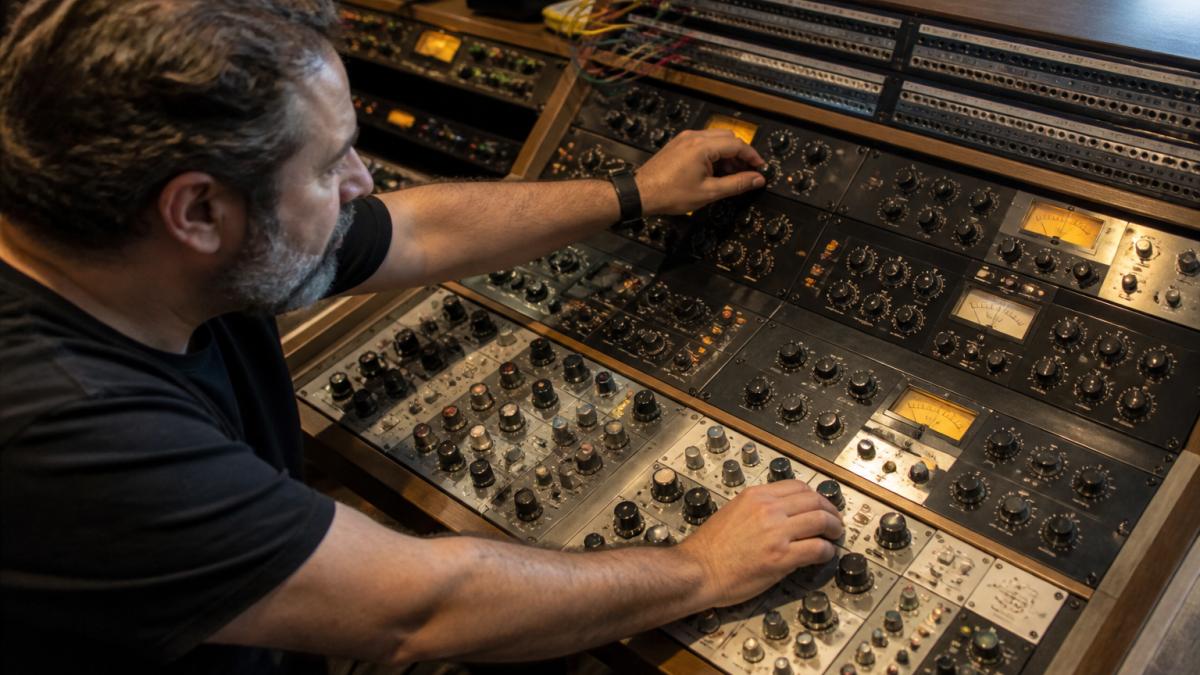
Basic signal path:
- Mix bus output from your DAW goes to your audio interface's analog outputs
- Those outputs connect to your summing amplifier or first outboard processor
- The summing amp's outputs feed into additional processing (compressor, EQ, limiter)
- The final outputs return to your audio interface's analog inputs
- Your DAW records the processed signal back to a new track or bus
This loop introduces latency, the time it takes for audio to travel out of your computer, through the gear, and back in. Latency compensation is essential.
Patchbay routing becomes critical if you have multiple pieces of outboard gear. A patchbay lets you reconfigure connections without physically unplugging cables.
Practical setup considerations:
- Use balanced XLR cables to minimize noise and maintain signal integrity
- Keep cable runs as short as practical to reduce noise and latency
- Label everything clearly so you can recall your signal path
- Test your latency compensation with a known audio file to confirm accuracy
- Consider using a dedicated audio interface with sufficient I/O for your gear count
Many bedroom producers worry that hybrid mixing requires a full mastering suite. It doesn't. Even a single quality summing amplifier and one compressor can transform a mix. Start small, understand your signal path, and expand as your needs grow.
Solving the Recall and Scalability Challenge
The biggest obstacle to hybrid mixing for independent artists and small studios is recall, the ability to return to a previous mix state.
This is where hybrid mixing's reputation for being impractical comes from. But solutions exist.
Documentation strategies are the first line of defense. Photograph your console settings with a smartphone. Note the position of every knob, fader, and switch.
Session recall software bridges the gap. Some engineers use notation systems or spreadsheets to log settings.
Scalability is another concern. If you're mixing ten songs for an album, does hybrid mixing become too cumbersome? The answer depends on your workflow.
For mixing multiple songs, many engineers dedicate specific outboard gear to specific tasks. Your compressor always handles the drum bus; your EQ always handles the vocal chain.
The benefits of hybrid mixing for professional music production include this scalability advantage: once you establish a hybrid workflow that works, you can repeat it reliably across projects.
Why Professional Studios Choose Hybrid Mixing
Professional mastering and mixing studios worldwide have invested in analog outboard gear not out of nostalgia but because it solves real problems. The benefits of hybrid mixing for professional music production are measurable and repeatable.
First, analog processing handles certain mixing challenges that digital cannot.
Second, the tactile control matters more than many engineers admit. When you're adjusting a compressor's threshold by turning a physical knob, you're making a real-time decision with immediate feedback.
Third, analog outboard gear imparts a specific character that listeners recognize and respond to. This isn't mysticism, it's measurable. Harmonic saturation, frequency response curves, and transient handling differ between analog and digital systems.
Finally, professional studios choose hybrid mixing because it's become the industry standard for mastering.
The difference between a mix that translates across all playback systems and one that doesn't often comes down to how intentionally you've managed the overall character and dynamic range.
If you're serious about releasing music that competes commercially, hybrid mixing should be part of your process. LB-Mastering Studios specializes in analog mastering and mixing that leverages this approach to deliver professional-grade results for streaming, vinyl, and physical distribution. Our team uses world-class outboard gear and proven hybrid workflows to ensure your music translates perfectly across all platforms. Book a session and hear the difference that professional hybrid mixing can make. Book a session and hear the difference that professional hybrid mixing can make.
Frequently Asked Questions
Does hybrid mixing actually provide better sound quality than in-the-box mixing?
Yes, when executed properly. Hybrid mixing for music production leverages analog gear's harmonic saturation, transient response, and natural compression characteristics that digital emulations approximate but don't fully replicate. The key is gain staging and proper AD/DA conversion. Professional studios report improved dynamic range, stereo imaging, and perceived warmth, especially critical for streaming standards and vinyl mastering, where analog processing enhances perceived loudness without digital clipping.
What are the main challenges of setting up a hybrid mixing environment?
Three primary challenges: latency compensation (analog signal path delays require precise timing alignment), session recall (analog gear settings aren't automatically saved like DAW parameters), and cost of quality outboard gear and converters. For bedroom producers, space and budget constraints are real. However, scalable solutions exist, starting with a single high-quality analog summing stage or mastering chain rather than a full console setup reduces complexity while delivering measurable sonic benefits.
How does hybrid mixing differ from automated mastering services?
Automated mastering applies generic algorithms to your stereo mix without human judgment or outboard processing. Hybrid mixing for professional music production involves a trained engineer using analog outboard gear, patchbay routing, and tactile control to shape each track's character. An engineer listens critically, makes intentional decisions about harmonic saturation and dynamic range, and optimizes for your specific streaming platform or vinyl format, delivering customized results rather than one-size-fits-all processing.
Can hybrid mixing work for all music genres?
Absolutely. While hybrid mixing is often associated with genres like jazz, classical, or rock, the benefits apply universally. Electronic, hip-hop, and pop producers benefit from analog warmth and dynamic control in mastering chains. The approach is non-genre specific, it's about using the right tool (analog or digital) for each stage of your signal path. Modern streaming standards actually favor hybrid processing because analog saturation masks digital artifacts better than pure ITB (in-the-box) mixing.