
 ultimate-guide
When to Hire a Professional Mixing Engineer in 2026
Table of Contents
- When to Hire a Professional Mixing Engineer: Key Signals
- The Benefits of Professional Audio Mixing for Your Release
- How to Prepare Tracks for Professional Mixing
- Mixing vs Mastering Services: What Each One Does
- Genres and Scenarios Where a Mix Engineer Is Essential
- How to Choose the Right Mixing Engineer
- Common Mistakes When Hiring a Mixing Engineer
- Conclusion
- Frequently Asked Questions
Last Updated: September 17, 2026
When to Hire a Professional Mixing Engineer: Key Signals
Knowing when to hire a professional mixing engineer comes down to three signals: your mix fails to translate across playback systems, you've lost objectivity after dozens of revisions, or your deadline demands a commercial-standard finished product. This guide covers each signal, plus how to prepare your files and choose the right engineer.
Your Mix Translates Poorly Across Systems
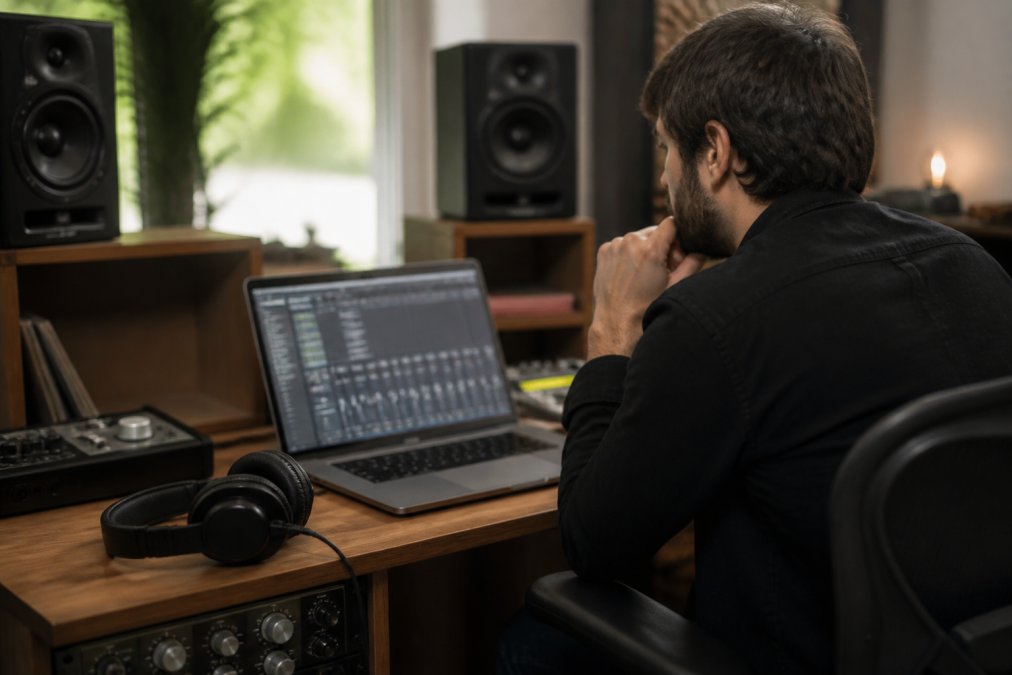
Translation failure is the most common reason artists seek outside help. If your low end disappears on laptop speakers or your vocals vanish in the car, the problem sits in frequency balance and dynamic range. A professional mixing engineer works in a treated room with reference-grade monitors, so decisions rest on accurate information rather than guesswork.
You Are Too Close to the Project
After forty or fifty revision passes, most artists stop hearing the song and start hearing every individual decision they made. That's familiarity, not a talent problem. An outside engineer brings fresh ears, instrument separation expertise, and a reference library built from hundreds of prior mixes.
The Benefits of Professional Audio Mixing for Your Release
Professional audio mixing delivers three concrete benefits: higher production value, faster turnaround, and a final recording that holds up against commercial releases in the same genre. The gap between a home studio mix and an industry-standard mix comes down to hundreds of small decisions made by someone who has made them thousands of times.
How to Prepare Tracks for Professional Mixing
Preparing tracks properly is the single biggest thing you control before handing off a project. Clean, well-labeled stems with consistent levels save your engineer hours, and those hours show up in your turnaround time.
Organize Your Stems and Label Everything
Start with session housekeeping. Consolidate every track from its start point so all files begin at the same timestamp. Name each stem descriptively: LeadVox, BGV_Harmony_L, Kick, Snare_Top, not Audio_17. Remove muted and unused tracks. If you tracked with sound-shaping plugins, print them into the stem unless your engineer asks for both.
Export at the Right Sample Rate and Bit Depth
Export at the session's native sample rate, typically 44.1 kHz or 48 kHz, at 24-bit depth. Do not upsample or apply a master bus limiter. Leave headroom by keeping peaks well below clipping. Provide raw tracks as individual WAV files plus one stereo reference mix of your rough version, which tells the engineer where you were heading creatively.
| Prep Step | What to Do | Why It Matters |
|---|---|---|
| Consolidate | All stems start at bar 1 | Prevents alignment errors |
| Label | Descriptive file names | Speeds up session setup |
| Print effects | Bounce creative plugins | Preserves your sound |
| Export | Native rate, 24-bit WAV | Avoids quality loss |
| Headroom | Peaks below clipping | Gives room to process |
| Reference | Include rough stereo mix | Communicates creative vision |
Mixing vs Mastering Services: What Each One Does
Mixing and mastering are two separate stages, and confusing them leads to mismatched expectations and wasted budget. Mixing balances individual recorded tracks into a cohesive stereo image. Mastering refines that finished stereo mix for distribution across streaming, CD, and vinyl.
Genres and Scenarios Where a Mix Engineer Is Essential
Certain genres and situations make an outside engineer close to mandatory. Dense arrangements, heavy vocal stacks, and anything destined for film, advertising, or sync licensing benefit most, because those contexts demand sonic clarity that's hard to reach in an untreated room.
Consider these scenarios:
- Hip-hop and trap: 808 tuning, vocal layering, and low-end control are unforgiving. A muddy 808 ruins a track faster than almost anything else.
- Pop and R&B: Vocal production carries the song. Pitch, doubles, ad-libs, and harmonies need precise placement to sit in front of a busy instrumental.
- Rock and metal: Guitar and drum separation is the whole game. Wall-of-sound arrangements collapse without careful frequency carving.
- Orchestral and cinematic: Dynamic range matters enormously, and these mixes are often judged on systems far better than a home setup.
- Sync and advertising work: Music supervisors expect broadcast-ready levels and clean stems. Substandard mixes get rejected outright.
How to Choose the Right Mixing Engineer
Choosing an engineer comes down to three filters: portfolio, genre specialization, and communication. What matters is whether their past work sounds like the record you're trying to make, and whether they respond to your notes in a way you can work with.
Portfolio, Genre Fit, and Communication
Listen to at least three full songs from their portfolio, not clips. Pay attention to whether the vocals sit the way you want yours to sit, and whether the low end has the weight you're after. Genre specialization matters more than general experience: an engineer who mixes country all day may not fit a hyperpop record.
The Test-Mix Filter: How to Vet Before You Commit
Most experienced engineers offer a short test mix or sample master on one of your tracks. Treat this as the single most useful vetting tool available. Here's how to get the most out of it:
- Send the same 30-60 seconds to two or three engineers. Use an identical section, usually the first chorus, where the arrangement is densest.
- Give each engineer the same brief. Same reference tracks, same notes about what you want the vocal to do, same target loudness feel.
- Listen blind if you can. Have someone else rename the files so you're judging sound, not reputation.
- Compare on the same three systems. Phone speaker, car, and headphones. The mix that holds up across all three is the one to hire.
Red Flags That Should End the Conversation
Walk away if any of these show up before money changes hands:
- No portfolio in your genre. A wall of unrelated credits means you'll be paying them to learn your style.
- Vague revision terms. "Unlimited revisions" without a scope definition often means endless back-and-forth with no end date, or a quiet cap enforced later.
- No questions about your vision. An engineer who doesn't ask for references, rough mixes, or creative direction is planning to impose their own taste.
- Pressure to skip the test mix. A confident engineer welcomes the audition. Reluctance usually signals they know the fit is wrong.
- Promises about mastering fixing the mix. If they claim mastering will "save" a rough mix, they either don't understand the stages or are overselling.
- No written agreement. Even a short email confirming deliverables, revision count, and turnaround protects both sides.
Questions to Ask Before You Book
Ask these directly and compare answers across candidates:
- Can I hear before-and-after examples from a similar genre?
- How many revisions are included, and what counts as a revision?
- Do you want stems or a stereo mix?
- What's your typical turnaround time?
- Do you offer a sample of your work on one of my tracks?
- Who handles mastering, and is it a separate stage?
- What happens if I'm not happy with the final mix?
That last question matters. A free sample master or test mix lets you judge the fit before spending anything. LB-Mastering Studios provides a free sample master so artists can hear the difference on their own material first.
Common Mistakes When Hiring a Mixing Engineer
The costliest mistakes happen before the first file is ever sent. Artists often shop on price alone, skip the reference track conversation, or hire without confirming genre fit, then wonder why the result doesn't match their vision. The deeper problem is that most artists don't know what the collaboration should look like, so they can't tell when it's going wrong.
What the Client Journey Should Actually Look Like
A well-run mixing project follows a predictable arc. If yours doesn't, that's the first warning sign.
Mistakes That Cost You Time and Money
Here are the pitfalls worth avoiding, framed by where they occur in the journey:
- Chasing the lowest quote: Budget matters, but an engineer who doesn't understand your genre will cost you more in revisions and lost time than one who charges appropriately for the work.
- Sending unorganized stems: Misaligned or badly labeled files add setup hours that get billed back to you or eat into revision time.
- Skipping reference tracks: Without two or three songs that capture the sound you want, the engineer is guessing at your target.
- Sending untimestamped revision notes: "Make the chorus bigger" is not actionable. "At 0:52, the chorus feels thin, can the low synth come up?" is.
- Not discussing revisions upfront: Confirm how many rounds are included and what triggers an additional charge before work begins.
- Expecting mastering to fix a mix: No mastering engineer can repair a fundamentally unbalanced mix. Get the mix right first.
- Disappearing mid-project: Long gaps between your feedback slow momentum and often push the project past its original timeline.
Genre-Specific Traps
Different genres fail in different ways, and knowing the trap helps you brief the engineer correctly:
- Hip-hop and trap: The 808 must be tuned to the key of the track. An untuned 808 fights the bassline and the vocal, and no amount of EQ fixes it after the fact.
- Pop and R&B: Vocal stacks that aren't phase-aligned sound hazy instead of wide. Ask whether the engineer checks phase on doubled vocals.
- Rock and metal: Guitars and cymbals occupy the same frequency range. Without deliberate carving, the mix turns into a wall of hiss.
- Acoustic and singer-songwriter: Over-compression kills the dynamics that make the performance feel human. Ask how they preserve dynamic range.
- Podcast and spoken word: Intelligibility beats musicality. A music-mixing approach applied to voice often buries the message.
The One Question That Prevents Most Problems
Before work starts, ask: "Walk me through what happens from the moment I send files to the moment I get the final master." A professional answers in specific steps with timelines. A vague answer, "I'll mix it and send it back", means the process isn't defined, and undefined processes are where projects go sideways.
Conclusion
Getting a release to commercial standard is a challenge, and the difference between a mix that competes and one that gets skipped often comes down to who finishes it. LB-Mastering Studios brings a Latin GRAMMY Award-winning, 11x Billboard-charting engineer with over 44 years of experience, a specialized analog facility, and a free sample master so you can hear the result before you commit.
Frequently Asked Questions
How much does it cost to hire a mixing engineer?
Pricing depends on the number of songs, the complexity of the project, and the turnaround time you need. Engineers who work on signed artists and charting releases typically charge more than beginners, but rates vary widely. Rather than quoting a single figure, ask each engineer for a custom quote based on your track count and deadline. LB-Mastering Studios provides quotes on request through its website.
What is the difference between mixing and mastering?
Mixing balances individual recorded tracks, setting levels, panning, EQ, and effects so the song sounds cohesive. Mastering is the final polish applied to the finished stereo mix, optimizing loudness, dynamic range, and frequency balance for streaming, CD, or vinyl. A professional mixing engineer shapes the song; a mastering engineer prepares that mix for distribution across all playback systems.
How do I know if my mix is good enough to release?
Test your mix on multiple systems: car speakers, phone speakers, earbuds, and studio monitors. If vocals sit too far back on one system or the low end disappears on another, the mix needs work. Also compare your track's loudness and tonal balance to commercial releases in your genre. If it sounds noticeably thinner or muddier, a professional mixing engineer can close that gap before you release music.
What should I look for when vetting a mixing engineer?
Check their portfolio for songs in your genre, read client reviews, and ask about their revision policy. A good engineer communicates clearly, respects your creative vision, and can explain their process without jargon. Confirm whether they accept stems or a stereo mix, how many revisions are included, and what file formats they deliver. Experience level matters, but genre specialization and communication often matter more.