 blog
blog
Vinyl Mastering vs Digital Mastering Explained
Table of Contents
- Why Vinyl Mastering and Digital Mastering Are Different
- Physical Groove Constraints and Record Pressing Limits
- Vinyl Mastering Bass and Stereo Width Requirements
- Frequency Response, Sibilance, and High-Frequency Control
- Vinyl Pre-Master Checklist: What You Need Before Cutting
- Vinyl Mastering Requirements: Track Sequencing and Side Duration
- Should You Create Separate Masters or Use One for Both Formats
- Work With a Mastering Engineer Who Understands Both Formats
- Frequently Asked Questions
Last Updated: October 17, 2026
Why Vinyl Mastering and Digital Mastering Are Different
Vinyl mastering and digital mastering differ fundamentally: vinyl records have strict physical constraints that digital formats don't face. A vinyl master prepares audio for a physical groove; a digital master optimizes for playback on devices with no physical limitations.
A vinyl master must account for the needle, groove width, and mechanical playback; a digital master only needs to work within software parameters and file specs.
At LB-Mastering Studios, we've worked with artists who thought one master could serve both formats. It can't: your mix might sound great on Spotify but fail during vinyl cutting, or press beautifully but sound thin on streaming.
Understanding vinyl mastering vs digital mastering matters whether you're releasing on vinyl, digital-only, or both, the choice affects how your engineer approaches your mix from the start.
Physical Groove Constraints and Record Pressing Limits
A vinyl record's groove is a physical spiral carved into polyvinyl chloride, with width, depth, and spacing limits. The mastering engineer must respect these constraints or the record won't cut or play back cleanly.
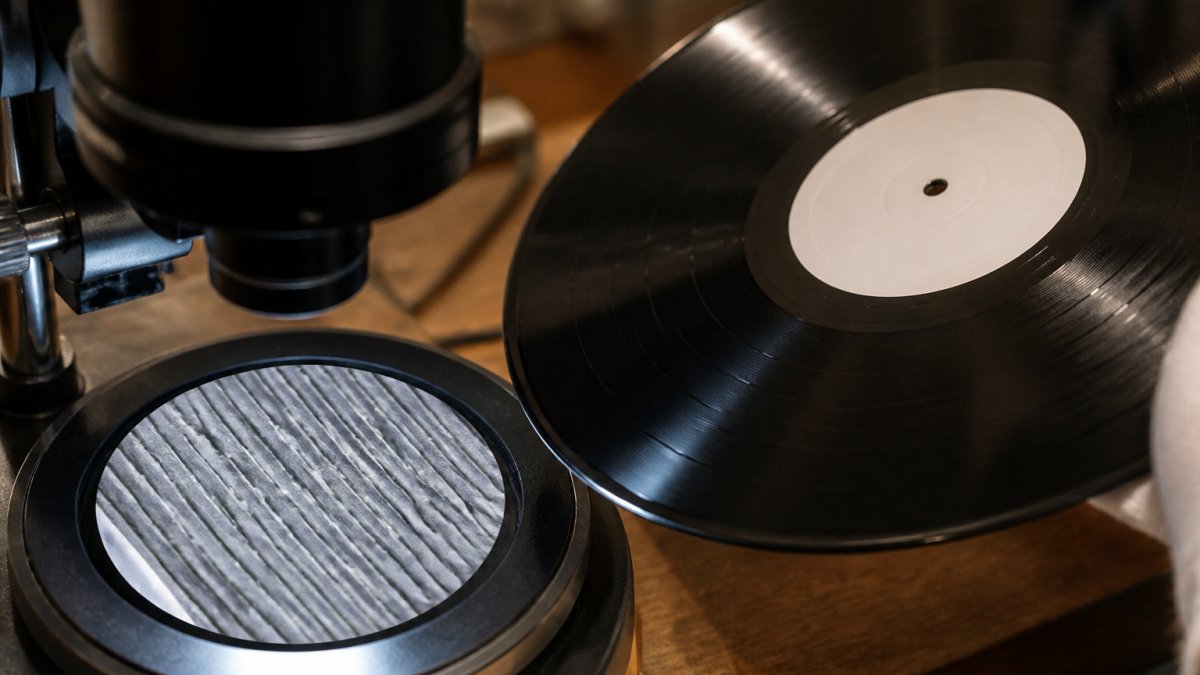
Groove width determines how much information fits: wider grooves mean fewer tracks per side; narrower grooves fit more music but risk inner-groove distortion. The cutting engineer controls groove width by managing levels sent to the lathe.
Peak levels matter more for vinyl than digital. A peak that's fine for streaming can cause the cutting stylus to jump or distort on vinyl, which is why vinyl masters often have lower peak levels.
Stereo width also has limits: hard-panned content can cause tracking issues because the stylus struggles to follow extreme separation. Vinyl masters typically use mono compatibility checks and reduce extreme stereo width.
Track length and sequencing matter too. A record has a fixed amount of space per side, and longer or more tracks per side mean lower volume and higher distortion risk. Your engineer needs track order and total side duration before starting.
Vinyl Mastering Bass and Stereo Width Requirements
Bass frequencies behave differently on vinyl than in digital playback. Low frequencies require more groove space and can cause tracking problems if not managed carefully. This is where vinyl mastering and digital mastering diverge most noticeably.
Vinyl mastering requires bass management that digital mastering doesn't. Very low frequencies, typically below 60 Hz, are often reduced or converted to mono, stabilizing the groove and preventing the stylus from jumping.
Stereo bass can work if controlled, but extreme low-end separation makes the stylus work harder and the groove unstable. Most vinyl masters use high-pass filters or bass management to keep lows centered.
Midrange and high-frequency stereo information can remain wider. Vocals and instruments in the midrange and treble can spread across the stereo field, so engineers often preserve width there while tightening the bass.
This sounds different from a digital master, which can push bass hard into both channels with no physical consequence. Vinyl masters sound warmer and more centered in the low end; some listeners prefer this character, others notice the difference immediately.
Frequency Response, Sibilance, and High-Frequency Control
Vinyl playback has natural frequency limits that digital doesn't. The stylus and cartridge respond best between roughly 20 Hz and 20 kHz, but the practical range is narrower. Highs above 15 kHz can become problematic, especially sibilance, the harsh "s" and "sh" sounds in vocals.
Harsh sibilance can cause the cutting stylus to jump or produce surface noise, so vinyl mastering engineers use de-essers or EQ to reduce it before the cut.
Digital masters don't need this treatment: streaming platforms and CDs handle sibilance without physical consequences.
High-frequency rolloff is common in vinyl mastering. A gentle high-pass filter or shelf EQ above 12-15 kHz smooths harshness and protects the pressing, giving vinyl masters a warmer, softer character. Some artists love this sound; others find it too dark.
Transients, the sharp attack of drums and percussion, also need attention. Vinyl masters often use gentle compression or limiting to control peaks, preventing the stylus from jumping and reducing distortion. Digital masters can have sharper transients without risk.
Vinyl Pre-Master Checklist: What You Need Before Cutting
Most vinyl problems are decided before the lathe ever spins. A clear, complete handoff prevents revisions, wasted lacquers, and test-pressing surprises. Use this checklist as a deliverables and communication template.
**1.
2. Alternate versions Send any alternate mixes you want considered: instrumental, TV mix (no lead vocal), a cappella, and edited short versions.
3. Track order and side breaks Provide the exact sequence and total duration per side.
4. Loudness and dynamic-range intent State whether you want maximum perceived loudness or maximum cleanliness and headroom.
5. Bass management preference Confirm whether you expect mono bass below roughly 60-100 Hz (standard for most modern cuts) or want to preserve stereo low end where the material allows.
6. Sibilance and high-frequency notes Point out tracks with aggressive "s" and "sh" sounds, bright cymbals, or dense high-frequency content. Vinyl playback can turn harsh sibilance into distortion or mistracking.
7. Reference records Name one or two pressed records whose tonal character and low-end feel match your goal. References help the engineer calibrate warmth, high-frequency rolloff, and bass weight.
8. Pressing plant and project specs Tell the engineer which pressing plant you're using, the record size (12-inch, 10-inch, 7-inch), speed (33 1/3 or 45 RPM), and expected run length.
9. Label copy and metadata Provide final song titles, side designations (A/B, C/D), and any locked-groove or run-out etch requests.
Vinyl Mastering Requirements: Track Sequencing and Side Duration
Track sequencing directly affects how your vinyl master sounds. Track order determines total duration per side, which determines the cutting parameters.
Longer sides require more aggressive cutting. The groove must be narrower to fit more music, raising distortion risk and inner-groove distortion near the end of the side.
Most vinyl records use 20-25 minutes per side, the sweet spot between fitting enough music and maintaining sound quality. Sides under 15 minutes allow wider grooves and cleaner sound; sides over 30 minutes require very aggressive cutting.
Your engineer needs total side duration before starting to adjust cutting level and EQ, a 20-minute side gets different treatment than a 25-minute side.
Track spacing matters too. Gaps between tracks affect how the cutting lathe operates. Your engineer will sequence the tracks and set appropriate gaps for vinyl playback.
Should You Create Separate Masters or Use One for Both Formats
Separate masters usually sound better, but the right choice depends on how much the formats differ for your specific program material. Evaluate the trade-offs below.
What a vinyl master typically changes A vinyl-specific master commonly applies mono bass below roughly 60-100 Hz, gentle high-frequency rolloff or de-essing, controlled peak levels to protect the cutting stylus, and reduced extreme stereo width in the low end. These choices stabilize the groove and reduce distortion risk, yielding a warmer, more centered sound with softer high-frequency extension.
What a digital master typically changes A digital master can keep stereo bass, sharper transients, brighter highs, and higher peak loudness because there's no physical playback constraint. Streaming platforms apply their own loudness normalization, so a very loud digital master may simply be turned down.
When one master can work A single master is a reasonable compromise when your music is mid-focused, has modest sub-bass, limited hard-panned low end, and side durations comfortably under 20 minutes. Acoustic, folk, jazz, and sparse singer-songwriter material often survives a unified master with minimal audible penalty. If vinyl is a secondary collectible and digital is primary, a well-made unified master can be acceptable.
When separate masters are worth it Separate masters pay off when the program is bass-heavy (electronic, hip-hop, reggae, modern pop), when sides run long, when the mix uses wide stereo bass or hard-panned low end, or when bright, sibilant vocals are central.
The measurable trade-offs
- Groove width vs. side duration: wider grooves improve playback but reduce available time; narrower grooves fit more music but raise inner-groove distortion risk.
- Bass mono vs. stereo width: mono bass stabilizes the stylus but narrows low-end image; stereo bass preserves width but increases tracking risk.
- Peak level vs. loudness: lower peaks protect the cut but reduce perceived level; higher peaks raise distortion and mistracking risk.
- High-frequency extension vs. sibilance control: brighter masters sound open but can mistrack; controlled highs play safer but can read as darker.
A practical decision path
- Note total side durations and the bass-heavy tracks.
- Identify any hard-panned low end or extreme stereo bass.
- Flag bright, sibilant vocals or dense cymbals.
- Decide whether vinyl is a primary or secondary format.
- If two or more risk factors are present, budget for separate masters.
At the conclusion of your project, the right mastering partner can help you weigh these trade-offs and prepare format-specific deliverables that respect vinyl's physical limits while optimizing for digital playback.
Work With a Mastering Engineer Who Understands Both Formats
Not all mastering engineers understand vinyl mastering vs digital mastering or have vinyl experience. Many modern engineers work exclusively in digital, understanding streaming optimization and loudness standards but lacking hands-on vinyl cutting knowledge.
Finding an engineer who understands both formats matters. They need to know how vinyl cutting works, what causes distortion, and how to manage technical constraints, plus have experience with pressing plants and the relationship between the master and the final pressed record.
Experience matters: an engineer with vinyl mastering experience has tested their work on actual records and knows what sounds good digitally but fails on vinyl.
Ask potential engineers about their vinyl experience. Do they cut their own test pressings? Have they worked with specific pressing plants? Can they explain the trade-offs between vinyl and digital mastering? Their answers will tell you whether they understand the format.
LB-Mastering Studios specializes in vinyl mastering alongside digital formats. Our engineer has over 44 years of professional experience and understands the technical requirements of both vinyl cutting and digital optimization.
Vinyl mastering requires technical knowledge that digital mastering doesn't demand. Groove width, bass management, sibilance control, and side duration all affect how your master is prepared.
When you're ready to master your vinyl release, LB-Mastering Studios can handle both your vinyl and digital masters. We offer vinyl mastering services designed for artists serious about physical and digital distribution.
Frequently Asked Questions
Do vinyl records need a different master than digital releases?
Yes. Vinyl mastering requires separate adjustments for bass management, stereo width, and peak levels because of physical groove constraints. Digital masters optimize for streaming platforms with no physical limitations. Using the same master for both formats often results in playback issues on vinyl, including groove distortion, inner-groove distortion, and surface noise. A mastering engineer can create format-specific masters that maximize audio quality for each medium.
Why does vinyl mastering require different bass and stereo settings?
Vinyl's physical groove has strict limits. Excessive bass or wide stereo information causes the cutting stylus to cut too deep or wide, risking groove collapse and playback problems. Vinyl mastering typically reduces low-frequency width to mono below 100 Hz and limits overall stereo width. Digital mastering has no such constraints and can preserve full stereo information and extended bass. These adjustments prevent distortion and ensure clean playback on turntables.
How should I prepare audio files for vinyl mastering?
Provide a high-resolution stereo mix (24-bit minimum) with proper headroom and no clipping. Ensure your mix is sequenced with appropriate gaps between tracks and calculate total side duration to fit within vinyl's playback limits (typically 18-22 minutes per side). Include track metadata and any specific notes about dynamics or problem frequencies. A mastering engineer will evaluate your source material and recommend adjustments before cutting.
Can the same master be used for vinyl and streaming?
Technically possible but not recommended. Streaming platforms like Spotify and Apple Music tolerate the full frequency range, wide stereo, and higher loudness that digital masters provide. Vinyl requires compromises in these areas to prevent playback issues. Using a vinyl master on streaming results in unnecessarily restricted audio; using a digital master on vinyl causes distortion and groove problems. Separate masters ensure each format sounds its best and performs reliably during playback and pressing.