 listicle
Best Expert Mixing and Mastering Services for Pro Sound
Table of Contents
- Expert Mixing and Mastering Services: What Sets Them Apart?
- How We Evaluated the Best Mixing and Mastering Services
- AI vs. Human Mastering Engineers: What Actually Changes Your Sound
- Professional Stem Mastering Services and Stereo Mastering Compared
- How to Prepare Tracks for Professional Mixing and Mastering
- Understanding Mixing and Mastering Turnaround Time
- What to Look For in a Mastering Engineer
- Find Your Professional Mixing and Mastering Partner
- Frequently Asked Questions
Last Updated: September 8, 2026
Expert Mixing and Mastering Services: What Sets Them Apart?
Every artist reaches the point where a track sounds finished in the DAW, yet something still separates it from commercial releases. Expert mixing and mastering services for professional sound enhancement bridge that divide through trained ears, calibrated rooms, and signal chains built from premium analog hardware.
The LB-Mastering Studios team has spent over 44 years inside professional mastering environments. A true mastering engineer works with frequency balance, dynamic range, stereo imaging, and loudness normalization in a treated room with acoustic transparency, delivering audio that translates consistently across streaming platforms, club systems, and physical formats.
Mastering is not a single process. The best expert mixing and mastering services for professional sound enhancement tailor every decision to the genre, the delivery format, and the artist's vision.
How We Evaluated the Best Mixing and Mastering Services
Professional mastering services fall into distinct categories. We evaluated providers across engineer credentials, signal chain quality, format specialization, revision policies, and turnaround time.
The landscape breaks down into three main groups. AI platforms offer instant processing at subscription prices, useful for demos and quick releases. Freelance marketplaces connect you with individual engineers at varying price points. Dedicated mastering studios provide the most consistent results, with specialized facilities and experienced engineers who work on your music daily.
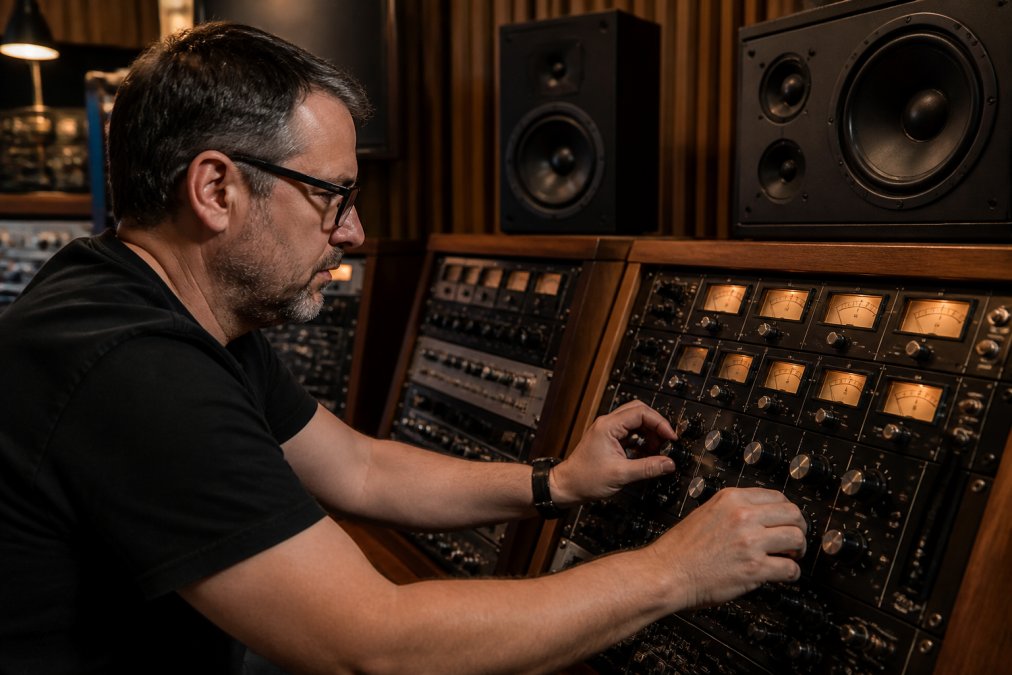
For serious releases, the studio model consistently delivers superior audio fidelity. A dedicated facility invests in acoustic treatment, premium converters, and analog outboard gear that shapes sound in ways plugins alone cannot replicate. The engineer's experience also matters enormously. According to AES technical guidelines on loudness and mastering practice, the human ear's response to dynamic processing varies significantly between listeners, which is why trained judgment remains central to professional results.
AI vs. Human Mastering Engineers: What Actually Changes Your Sound
AI mastering tools have improved dramatically and serve a real purpose: instant processing, low costs, and consistent results for podcasts, demos, and content where speed matters more than nuance. But automated systems work from statistical models, not from an understanding of your specific artistic intent.
A human mastering engineer listens critically to your reference track and makes decisions that serve the song's emotional arc. The difference becomes audible in how transients are shaped, how the low end remains controlled without sounding pumped, and how the stereo image widens naturally rather than artificially.
Professional studios use analog equipment that introduces musical saturation and subtle nonlinearities; digital processing is cleaner but often sterile. The best expert mixing and mastering services for professional sound enhancement combine both approaches.
Professional Stem Mastering Services and Stereo Mastering Compared
Understanding the difference between stem mastering and stereo mastering helps you choose the right service for your project.
Stereo mastering works with your final two-track mix. The engineer applies equalization, compression, and limiting across the complete mix. This approach preserves the integrity of your balance and is the industry standard for most releases.
Stem mastering provides the engineer with separated groups: drums, bass, vocals, instruments. This allows targeted corrections within each group, offering more control over frequency balance and dynamic range. Professional stem mastering services suit mixes that need specific elements addressed without remixing the entire song.
| Service Type | What You Send | Engineer Can Adjust | Best For |
|---|---|---|---|
| Stereo Mastering | Final 2-track mix | Overall balance, EQ, dynamics | Finished mixes, most genres |
| Stem Mastering | Grouped tracks (drums, bass, vox) | Individual group balance | Complex mixes needing refinement |
| Vinyl Mastering | Stereo or stems | Groove spacing, RIAA curve | Physical releases |
Vinyl mastering deserves special attention. It requires specific techniques: managing low frequencies to prevent groove skipping, adjusting stereo placement for cartridge tracking, and applying the RIAA equalization curve correctly. Not every service handles vinyl properly. If you're releasing both digital and physical formats, confirm your engineer has dedicated vinyl mastering experience.
How to Prepare Tracks for Professional Mixing and Mastering
Preparation is the single most impactful step you can take to ensure your project reaches its full potential. A well-organized session directly translates into a better final master.
The Pre-Mix Checklist: Beyond the Basics
Before you export, run through this checklist to ensure your session is ready for a high-end analog chain.
- Consolidate and Clean: Ensure all tracks start at the same point with no unintended silence or clipping. The mastering engineer's job is to enhance the music, not to fix editing errors.
- Print Your Effects: If you use hardware effects or plugin chains integral to your sound, print them to audio so the engineer hears exactly what you intend.
- Gain Staging: Leave headroom on the master bus and keep individual tracks at healthy levels so the mastering engineer has dynamic range to work with.
- Reference Tracks: Provide 2-3 reference tracks and explain what you like about each one, the low-end punch of one, the vocal presence of another, to give the engineer a clear target.
- Session Notes: Mention specific concerns and what you don't want changed. This prevents an engineer from "fixing" something you intentionally did.
File Delivery Standards: A Practical Guide
While 24-bit WAV at 44.1 kHz is the standard, understanding why helps you make informed decisions.
- Bit Depth: 24-bit is mandatory, providing a theoretical dynamic range of 144 dB, far exceeding the 96 dB of 16-bit audio (en.wikipedia.org).
- Sample Rate: 44.1 kHz is the CD standard and perfectly adequate for any streaming service. If you recorded at 48 kHz, deliver at 48 kHz. Upsampling to 96 kHz does not add quality and can introduce artifacts.
- File Type: WAV or AIFF are both acceptable. Never send MP3 or AAC files; the data lost during compression is gone forever.
Integrating with Your Distribution Plan
The preparation process extends beyond the audio file. The metadata embedded in your track is what connects it to streaming platforms.
- ISRC Codes: An International Standard Recording Code (ISRC) is a unique identifier required for royalty tracking. Ensure you have this code before you send your track for mastering, as it is embedded in the final file.
- Metadata: Your mastering engineer can embed track title, artist name, album name, and ISRC directly into the WAV file. Provide this information in your session notes.
- Loudness Targets: The current streaming standard is approximately -14 LUFS for integrated loudness, but a professional master will often be louder, relying on platform normalization (support.spotify.com). Discuss your primary distribution platform with your engineer so they can tailor the master's dynamics.
By treating preparation as part of the creative process, you empower the mastering engineer to work at their highest level, ensuring your music translates perfectly from your studio to the world.
Understanding Mixing and Mastering Turnaround Time
Turnaround time varies significantly across services.
AI platforms deliver results in minutes. Freelance engineers typically return masters within three to seven days, depending on their workload. Dedicated studios offering professional mixing and mastering turnaround time of two to five business days per song are common, with album projects taking longer.
A single track moves faster than a twelve-song album. Revision cycles add time, so clarify how many revisions your service includes. Seasonal demand around major holidays fills studio calendars quickly.
Plan your release backward from your distribution date, accounting for the two to three weeks that digital distribution typically requires. Booking your mastering session two to three weeks before your target release date provides comfortable margin for revisions.
What to Look For in a Mastering Engineer
Credentials and gear are necessary but not sufficient. The most critical factor is whether the engineer's aesthetic judgment aligns with your artistic vision. A professional service will offer a free sample master, but how you evaluate that sample is what separates a successful collaboration from a disappointing one.
The Blind A/B Testing Methodology
Our ears are easily fooled by expectation and volume. A louder master will almost always sound "better" in a quick A/B test, even if it is less dynamic or has a harsher high end. Here is a framework for objective evaluation.
- Level-Match Your Tracks: In your DAW, insert a gain plugin on the mastered track and lower its gain until both tracks match on a loudness meter (like Youlean Loudness Meter). When level-matched, you are hearing the quality of the processing, not just a volume difference.
- The A/B/X Test: Have a friend set up a blind test so you don't know which track is playing. If you can consistently identify the mastered track as clearer, wider, and more polished, it is a good master. If you cannot tell the difference, the engineer may not be adding enough value.
- Listen on Multiple Systems: Listen to the test master on your car stereo, phone speaker, and consumer earbuds. A great master will translate well across all of these.
- Evaluate the Specifics: Ask yourself: Is the low end tighter or just louder? Are the vocals more present or harsh and sibilant? Is the stereo image wider or artificially widened and phasey? Does the track have punch or does it sound squashed?
The Role of Communication and Revision Policy
The best engineers are also excellent communicators. When you receive your test master, ask what main issues they heard, what processing they applied, and how they ensured it translates to streaming platforms. A vague response like "I just made it sound bigger" is a red flag; a detailed response mentioning specific frequency ranges and dynamic control shows deep understanding.
Beyond the Sample: The Long-Term Partnership
A single test master is a snapshot; the best relationships are built over multiple projects. Look for an engineer who offers a clear revision policy (one to two rounds is standard), is responsive and accessible, and understands your genre's conventions.
This objective approach ensures that when you choose a professional service, you are doing so because they have proven they can enhance your sound, not just because of a name on a website.
Find Your Professional Mixing and Mastering Partner
Choosing the right mastering service comes down to matching your project's needs with the right expertise. For independent artists, the learning curve can feel steep; for labels, consistency and reliability become priorities.
LB-Mastering Studios offers the combination of experience and specialized equipment that serious releases demand. Our dedicated analog mastering environment and our engineer's Latin GRAMMY and Billboard recognition support CD, stem, and vinyl mastering, with a free sample master so you can hear the difference before committing. Book a session at LB-Mastering Studios and hear what a world-class analog mastering facility can do for your sound.
The best expert mixing and mastering services for professional sound enhancement share one trait: they treat your music with the same care you invested in creating it. Working with a professional studio means your final master meets industry standards for loudness, frequency balance, and audio fidelity, ready for streaming and physical distribution.
Whether you're a producer finalizing tracks for commercial release or an artist preparing your first album, professional mastering is the final step that ensures your music sounds its best everywhere it plays. Book a session at LB-Mastering Studios and hear what a world-class analog mastering facility can do for your sound.
Frequently Asked Questions
How much does it cost to professionally mix and master a song?
Pricing for professional mixing and mastering services varies widely depending on the engineer's experience, the project's complexity, and whether you need stem mastering or a simple stereo master. While AI tools offer subscription plans starting around $12 per month, a professional human engineer's fee reflects their expertise, studio quality, and the time spent on your project. For specific pricing, request a quote from the studio directly, as costs depend on your track count and delivery requirements.
Is AI mastering better than professional human-led mastering?
AI mastering services offer speed and affordability, making them a good starting point for demos or content where convenience matters more than perfection. However, professional human-led mastering provides a critical listening ear, analog signal chains, and the experience to make creative decisions that serve the music. A human engineer can address subtle frequency balance issues and ensure your track translates well across all playback systems, a level of nuance AI algorithms have not yet matched.
What is the difference between stem mastering and stereo mastering?
Stereo mastering processes a single, mixed stereo file, which is the standard approach for most tracks. Professional stem mastering services, on the other hand, work with the individual element groups, such as vocals, drums, and bass, before the final stereo bounce. This provides greater control to fix specific issues or enhance the mix's clarity without affecting the whole track, making it a preferred choice for complex productions or when the mix needs more detailed attention.
How long does it take to get a song professionally mixed and mastered?
Mixing and mastering turnaround time varies by service and complexity. Some online services advertise a 2-3 day turnaround per song, while a dedicated professional studio might require more time for a full album project to ensure the highest audio fidelity. The process includes an initial review, the mastering session itself, and time for your revision cycles. Always confirm the expected delivery schedule before booking to align with your release timeline.
What should I look for when hiring a professional mixing and mastering engineer?
Look for a proven track record, such as charting credits or awards, and listen to their past work to see if it matches your sonic goals. Ask about their signal chain and whether they use analog outboard gear, and ensure they provide a reference track match. A free sample master is a great way to evaluate if their approach fits your music. Also, clarify their revision policy to ensure you are comfortable with the process before committing.