 listicle
Best Access to Analog Outboard Gear for Pro Sound
Table of Contents
- What Makes Analog Outboard Gear Essential for Professional Sound Enhancement
- Analog vs Digital Mastering: Where Each One Wins
- Best Hardware Limiters for Mastering: What to Look For
- Your Access Options: Owning, Renting, or Outsourcing Analog Outboard Gear
- DAW Integration and Hybrid Mixing Workflow
- Professional Mastering Services: What Separates Expert Results from DIY
- Conclusion
- Frequently Asked Questions
Last Updated: August 30, 2026
What Makes Analog Outboard Gear Essential for Professional Sound Enhancement
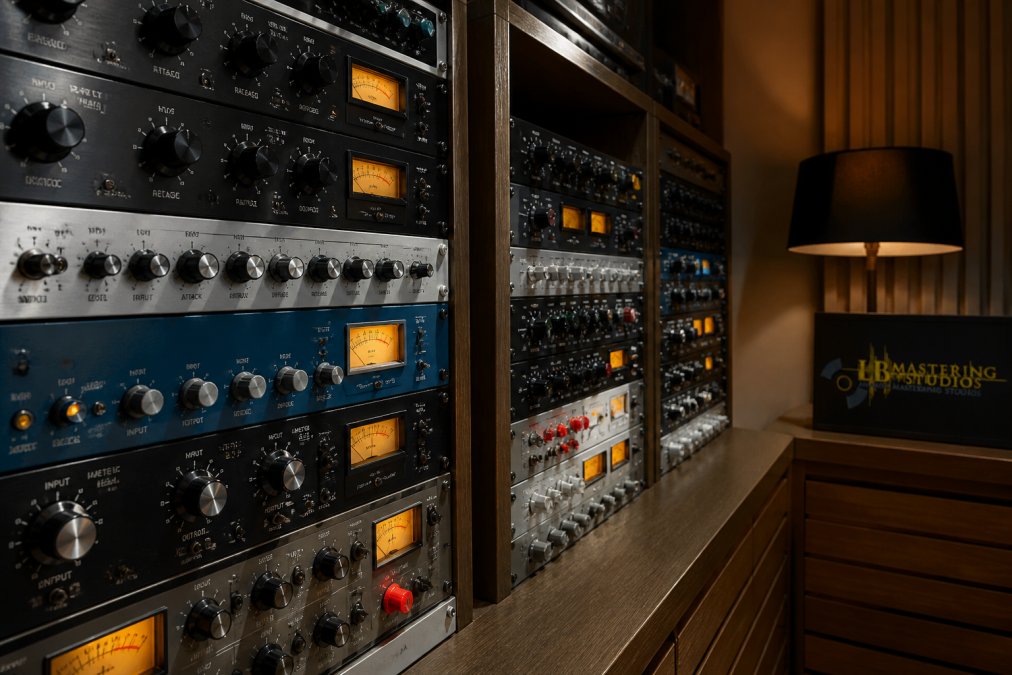
Analog outboard gear, hardware signal processors, compressors, equalizers, limiters, tape machines, and transformers inserted directly into the signal chain, produces results that no plugin fully replicates. The core reason is physics: analog circuitry introduces controlled harmonic distortion, transformer saturation, and dynamic response that is inherently continuous rather than sample-by-sample. These qualities give recorded music weight, breath, and presence.
Harmonic Distortion, Saturation, and Sonic Character
Harmonic distortion adds overtones generated by the non-linear behavior of tubes, transformers, and transistors. At low levels, even-order harmonics add warmth and richness. At higher levels, saturation compresses transient peaks and introduces audible character. Different circuit topologies produce distinctly different flavors: tube circuitry tends toward soft, even-order harmonic content, while transformer-coupled solid-state designs add density and punch.
Signal Chain Components Every Mastering-Grade Studio Uses
A professional mastering signal chain typically includes:
- Input gain staging, Setting optimal levels before processing begins
- Broad equalization, High-quality EQ for tonal shaping and corrective work
- Bus compression, Glue compression that controls dynamic range across the full mix
- Limiting, Brickwall or vari-mu limiter for final peak control and loudness targeting
- AD/DA conversion, High-resolution converters that translate between analog and digital domains
The patch bay ties these components together, allowing quick reconfiguration and experimentation. Stepped controls on each unit ensure precise hardware recall.
Analog vs Digital Mastering: Where Each One Wins
Analog mastering wins on dynamic response, transient behavior, and harmonic complexity. Hardware compressors and limiters respond to audio in a physically continuous way, producing natural-feeling dynamic range reduction and glue that is difficult to achieve in the box.
Digital mastering wins on precision, repeatability, and recall. DAW sessions restore to exactly the same state weeks later. Linear-phase EQ and look-ahead limiting are only possible digitally. For surgical correction work, digital tools are faster and more accurate.
The professional standard is a hybrid workflow: use analog hardware for character-building stages and digital tools for precision correction and final delivery formatting.
Objective A/B Testing: How to Hear the Difference Clearly
Objective A/B testing compares two processing states at matched loudness levels to evaluate sonic differences without bias. Louder-sounds-better bias affects judgment even at 0.5 dB differences. The correct methodology:
- Process through your analog chain and capture the output
- Match the output level to the unprocessed signal using a reference meter
- Switch between versions in real time, blind if possible
- Listen specifically to transient response, low-end definition, and stereo width
This approach separates genuine sonic improvement from loudness-induced preference.
Best Hardware Limiters for Mastering: What to Look For
Mastering-grade limiters prioritize transparency at high gain reduction levels, minimal inter-sample peak generation, and release characteristics that avoid pumping artifacts. Attack and release controls should be stepped or detented for precise hardware recall.
Key specifications:
- Lookahead capability, Anticipates transients before they arrive
- True peak detection, Essential for streaming delivery
- Gain reduction metering, High-resolution display of limiting amount
- Transformer-coupled output stage, Adds density and controls release musically
As Recording Academy's technical resources for music production notes, true peak compliance is now a non-negotiable requirement for professional delivery.
Vari-Mu Compressors and Bus Compression for Glue
Vari-mu compressors are tube-based processors where gain reduction is controlled by varying vacuum tube bias current, producing a compression ratio that changes continuously with signal level. This creates smooth, musical compression particularly effective on full mixes and stereo buses.
Bus compression for glue applies light compression across the full mix, typically 2 to 4 dB of gain reduction, creating cohesion between elements. Vari-mu compressors excel here because their program-dependent release behavior adapts to the music, tightening on dense passages and relaxing on sparse ones.
Hardware Type | Best Application | Key Characteristic | Recall Method |
|---|---|---|---|
Vari-mu compressor | Bus glue, full mix | Program-dependent release | Stepped controls |
Solid-state VCA compressor | Transient control, punch | Fast, precise attack | Stepped controls |
Optical compressor | Vocal chain, transparency | Slow, musical response | Detented pots |
FET limiter | Peak limiting, aggression | Very fast attack | Stepped controls |
Tube limiter | Mastering-grade limiting | Smooth, colored | Stepped controls |
Your Access Options: Owning, Renting, or Outsourcing Analog Outboard Gear
Access to analog outboard gear takes three primary forms:
Owning means purchasing hardware outright and installing it in a physical studio. This gives maximum control and unrestricted session time but requires substantial capital, maintenance knowledge, and acoustic treatment.
Renting provides access to specific units for defined periods through professional studios or gear rental companies. This works for one-off projects but adds logistics friction.
Outsourcing to a professional mastering engineer delivers the highest quality-to-cost ratio for most independent artists and producers. You receive mastering-grade hardware benefits without capital expenditure and gain the expertise of an engineer trained to use that hardware effectively.
Remote Hardware Integration: Technical Requirements and Latency Realities
Remote hardware integration routes audio from a DAW to physical outboard gear in a different facility, processes it in real time, and returns the signal. Round-trip latency is the primary constraint. For real-time monitoring to be usable, combined latency must remain below approximately 20 milliseconds (aes.org). Achieving this over standard internet connections is not reliably possible; it typically requires dedicated low-latency audio-over-IP infrastructure.
The practical approach: send files to a facility, have the engineer process them on hardware, and receive processed files back. This eliminates latency constraints and allows full attention to processing decisions. High-resolution converters preserve signal integrity that makes analog processing worthwhile.
Physical Ownership vs. Studio Time: A Cost-Benefit Breakdown
Physical ownership makes economic sense when session volume is high, the studio operates commercially, the engineer has maintenance expertise, and acoustic treatment is in place.
Professional studio time or outsourced mastering makes economic sense when project volume is moderate, required hardware represents significant capital investment, experienced engineer expertise adds value, and turnaround time matters. For independent artists and producers, the math typically favors outsourcing.
DAW Integration and Hybrid Mixing Workflow
Hybrid mixing routes audio from a DAW through analog outboard gear for processing, then returns the processed signal to the DAW for editing, automation, and final delivery. This captures analog sonic benefits while retaining digital precision and recall.
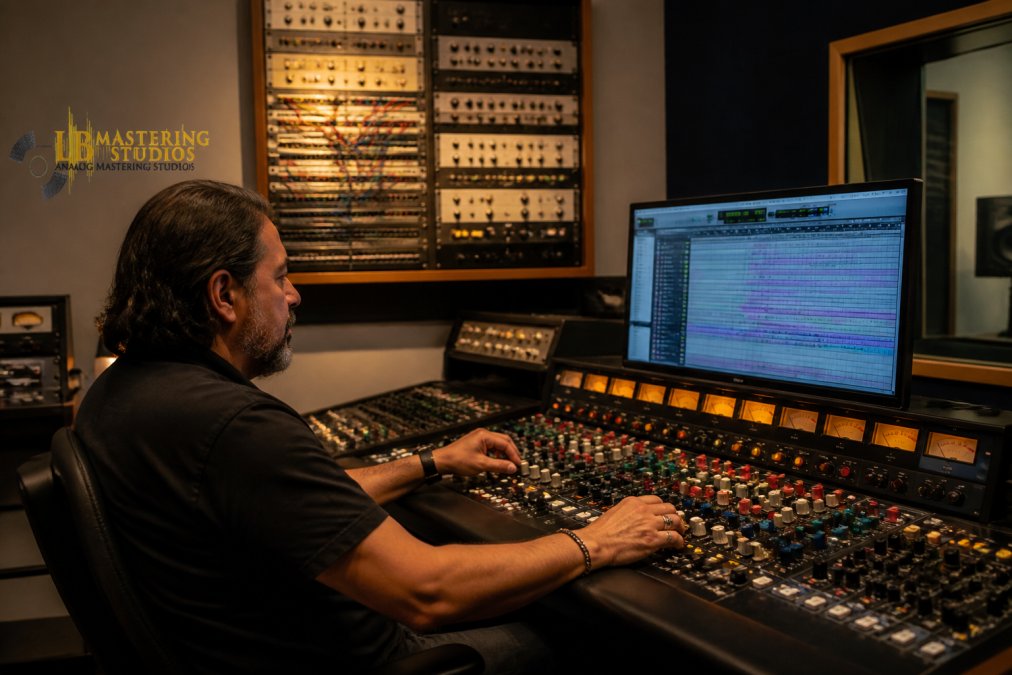
Insert points on professional audio interfaces allow external processors into the signal path. The DAW compensates for round-trip latency by applying a fixed delay offset, keeping everything in time.
A functional hybrid workflow requires:
- A high-quality audio interface with insert points or dedicated analog I/O
- Accurate latency compensation in the DAW
- Consistent gain staging at every chain stage
- Hardware recall documentation for every piece used
- Reference monitoring that represents consumer playback systems
The patch bay makes complex hybrid setups manageable by normalizing common signal paths and enabling quick reconfiguration.
Professional Mastering Services: What Separates Expert Results from DIY
Professional mastering differs from DIY mastering in ways beyond equipment access. The most significant differentiator is calibrated listening. A professional mastering engineer works in an acoustically treated room with reference monitors they know intimately, so decisions translate accurately to every playback system.
The second differentiator is experience with format requirements. Mastering for streaming, vinyl, and CD involves different technical targets. Streaming services apply loudness normalization that penalizes over-limited masters (aes.org). Vinyl mastering requires specific frequency and dynamic constraints. CD masters require precise peak limiting to avoid inter-sample distortion.
Automated mastering services apply fixed processing chains regardless of what each track needs. A professional engineer listens first, identifies what the mix requires, and makes project-specific processing decisions.
A free sample master is the most transparent way to evaluate mastering service quality, allowing direct comparison between the engineer's work and the original mix.
Standard deliverables are stereo mix files at the highest production resolution with 1 to 2 dB of headroom below 0 dBFS. Stems allow more targeted adjustments when the stereo mix has elements that cannot be addressed without affecting others. For vinyl mastering, requirements are distinct enough to warrant separate treatment, with specific attention to low-frequency stereo content, sibilance, and peak levels.
Conclusion
The best access to world-class analog outboard gear for professional sound enhancement comes down to a clear decision: own the gear, rent it, or work with an engineer who already has it and knows how to use it. For most independent artists, producers, and labels, the third option delivers the highest return on investment, because hardware is inseparable from the expertise required to operate it at a professional level.
LB-Mastering Studios offers exactly that combination. Led by a Latin GRAMMY Award-winning, 11x Billboard-charting engineer with 44 years of professional experience, the studio provides access to a specialized analog mastering facility for CD, stem, and vinyl mastering. A free sample master is available so you can hear the results before committing. Book a session with LB-Mastering Studios and hear what your music sounds like through a signal chain built for professional distribution.
=== FAQ ANSWERS (audit these too, same rules) ===
[1] Q: What analog gear is essential for professional mastering? A: A professional mastering chain typically includes a transformer-coupled equalizer for tonal shaping, a vari-mu or optical compressor for dynamic range control and glue, a high-quality hardware limiter for loudness management, and precise AD/DA converters to preserve signal integrity moving in and out of the digital domain. Each unit adds a layer of sonic character that shapes the final sound in ways that are difficult to replicate with plugins alone.
[2] Q: How does analog outboard gear compare to high-end digital plugins? A: Analog outboard gear introduces harmonic distortion, transformer coloration, and transient response characteristics that are physical properties of the circuit itself. High-end digital plugins model these behaviors mathematically, and while modern emulations are impressive, the interaction between a real tube circuit or solid-state amplifier and an audio signal produces subtle saturation and warmth that most engineers still prefer for mastering-grade work. The practical difference is most audible on full mixes and complex material.
[3] Q: Is it better to rent time with analog gear or build a home studio? A: For most independent artists and producers, booking time at a professional studio with an experienced engineer delivers better results at a lower total cost than assembling a home analog rig. Renting studio time also gives you access to a calibrated acoustic environment, a tuned monitoring system, and an engineer who knows how to get the most from the gear.
[4] Q: What are the benefits of using hardware limiters in a mastering chain? A: Hardware limiters add a final stage of dynamic control that manages peak levels for streaming and physical distribution without the digital harshness that aggressive plugin limiting can introduce. The best hardware limiters for mastering use transformer-coupled or tube output stages that add a degree of natural saturation as they work, keeping transient response intact and preventing clipping. This results in loud, competitive masters that still retain punch and clarity across playback systems.
[5] Q: What is the role of analog equalization in professional sound enhancement? A: Analog equalization in mastering shapes the tonal balance of a finished mix using inductor or transformer-based circuits that impart a musical quality to any boost or cut. Unlike digital EQ, which can sound clinical, a well-designed analog equalizer adds a gentle coloration that makes corrections feel natural. Engineers use it to address frequency imbalances, improve low-end definition, add presence to vocals, and ensure the master translates accurately across streaming platforms and physical formats.
Frequently Asked Questions
Q: What analog gear is essential for professional mastering?
A: A professional mastering chain typically includes a transformer-coupled equalizer for tonal shaping, a vari-mu or optical compressor for dynamic range control and glue, a high-quality hardware limiter for loudness management, and precise AD/DA converters to preserve signal integrity moving in and out of the digital domain. Each unit adds a layer of sonic character that shapes the final sound in ways that are difficult to replicate with plugins alone.
Q: How does analog outboard gear compare to high-end digital plugins?
A: Analog outboard gear introduces harmonic distortion, transformer coloration, and transient response characteristics that are physical properties of the circuit itself. High-end digital plugins model these behaviors mathematically, and while modern emulations are impressive, the interaction between a real tube circuit or solid-state amplifier and an audio signal produces subtle saturation and warmth that most engineers still prefer for mastering-grade work. The practical difference is most audible on full mixes and complex material.
Q: Is it better to rent time with analog gear or build a home studio?
A: For most independent artists and producers, booking time at a professional studio with an experienced engineer delivers better results at a lower total cost than assembling a home analog rig. Renting studio time also gives you access to a calibrated acoustic environment, a tuned monitoring system, and an engineer who knows how to get the most from the gear.
Q: What are the benefits of using hardware limiters in a mastering chain?
A: Hardware limiters add a final stage of dynamic control that manages peak levels for streaming and physical distribution without the digital harshness that aggressive plugin limiting can introduce. The best hardware limiters for mastering use transformer-coupled or tube output stages that add a degree of natural saturation as they work, keeping transient response intact and preventing clipping. This results in loud, competitive masters that still retain punch and clarity across playback systems.
Q: What is the role of analog equalization in professional sound enhancement?
A: Analog equalization in mastering shapes the tonal balance of a finished mix using inductor or transformer-based circuits that impart a musical quality to any boost or cut. Unlike digital EQ, which can sound clinical, a well-designed analog equalizer adds a gentle coloration that makes corrections feel natural. Engineers use it to address frequency imbalances, improve low-end definition, add presence to vocals, and ensure the master translates accurately across streaming platforms and physical formats.