
 ultimate-guide
Benefits of Professional Mastering for Digital Release
Table of Contents
- Why Professional Mastering Matters for Digital Release
- Mastering for Streaming Services: Meeting Platform Standards
- Professional vs Automated Mastering: What's the Real Difference
- Preparing Tracks for Digital Distribution: The Mastering Process
- Audio Quality and Translation Across Playback Systems
- Loudness Normalization and LUFS Standards Explained
- Consistency and Sonic Cohesion Across Your Album
- Getting Started with Professional Mastering
- Frequently Asked Questions
Last Updated: September 19, 2026
Why Professional Mastering Matters for Digital Release
Professional mastering is the critical final step that ensures your audio translates well across all playback systems, from earbuds to studio monitors, with clarity, punch, and sonic consistency.
The benefits of professional mastering for digital release extend far beyond loudness adjustment. A skilled mastering engineer applies technical expertise and trained ears in an acoustically treated environment to optimize your mix for streaming platforms like Spotify, Apple Music, and YouTube, something automated tools cannot replicate. The human ear, combined with years of experience and premium analog outboard gear, catches problems a mix engineer might miss and ensures your music competes with commercially released tracks.
Professional mastering is the difference between a track that sounds amateur and one that sounds professional, guaranteeing your listeners hear what you actually created.
Mastering for Streaming Services: Meeting Platform Standards
Each streaming platform applies its own loudness normalization: Spotify to -14 LUFS, Apple Music to -16 LUFS, and YouTube to -13 LUFS. If your master doesn't account for these standards, the platform's algorithms will reduce your track's perceived loudness, making it sound quieter and less impactful than competing songs.
Professional mastering engineers understand these specifications and ensure your track maintains clarity and impact across all major streaming services without excessive limiting that degrades audio quality.
One master no longer works for all distribution channels. A track mastered for vinyl requires different EQ and dynamic characteristics than one optimized for lossy digital compression on Spotify. Professional studios deliver platform-specific masters when needed, ensuring your music sounds its best everywhere it's distributed.
Professional vs Automated Mastering: What's the Real Difference
The Human Ear and Acoustic Environment
Automated mastering applies generic processing based on algorithmic rules. A human mastering engineer listens in a treated acoustic environment, using their trained ear and experience to make decisions that serve your music's specific character.
A treated mastering room eliminates room reflections, standing waves, and acoustic coloration that color perception. Professional studios invest in calibrated monitoring systems and acoustic treatment to ensure decisions are made based on what's actually in the audio, not what the room is doing to it.
An experienced mastering engineer brings contextual knowledge from thousands of tracks across genres and recognizes when a mix has issues that need attention. Automated systems cannot make these nuanced judgments.
Analog Outboard Gear vs Digital Algorithms
Professional mastering facilities use analog outboard gear because these tools color audio in musically pleasing ways that digital algorithms struggle to replicate. Analog compression applies gentle saturation and harmonic enhancement that adds character, while digital algorithms sound sterile by comparison.
Professional mastering studios use a hybrid approach that combines the precision of digital audio with the musicality of analog processing, resulting in a polished, professional master rather than an over-processed one.
Automated mastering services apply digital processing only, which is faster and cheaper but lacks the tonal refinement that separates a professional master from a competent one. For artists serious about competing commercially, this difference is audible and matters.
The Cost-Benefit Reality for Independent Artists
Automated mastering delivers results in minutes to hours. Professional mastering takes three to ten business days. For an independent artist releasing a single, the difference is modest; for an album, professional mastering represents a significant investment.
Automated mastering makes sense for experimental or demo material, testing multiple versions quickly, or extremely tight budgets. The results meet basic technical standards for distribution.
Professional mastering becomes essential for primary commercial releases, playlist placement, or albums where sonic cohesion matters. A professional engineer catches mix problems, optimizes for platform loudness targets, and ensures translation across all playback systems.
Many independent artists use professional mastering for lead singles and key tracks while using automated services for B-sides, balancing budget with quality.
When Automated Mastering Falls Short
Automated systems struggle with heavily compressed mixes, unusual genre blends, or unconventional dynamics. They cannot communicate about artistic intent or flag mix problems like phase issues or frequency imbalances.
A professional engineer flags issues and discusses solutions, providing feedback impossible with automated services.
Preparing Tracks for Digital Distribution: The Mastering Process
The mastering process begins with a properly mixed stereo file or stems. Most engineers prefer a stereo mix, though stem mastering gives the engineer more control over the final balance.
Your mix should arrive with peaks around -3dB to -6dB below clipping, at your session's native sample rate and bit depth. Most professional studios work at 48 kHz or 44.1 kHz.
File Specifications and Delivery Formats
Sample Rate and Bit Depth: Streaming platforms accept 44.1 kHz, 48 kHz, or higher, with 44.1 kHz as the standard (Audio file formats for Spotify). Bit depth should be 16-bit or 24-bit; platforms convert to their own specifications. Many engineers deliver 24-bit masters for archival flexibility.
File Format: WAV is the industry standard for mastering delivery. Avoid MP3 or AAC files, as these are lossy formats that discard audio information.
Stereo Configuration: Ensure your stereo file is a true stereo mix with balanced left and right channels and no phase issues.
Metadata and Delivery Package Requirements
Essential Metadata:
- Track title (exactly as it should appear on streaming platforms)
- Artist name and any featured artists
- Album or project name
- Track number and total tracks (if part of an album)
- Genre classification (use primary genre; secondary genres are optional)
- ISRC code (International Standard Recording Code), your distributor typically assigns this, but some mastering studios can generate it
- Copyright and publishing information
- Explicit content flag (if applicable)
Delivery Formats for Different Platforms: Spotify normalizes to -14 LUFS, Apple Music to -16 LUFS (lossy) or -14 LUFS (lossless), YouTube Music to -13 LUFS, and Amazon Music to -14 LUFS. A professional mastering engineer will deliver masters optimized for these specifications. While digital normalization ensures a consistent listening experience across streaming services, the dynamic range and sonic depth inherent in physical music media offer an alternative fidelity that remains untouched by algorithmic adjustments.
The Mastering Engineer's Assessment and Process
The engineer assesses the mix across multiple monitoring systems to identify frequency imbalances, dynamic issues, or subtle problems, then applies processing, EQ, compression, limiting, to optimize the audio for distribution.
The benefits of professional mastering for digital release become tangible here: surgical adjustments enhance clarity, improve stereo imaging, and ensure consistent translation across playback systems without over-processing.
Revision Requests and Communication
Most professional mastering services include one or two revision rounds. Communicate specific feedback like "The vocals feel buried" or "The low end is too aggressive on headphones" rather than vague requests like "make it louder."
Be realistic about revision scope. Minor adjustments differ from substantial rework that constitutes a new master.
Once you approve the master, request the final stereo master at the target LUFS level, a reference mix for your own listening, and documentation of mastering settings including LUFS measurement and true peak level.
Audio Quality and Translation Across Playback Systems
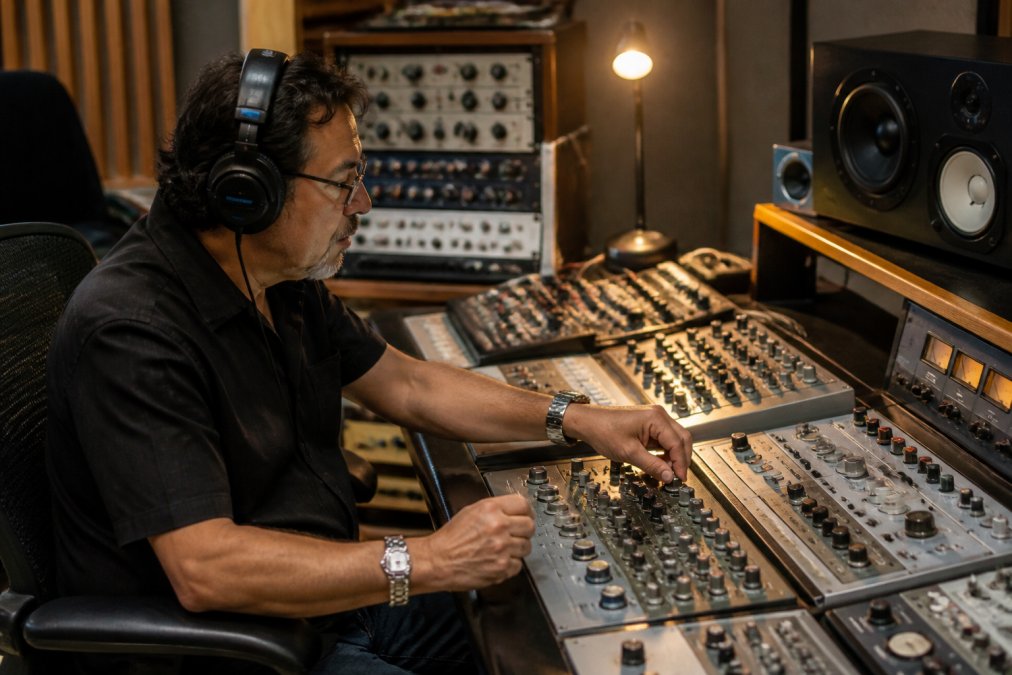
Translation is ensuring a mix sounds good on every playback system, from studio monitors to earbuds. Most home studios have acoustic problems that fool the ear, a bass-heavy room might suggest cutting bass, or poor midrange definition might lead to excessive boosting. By mastering, these problems are embedded in the audio.
A professional mastering engineer listens in an acoustically treated environment with calibrated monitors and reference headphones, hearing what's actually in the audio. They understand how your track will sound on Spotify, Apple Music, earbuds, and car stereos, making decisions that ensure translation across all scenarios.
Professional mastering involves A/B comparison against commercial reference tracks in the same genre, ensuring your track sits at a competitive loudness level and has similar frequency balance, preventing over-processing that degrades dynamic range.
Loudness Normalization and LUFS Standards Explained
LUFS (loudness units relative to full scale) is a standardized measurement of perceived loudness. Streaming platforms use LUFS to normalize volume so skipping between songs doesn't require constant adjustment.
Spotify normalizes to -14 LUFS, Apple Music to -16 LUFS (lossy) or -14 LUFS (lossless), and YouTube to -13 LUFS.
Consistency and Sonic Cohesion Across Your Album
If you're releasing an album or EP, consistency across tracks is non-negotiable. Each song should have a similar perceived loudness, frequency balance, and dynamic character so listeners don't experience jarring volume or tonal shifts when skipping between songs. This is where album mastering becomes essential.
Getting Started with Professional Mastering
When you're ready to master a track or album, the first step is preparing your files. Export a stereo mix at your session's native sample rate and bit depth, with peaks around -3dB to -6dB below clipping. Include any specific notes about the mix, the genre, reference tracks you're using, any particular concerns about frequency balance or dynamics, and your intended distribution platforms.
Frequently Asked Questions
What's the actual difference between mixing and mastering for digital distribution?
Mixing balances individual tracks, adjusts levels, and creates the stereo image. Mastering is the final step that optimizes your mix for all playback systems, phones, earbuds, car stereos, and headphones. A mastering engineer uses specialized equipment and an acoustically treated room to ensure your audio translates consistently across these platforms, which is critical for digital distribution where listeners use dozens of different devices.
Is professional mastering really necessary for digital-only releases?
Yes. Streaming platforms normalize loudness using LUFS standards, which means your mix must have proper headroom and frequency balance to survive that processing. An automated mastering service can't hear what your mix actually sounds like in a professional acoustic environment or adjust for subtle frequency issues that become obvious on earbuds or laptop speakers. Professional mastering ensures your track meets technical requirements and sounds intentional across all systems.
How does professional mastering improve streaming audio quality?
Professional mastering optimizes dynamic range, frequency balance, and loudness levels specifically for streaming platforms. Engineers use analog outboard gear and precise monitoring to catch problems, harsh frequencies, muddy lows, or inconsistent levels, that automated systems miss. They also ensure your mix has sufficient headroom so streaming normalization doesn't distort transients or squash dynamics, preserving the sonic detail listeners expect.
Can automated mastering services replace a professional engineer?
Automated services apply generic EQ and compression based on algorithms, not on how your specific mix sounds in a treated room with professional monitors. They can't make creative decisions, respond to genre nuances, or fix mixing problems that need human judgment. A professional engineer brings 44+ years of experience hearing thousands of mixes and knowing exactly what works for your genre, artist style, and target platforms. For serious digital distribution, professional mastering delivers measurably better results.